


 03 9070 5784
 Help & Support
 Track My Order




Recently Viewed
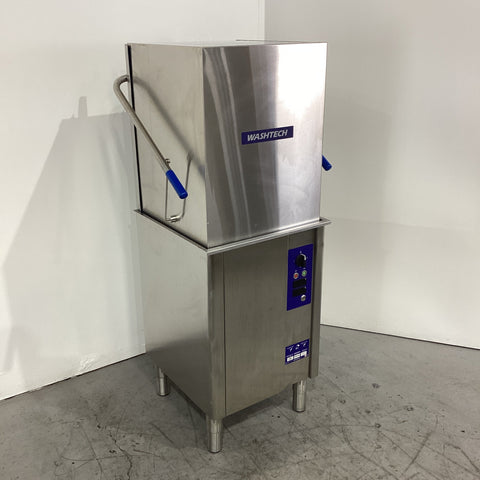

 Washtech XM Economy Passthrough Dishwasher - 841833
650W x 650D x 1490Hmm


 Meiko H500 Passthrough Dishwasher - 836842
700W x 860D x 1500Hmm


 Smeg HTY505DHAUS Ecoline Passthrough Dishwasher - 815263
620W x 800D x 1555Hmm


 Eswood ES32 Passthrough Dishwasher - 894884
700W x 620D x 1390Hmm

 Washtech M2 Passthrough Dishwasher - 882192
710W x 740D x 1500Hmm


 Hobart ECO-H604-90B Pass Through Dishwasher - 825534
730W x 740D x 1470Hmm

 Meiko H500 Passthrough Dishwasher - 825875
690W x 860D x 1500Hmm

 Washtech PW2 Front Loading Warewasher - 848704
1235W x 860D x 1790Hmm

 Washtech ALC WAL0021 Passthrough Dishwasher - 887358
755W x 780D x 1980Hmm

 Meiko M-iClean HM M2 Passthrough Dishwasher - 823739
930W x 800D x 1550Hmm


 Norris IM20.2 Passthrough Dishwasher - 905004
720W x 820D x 1555Hmm


 Fagor CO-142BDD Passthrough Dishwasher - 901805
715W x 835D x 1910Hmm

 Smeg HTY505DHAUS Ecoline Passthrough Dishwasher - 837081
820W x 620D x 1615Hmm

 Meiko H500 Passthrough Dishwasher - 869084
700W x 860D x 2320Hmm


 Zanussi ZHT8ILG Pass Through Dishwasher - 841937
750W x 870D x 1550Hmm


 Classeq P500 Passthrough Dishwasher - 918794
710W x 800D x 1480Hmm


 Eurowash EW393E-15A Pass Through Dishwasher - 830666
730W x 800D x 1450Hmm

 Classeq P500 Pass Through Dishwasher - 755187
730W x 775D x 1450Hmm
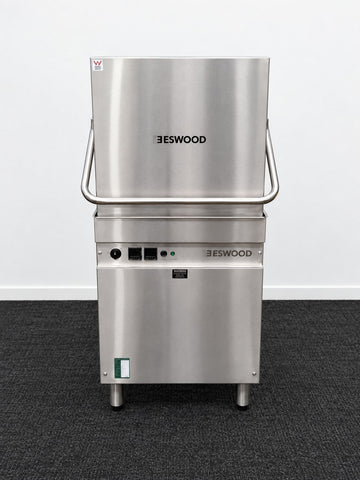
 Eswood ES-25DP Passthrough Dishwasher - 910466
690W x 740D x 1370Hmm


 Winterhalter PTM Passthrough Dishwasher - 843246
740W x 820D x 2280Hmm
 Washtech PW2 Dishwasher - 850007
1235W x 850D x 2060Hmm

 Meiko Upster H 500 M2 Pass Through Dishwasher - 897442
700W x 850D x 2160Hmm

 Hobart ECO-H604-90B Pass Through Dishwasher - 911324
740W x 740D x 1480Hmm

 Fagor CO-142HRSBDD Passthrough Dishwasher - 903778
715W x 845D x 1990Hmm
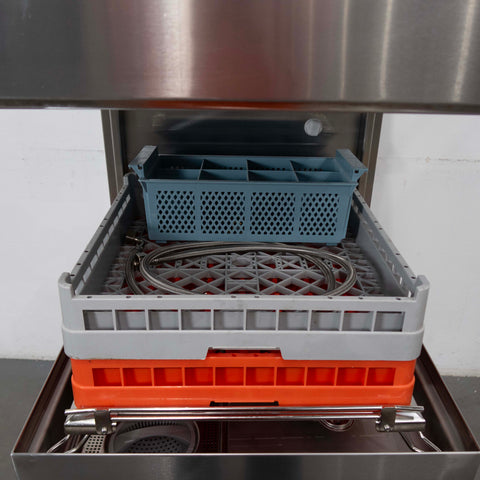
 Fagor CO-142HRSBDD Passthrough Dishwasher - 884681
720W x 850D x 1990Hmm

 Eswood ES100E Conveyor Dishwasher - 875851
1160W x 730D x 1550Hmm

 Eurowash EW800-6 Passthrough Dishwasher - 879606
730W x 840D x 1550Hmm


 CLEARANCE - Asber Tech Line Pass-through Hood Type Dishwasher - GE-H500DD-NSW2185
216(W) x 675(D) x 675(H)mm

 CLEARANCE - Asber Tech Line Pass-through Hood Type Dishwasher - GE-H500BDD-QLD375
216(W) x 675(D) x 675(H)mm
Refurbished passthrough dishwashers are the hood-type machines a busy kitchen runs its wash-up on. A rack slides in from the dirty bench, the hood comes down, the cycle runs and the rack goes out onto the clean bench, which is several times the throughput of an undercounter machine for not much more floor space. The new range is commercial passthrough dishwashers.
Machines come off showroom floors, out of demonstration kitchens and off supplier clearance lines. Each one is inspected, tested and verified in working condition before it is relisted for sale, and the marks on a given machine are described on its own product page.
A passthrough only works as part of a run, so plan it with refurbished dishwasher benches on both sides and rack slides through the machine. Below it in throughput is a refurbished undercounter dishwasher; above it is a conveyor dishwasher.
Silverchef Rent-Try-Buy can fund the machine and the benches either side of it, with the option to upgrade or hand equipment back as things change. Related ranges: refurbished commercial dishwashers, commercial dishwasher racks and dishwashing chemicals.
When the wash-up is a station with a person on it rather than something squeezed between other jobs. The hood design means racks are pushed through at bench height without lifting, so one person can keep a steady rhythm through a service, which is what you cannot do with an undercounter machine.
The signs you have outgrown an undercounter machine are a pile that never clears, racks queueing at the end of service, and staff hand-washing because waiting is faster. If that is happening, a passthrough is the answer rather than a second small machine.
More than the machine. You need the machine itself plus bench either side, and the hood needs headroom to lift fully, which is the dimension most often missed under a low shelf or a bulkhead. The product page gives the machine dimensions including the hood raised.
Then allow room for the person to stand and turn with a rack. A passthrough squeezed into a corner where the operator cannot stand square to it will be slower than the undercounter machine it replaced. Measure the whole run before you commit to the machine.
The hood mechanism first — the counterbalance, the springs or the arms, and the seals around the hood where it meets the tank. A hood that will not stay up or does not seal down is the defining fault of this machine type and the first thing to test.
Then the tank and boiler for scale, the wash and rinse pumps, the wash arms and jets, and the dosing pumps for detergent and rinse aid. Ask us what was replaced during the refurbishment rather than what was tested.
Many passthrough machines do, and the requirement for each unit is on its product page. These machines heat a tank and a rinse boiler, so the electrical load is well beyond what a general-purpose outlet carries, and a licensed electrician is part of the install.
Check your switchboard has the capacity before you buy, not after the machine is on site. If three phase is not available, that constrains which machines are usable and is worth telling us up front so we only show you units that will actually run there.
Work through it in order: water treatment, then the rinse aid dose, then the rinse arms. Spotting and film are usually water hardness rather than a machine fault, and a machine that was fine in soft water will spot in hard water with no change to the machine.
Then check the rinse jets are clear and the racks are not overloaded, because anything shielded from the rinse will dry marked. Keep the dosing pumps adjusted and the chemicals the ones the machine was set up for rather than whatever is cheapest.
A passthrough releases a burst of steam every time the hood lifts, and a wash-up area without extraction gets humid, hot and unpleasant, with condensation on the ceiling. Many machines have condensing or heat-recovery options that reduce it, and the product page says what a unit has.
Whether a hood is required over it comes down to your site's mechanical ventilation design, so take it up with the mechanical contractor along with the rest of the kitchen. If the exhaust hood arrangement is being reworked anyway, deal with the wash-up at the same time.
Often yes. Silverchef Rent-Try-Buy lets you rent the machine rather than buy it outright, so the payments are an operating expense and the cash stays in the rest of the kitchen.
It is also a sensible way to step up from an undercounter machine without committing before you know the new volume holds. Ask us which units in stock can be put on a rental.

We have a special page just for stock that's warehoused in Perth.
Click Here to see all WA stockWhat our customers say about us on Google, and how Google scores our store for things like shipping and returns.
Store scores from Google