


 03 9070 5784
 Help & Support
 Track My Order




Recently Viewed


 Meiko M-iClean UM M2 Undercounter Dishwasher - 767805
600W x 600D x 820Hmm
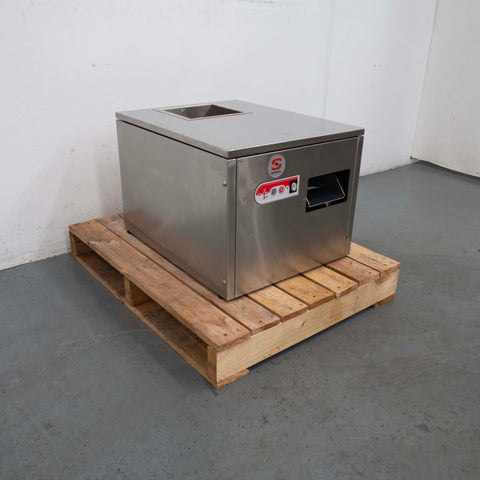

 Sammic SAM-3001 Cutlery Polisher - 837068
485W x 630D x 410Hmm


 Washtech WXG0030 Glasswasher - 792128
440W x 495D x 750Hmm
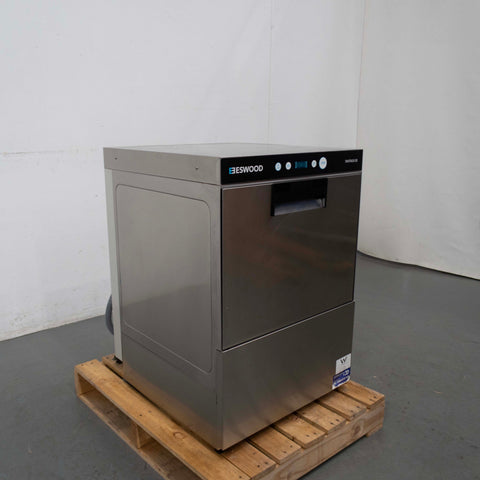

 Eswood SW500 Undercounter Dishwasher - 878272
580W x 610D x 840Hmm


 Adler ECO 50DP Dishwasher - Undercounter - 874617
580W x 640D x 810Hmm

 Meiko H500 Passthrough Dishwasher - 836842
700W x 860D x 1500Hmm


 Smeg HTY505DHAUS Ecoline Passthrough Dishwasher - 815263
620W x 800D x 1555Hmm

 Eswood ES32 Passthrough Dishwasher - 894884
700W x 620D x 1390Hmm


 Hobart Ecomax ECO-F504-90C Dishwasher - 905720
575W x 600D x 820Hmm


 Eurowash EW360E Undercounter Dishwasher - 895270
575W x 640D x 845Hmm


 Lamber GS900DP Dishwasher - 805056
600W x 635D x 820Hmm

 Washtech M2 Passthrough Dishwasher - 882192
710W x 740D x 1500Hmm

 Hobart ECO-H604-90B Pass Through Dishwasher - 825534
730W x 740D x 1470Hmm

 Meiko H500 Passthrough Dishwasher - 825875
690W x 860D x 1500Hmm

 Smeg UGA415M Underbench Glasswasher - 845979
460W x 610D x 860Hmm

 Meiko M-iClean US M2 Undercounter Glasswasher - 825878
460W x 600D x 850Hmm

 Washtech PW2 Front Loading Warewasher - 848704
1235W x 860D x 1790Hmm

 Washtech ALC WAL0021 Passthrough Dishwasher - 887358
755W x 780D x 1980Hmm


 Classeq C400 Undercounter Glasswasher - 907774
460W x 570D x 720Hmm

 Meiko M-iClean HM M2 Passthrough Dishwasher - 823739
930W x 800D x 1550Hmm


 Norris IM20.2 Passthrough Dishwasher - 905004
720W x 820D x 1555Hmm


 Fagor CO-142BDD Passthrough Dishwasher - 901805
715W x 835D x 1910Hmm

 Smeg HTY505DHAUS Ecoline Passthrough Dishwasher - 837081
820W x 620D x 1615Hmm

 Smeg UGA415M Underbench Glasswasher - 837082
460W x 610D x 845Hmm

 Meiko H500 Passthrough Dishwasher - 869084
700W x 860D x 2320Hmm
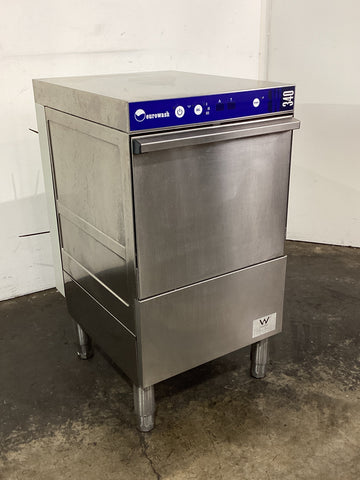
 Eurowash EW340E Undercounter Glasswasher - 859155
435W x 565D x 820Hmm


 Zanussi ZHT8ILG Pass Through Dishwasher - 841937
750W x 870D x 1550Hmm
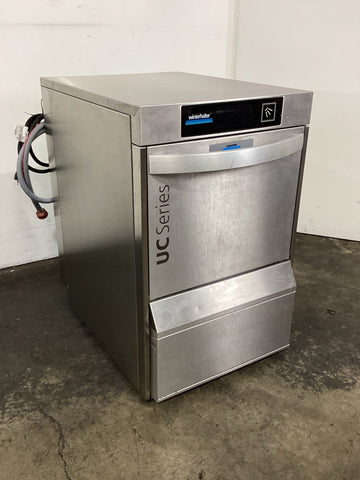

 Winterhalter UC-S Undercounter Glasswasher - 832039
460W x 640D x 725Hmm

 Classeq P500 Passthrough Dishwasher - 918794
710W x 800D x 1480Hmm

 Eurowash EW393E-15A Pass Through Dishwasher - 830666
730W x 800D x 1450Hmm

 Classeq P500 Pass Through Dishwasher - 755187
730W x 775D x 1450Hmm

 Smeg UD516DAUS Undercounter Dishwasher - 903094
600W x 680D x 830Hmm
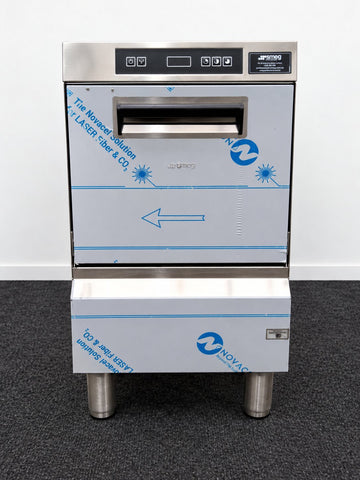
 Smeg SPG405MAU Glasswasher - 891888
375W x 530D x 695Hmm

 Smeg SPG405MAU Glasswasher - 942302
440W x 555D x 695Hmm
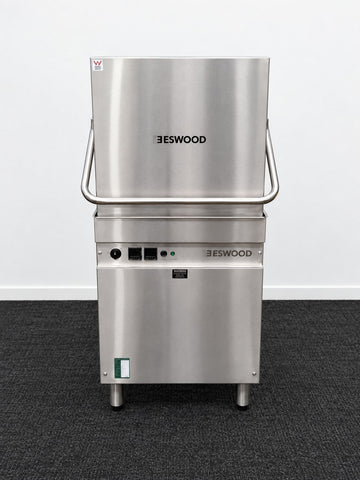
 Eswood ES-25DP Passthrough Dishwasher - 910466
690W x 740D x 1370Hmm


 Asber GE-400BDD Glasswasher - 939404
470W x 525D x 720Hmm

 Winterhalter UC-S Undercounter Glasswasher - 809257
460W x 640D x 820Hmm

 Winterhalter UC-S Undercounter Glasswasher - 805723
460W x 650D x 710Hmm

 Winterhalter PTM Passthrough Dishwasher - 843246
740W x 820D x 2280Hmm

 Winterhalter UC-S Undercounter Glasswasher - 887359
460W x 650D x 830Hmm

 Winterhalter UC-S Undercounter Glasswasher - 789989
460W x 603D x 820Hmm
 Washtech PW2 Dishwasher - 850007
1235W x 850D x 2060Hmm
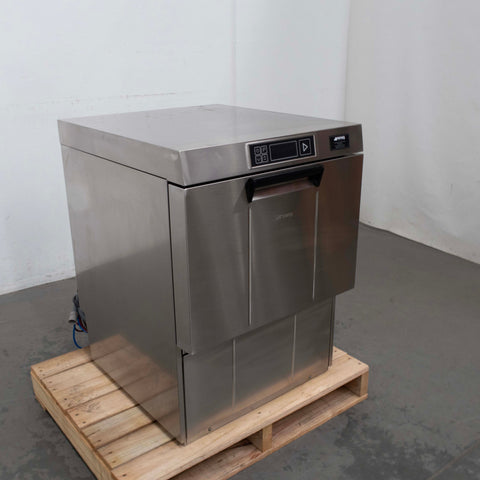
 Smeg UD516DAUS Undercounter Dishwasher - 916116
600W x 670D x 820Hmm

 Meiko Upster H 500 M2 Pass Through Dishwasher - 897442
700W x 850D x 2160Hmm

 Hobart ECO-H604-90B Pass Through Dishwasher - 911324
740W x 740D x 1480Hmm

 Fagor CO-142HRSBDD Passthrough Dishwasher - 903778
715W x 845D x 1990Hmm
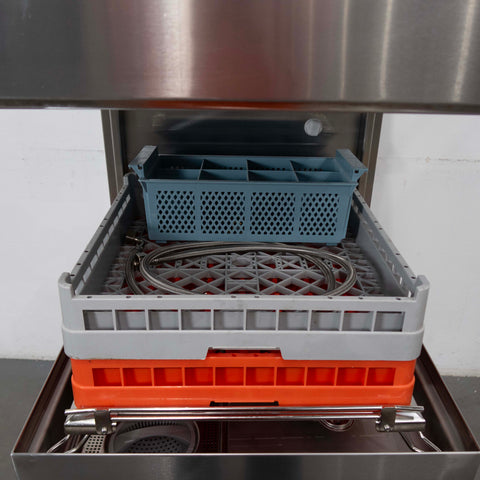
 Fagor CO-142HRSBDD Passthrough Dishwasher - 884681
720W x 850D x 1990Hmm

 Hobart ECO+G415-90C Glass Washer - 938286
460W x 590D x 860Hmm

 Fagor CO-402BDD Evo-Concept Glasswasher - 764475
470W x 570D x 725Hmm

 Fagor CO-402BDD Evo-Concept Glasswasher - 868024
470W x 580D x 720Hmm

 Eswood ES100E Conveyor Dishwasher - 875851
1160W x 730D x 1550Hmm

 Eurowash EW800-6 Passthrough Dishwasher - 879606
730W x 840D x 1550Hmm
Refurbished commercial dishwashers turn a rack of plates, cutlery and glassware around in minutes, hot enough to sanitise, so clean crockery gets back to the pass during service instead of banking up at the sink. A refurbished commercial dishwasher is one of the easier used buys in a kitchen, because the machines are simple, heavily built and well supported for parts. The new range is commercial dishwashers.
Units come off showroom floors, out of demonstration kitchens and off supplier clearance lines. Each one is inspected, tested and verified in working condition before it is relisted for sale, and the marks on a given machine are described on its own product page.
The range splits by shape and throughput. Refurbished undercounter dishwashers fit under a bench for a cafe or a bar. Refurbished passthrough dishwashers take a rack through a hood at kitchen volume. Refurbished dishwasher benches are the dirty-side and clean-side benching that makes either of them work, and conveyor dishwashers handle the largest sites.
A used machine plus the benching either side is still a fit-out spend, and Silverchef Rent-Try-Buy can fund it so the cash stays in the rest of the kitchen. Related ranges: commercial glasswashers, dishwashing chemicals and commercial dishwasher racks.
The cycle. A commercial machine washes in a short cycle with a dosed detergent and finishes with a fresh hot rinse, so a rack comes out ready to use in minutes rather than in an hour. It is built around throughput, not around a quiet overnight wash.
Then the construction. Stainless body and tank, a wash pump sized for continuous use, and components meant to be serviced rather than replaced as a unit. That is also why a used commercial machine is a reasonable buy and a used domestic machine in a cafe is not.
Undercounter for a cafe, a bar or a small kitchen: fits under a bench, handles glassware and plates, and needs the least space. Passthrough for a kitchen with real volume: a rack slides in under a hood, the hood comes down, and it sits above an undercounter machine in throughput.
Conveyor for institutional volume, where racks move through continuously. Most sites that outgrow an undercounter machine go to a passthrough rather than straight to a conveyor, because the conveyor needs space and services an ordinary kitchen does not have.
Behind a bar, usually yes. A glasswasher runs a gentler cycle suited to glass and sits where the glasses are used, which keeps bar glassware out of the kitchen machine where it gets chipped and comes back greasy.
In a small cafe, one undercounter machine doing both is normal and works, provided it is loaded sensibly. The test is whether glassware volume is high enough to compete with plates at the same time. If the bar and the kitchen peak together, buy two machines.
Hot or cold water in depending on the model, a drain out, and the electrical supply the product page specifies. Some machines are three phase and some need a 15 amp outlet, which takes a wider earth pin and will not accept a standard plug until an electrician fits one.
You also need somewhere for the detergent and rinse aid containers to sit, with the dosing lines reaching them. Plan the plumbing, waste and chemical storage into the bench run, because retrofitting a drain to a finished kitchen is the expensive version.
A great deal, and it shows up twice: as scale in the machine's boiler and elements, and as spotting and film on the glassware. Hard water is the usual reason glasses come out cloudy when the machine and the chemicals are both fine.
Water treatment is standard practice rather than an extra. Find out about the water where the machine is going and plan for treatment and for descaling as a routine. On a used machine, ask about the water where it last worked and whether it ran behind treatment.
The tank and the boiler for scale and corrosion, the wash and rinse pumps, the door or hood mechanism and its seals, and the wash arms and jets for blockages. Then the dosing pumps for detergent and rinse aid, which are small, cheap and commonly worn.
Ask us what was replaced during the refurbishment rather than what was tested, and check the brand still has service agents in Australia. A dishwasher down is a kitchen washing by hand, so parts availability is worth more here than a slightly better price.
Yes, and it is the part most often left out of the budget. A dishwasher needs a dirty side to stack and scrape on, ideally with a sink and a spray, and a clean side to land the hot rack on. Without both, the machine becomes the bottleneck no matter how fast it washes. Refurbished dishwasher benches are built for exactly this.
Allow for racks as well, since a machine running continuously needs more racks than it has slots, and for a dishwasher sink on the dirty side. Plan the whole run as one piece of bench rather than buying the machine and working out the rest later.
Often yes. Silverchef Rent-Try-Buy lets you rent the machine instead of buying it outright, so the cash stays in the rest of the fit-out and the payments are an operating expense.
It also helps where the throughput is a guess. Undersizing the dishwasher is one of the most common fit-out mistakes, and it is felt at the end of every shift. Being able to step up from an undercounter to a passthrough machine without writing off the first one is worth something. Ask us which units in stock can go on a rental.

We have a special page just for stock that's warehoused in Perth.
Click Here to see all WA stockWhat our customers say about us on Google, and how Google scores our store for things like shipping and returns.
Store scores from Google