


 03 9070 5784
 Help & Support
 Track My Order




Recently Viewed
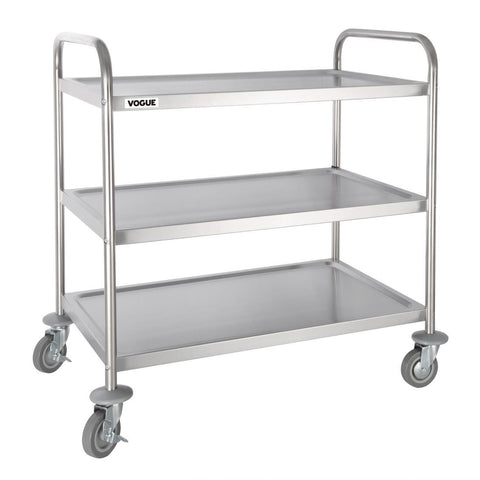

 Vogue Stainless Steel 3 Tier Clearing Trolley Large - F995
860(W) x 930(H) x 535(D)mm

 Modular Systems Stainless Steel Trolley YC-102
855(W) x 535(D) x 940(H)mm
 Modular Systems Stainless Steel Trolley YC-103
855(W) x 535(D) x 940(H)mm
 Modular Systems Stainless Steel Trolley With 2 Shelves YC-102D
855(W) x 535(D) x 940(H)mm
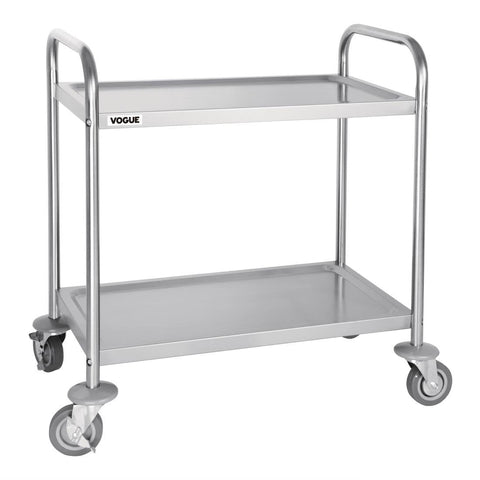
 Vogue Stainless Steel 2 Tier Clearing Trolley Small - F996
710(W) x 825(H) x 405(D)mm
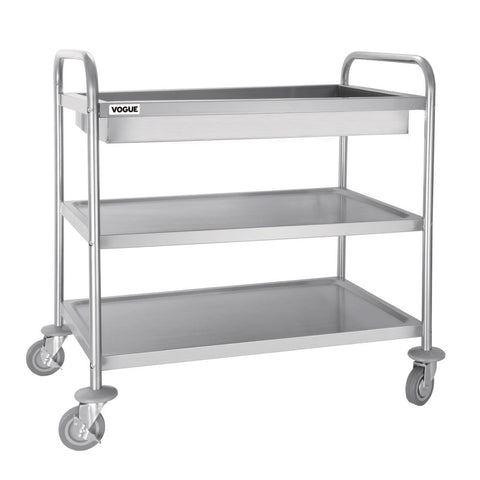
 Vogue Stainless Steel 3 Tier Deep Tray Clearing Trolley - CC365
855(W) x 940(H) x 535(D)mm
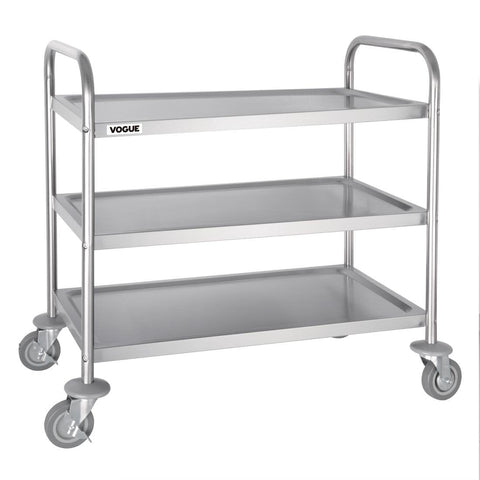
 Vogue Stainless Steel 3 Tier Clearing Trolley Medium - F994
810(W) x 855(H) x 455(D)mm
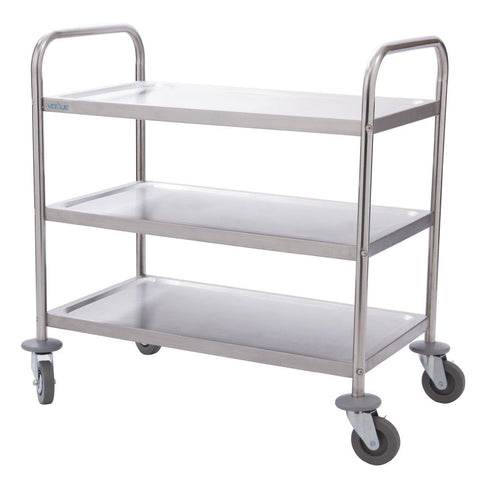
 Vogue Stainless Steel 3 Tier Clearing Trolley Small - F993
710(W) x 825(H) x 405(D)mm
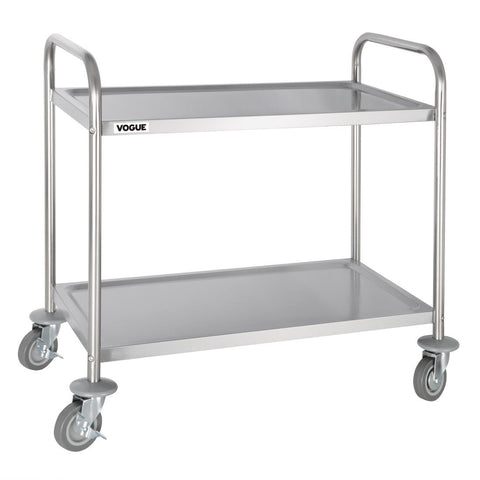
 Vogue Stainless Steel 2 Tier Clearing Trolley Medium - F997
855(W) x 855(H) x 455(D)mm
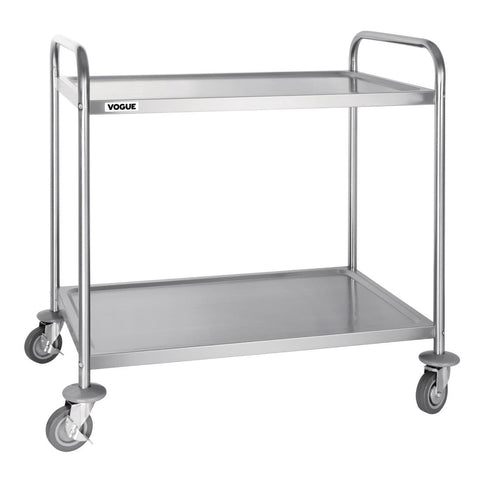
 Vogue Stainless Steel 2 Tier Clearing Trolley Large - F998
860(W) x 930(H) x 535(D)mm
 Vogue Chrome 3 Tier Wire Trolley - CC432
457(W) x 960(H) x 910(D)mm

 ICE Stainless Steel 3 Tier Trolley - TRS0003
855(W) x 930(H) x 535(D)mm
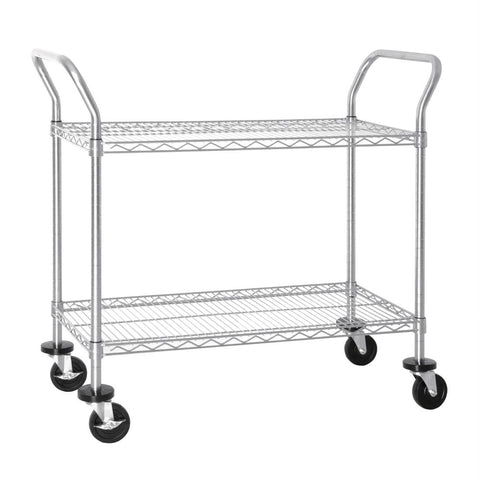
 Vogue Chrome 2 Tier Wire Trolley - CC430
457(W) x 960(H) x 910(D)mm
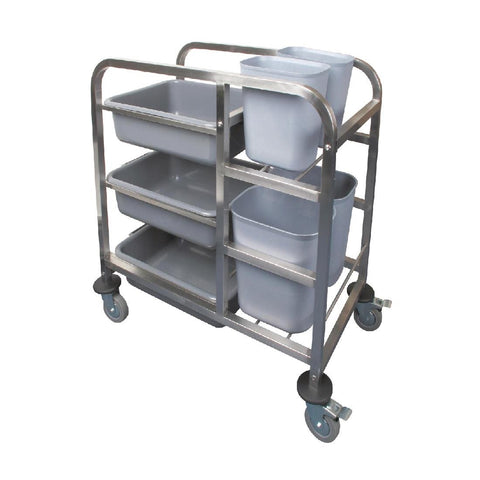
 Vogue Stainless Steel Bussing Trolley - DK738
820(W) x 900(H) x 440(D)mm
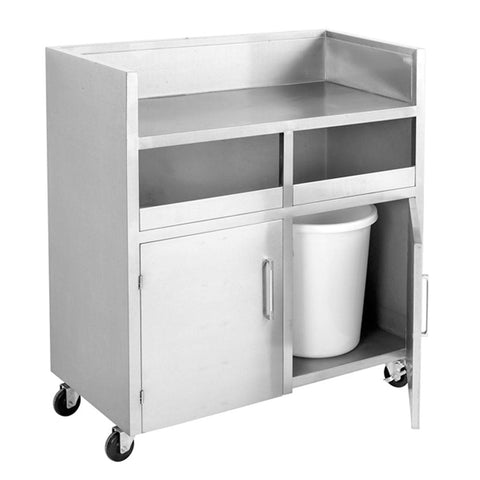
 Modular Systems Double Bin Mobile Station MBS118
1180(W) x 550(D) x 1260(H)mm
 ICE Seven Tier GN Trolley - TRS0207
385(W) x 855(H) x 550(D)mm
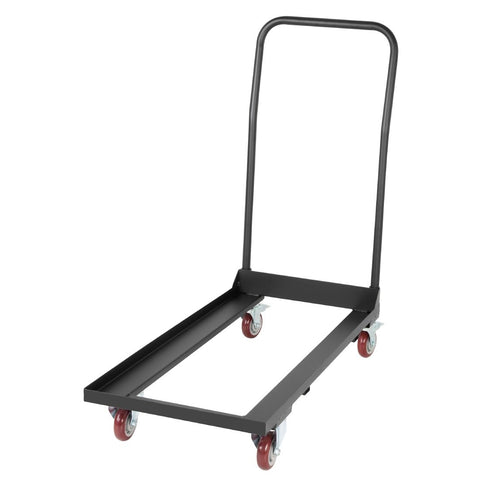

 Bolero Folding Chair Trolley - JA345
A stainless steel catering trolley moves hot pans, plates and trays around a working kitchen: out to the pass, back to the wash-up, in and out of the cool room. It is a frame with two or three shelves, castors sized for a kitchen floor, and 304 stainless steel, which is the food-safety grade used in Australian commercial kitchens.
Sold in some catalogues as a stainless steel catering cart, it is the same product. Where a trolley carries hot pans, parks beside a cooking line or goes through a washdown at the end of the night, stainless is what holds up over years rather than months.
The lighter alternative for front of house is plastic catering trolleys, and both sit under catering trolleys within commercial kitchen trolleys.
Not sure how many you need or which shelf layout suits your service? request a callback and we will work it through with you.
Heat, grease and washdown. Stainless takes a hot pan straight off the line, does not soften, does not stain from oil and can be cleaned with the same products as the rest of the kitchen.
The cost is weight and noise. A stainless trolley is heavier to push and louder on a hard floor, which is exactly why many venues keep plastic catering trolleys for the guest-facing areas and stainless for the back of house.
Three where you are moving a quantity of smaller items and want the capacity. Two where the items are tall, awkward or heavy, and where you want to be able to see and reach across the trolley.
Three shelves loaded to the top is also harder to see over while pushing. Keep the heavy items low whichever you choose, and check the shelf clearance against the tallest thing you carry on the product page.
Some models do and some do not, and it is worth deciding early because it changes which trolley you buy rather than being an option you add later. A folding trolley suits a venue that only needs it for functions.
A fixed-frame trolley is more rigid and takes more weight, which suits daily kitchen use. If storage space is the constraint, tell us and we will point you at the models that collapse.
For landing and moving plates and pans, yes, and it is often the fastest way to clear a pass between courses. It is not a work surface, so plating still happens on a bench.
Keep the trolley out of the walkway while it is parked. A stainless steel bench with a heated shelf is where the plating belongs.
Larger diameter ones, because a commercial kitchen floor has drains, floor wastes, door tracks and often a slope to the waste. Small castors catch in a drain grate and stop the trolley dead with a load on it.
Brakes on at least two castors, and swivels so it can be steered one-handed. Replacement castors and handles are in trolley accessories when the originals wear out.
Neutral detergent, wiped along the grain, dried rather than left wet. The shelves get attention daily; the frame, the castors and the underside of the bottom shelf are the parts that get skipped and need a weekly look.
Avoid abrasive pads and chlorine cleaners left sitting on the surface. The usual cleaning supplies are all it needs, and the rest of the stainless steel equipment range is maintained the same way.
Often, yes. Where a standard trolley will not fit a service lift, an alcove or a particular tray size, fabrication is routine work.
See our custom refrigeration and stainless steel appliances page. Send the dimensions and the route the trolley has to travel, and we will check the standard range first before quoting anything made to order.

We have a special page just for stock that's warehoused in Perth.
Click Here to see all WA stockWhat our customers say about us on Google, and how Google scores our store for things like shipping and returns.
Store scores from Google