


 03 9070 5784
 Help & Support
 Track My Order




Recently Viewed
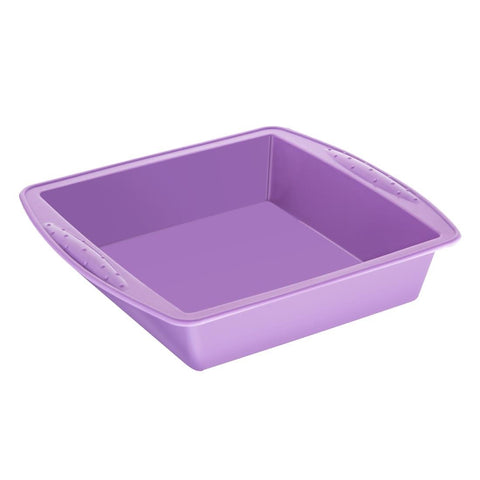

 Hygiplas Flexible Silicone Square Bake Pan Purple 245mm - CX049
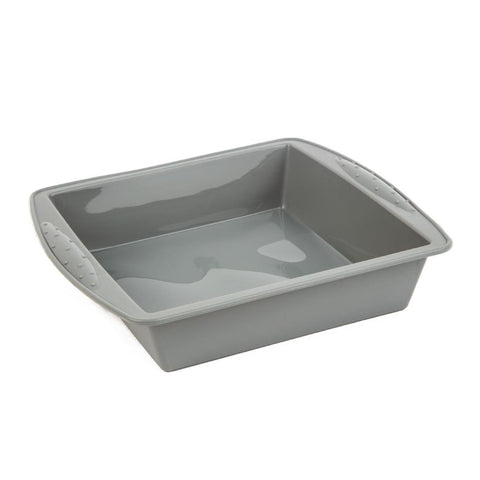

 Vogue Flexible Silicone Square Bake Pan 245mm - DA532
245(W) x 55(H) x 245(D)mm

 Vogue 1.5lb Flexible Silicone Loaf Pan - DA525
130(W) x 60(H) x 255(D)mm
Silicone food moulds peel away from the product instead of the product having to be forced out, which is why a pastry section uses them for anything set, frozen or delicate: mousse domes, bars, muffins and ice. Silicone baking moulds come as single cavity moulds and as multi-cavity sheets, and the sheets are what let you turn out a batch of identical items. Delivered anywhere in Australia.
That flexibility is also the limitation. A silicone mould tray has no structure of its own, so it needs a flat tray under it, and it does not give the crisp browned edge a metal mould does. For a tart shell you want metal; for a mousse dome you want silicone. Temperature ratings are per product and on the page. The parent range is kitchen moulds, with aluminium food moulds and stainless steel food moulds covering the rigid options.
Building out a dessert section? The price guide prices the single cavity moulds and the multi-cavity sheets alongside the trays they sit on.
Release. Anything set, frozen or delicate comes out of silicone intact when it would break coming out of metal, and that is the whole reason the material is in a pastry section.
It is also better for freezing, because it survives the thermal change and flexes when the contents are solid. See commercial chest freezers and commercial upright freezers for the holding.
A silicone mould tray has no rigidity of its own. A filled silicone sheet lifted by one edge will spill, and it will also sag unevenly in an oven.
Always fill it on the tray it will be baked or frozen on. See commercial baking trays and commercial gastronorm trays.
No, and this is the main reason not to use it for pastry. Silicone insulates rather than conducting, so a tart shell baked in it stays pale and soft at the sides.
Use metal where you want colour and structure — see quiche tins and commercial muffin pans.
It is rated per product and stated on the page, and the range differs between a cheap mould and a professional one. Never assume from the feel of the material.
Also check the low end if it is going into a blast chiller. Our specifications page explains how we list those ratings.
It does, more than any other mould material, and strong aromatics and colours transfer between uses. A savoury mould and a dessert mould should not be the same mould.
Keep separate sets and label them. See kitchen food labels for a workable system.
Usually not, which is a large part of the appeal, though a very light film helps with sticky sugar work. Over-greasing silicone leaves a tacky residue that is hard to wash out.
If something sticks repeatedly, the mould is probably past it. Silicone degrades with use and goes slightly sticky when it does.
A commercial dishwasher handles most of them where the product page allows it, and they need to be fully dry before storage because water sits in the cavities.
Store them flat, not folded or weighted, because a crease becomes permanent. A shelf or a tray is enough — see modular shelving.

We have a special page just for stock that's warehoused in Perth.
Click Here to see all WA stockWhat our customers say about us on Google, and how Google scores our store for things like shipping and returns.
Store scores from Google