


 03 9070 5784
 Help & Support
 Track My Order




Recently Viewed
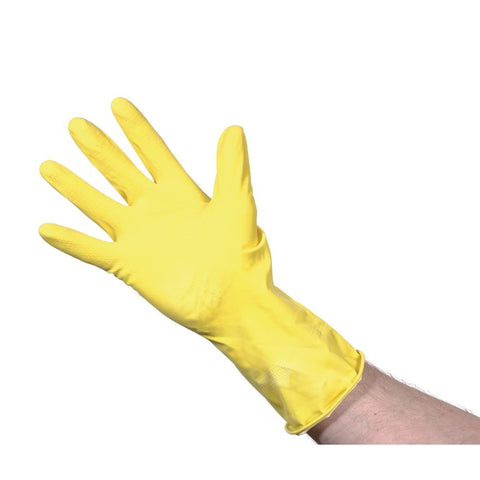

 Jantex Household Glove Yellow Medium - CD793-M
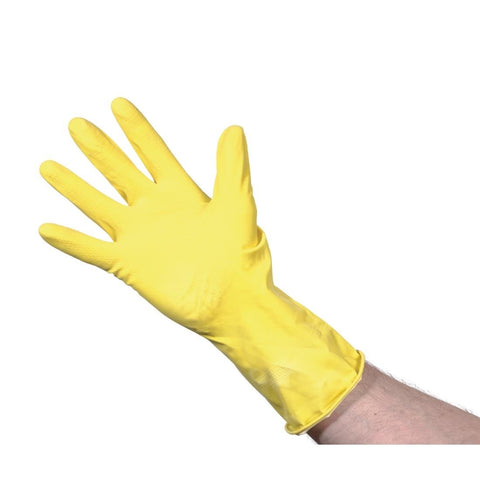
 Jantex Household Glove Yellow Large - CD793-L
Rubber gloves keep hands out of hot water, grease and cleaning chemicals at the sink, on the floor and in the washroom. Commercial rubber gloves are made for that: a long cuff, real grip and enough thickness to hold up to a degreaser.
The two mistakes are thin gloves for chemical work and short cuffs. Kitchen rubber gloves used for a pot sink need to reach past the wrist, because that is where water runs in, and thin disposables are not chemical protection no matter how many you double up.
Washing up gloves for the sink are a separate item from the disposable kitchen gloves used in food handling, and from the heat gloves in the kitchen mitts range. Keep all three, keep them apart.
Setting a reorder level for the store room? The price guide lists the gloves by weight and size, so you can decide what to keep on the shelf and in what quantity.
Thin gloves give dexterity and nothing else. For dishwashing and general cleaning a medium household-weight glove is enough; for decanting concentrates or cleaning an oven you want a heavy industrial glove with a long cuff.
The chemical the glove has to resist is the deciding factor, and that information comes from the chemical's own label rather than from the glove. For caustic cooking equipment cleaners, heavy is the only sensible choice.
Latex gives the best feel and grip but is a known allergen, which is why many kitchens have moved away from it. Nitrile handles oils and many solvents well. PVC is cheap and durable for general wet work.
If anybody on the team reacts to latex, the decision is made for the whole kitchen. Mixed gloves in one drawer defeats the purpose.
To a point, and that point is lower than people assume. A lined glove gives some insulation for washing up, but no washing-up glove is a heat glove and none of them should be used to handle a hot tray.
Use a proper heat-rated mitt from the kitchen mitts range for anything out of an oven.
No, and this is the one rule worth being inflexible about. Colour-code them, store them in different places, and keep the washroom cleaner gloves as a separate set.
Apply the same split to mops and brushes. If the cloth and the glove are separated, most of the risk is handled.
Rinse the outside, turn them inside out, hang them to dry, and never leave them balled up wet in the bottom of a sink. A damp glove left overnight grows exactly what you would expect.
Give each person their own pair where you can. Shared gloves are the fastest way to a kitchen full of unused gloves.
At the first pinhole, at the first tear in the cuff, and once the inside is permanently damp. A glove with a hole is worse than no glove because it holds chemical against the skin.
Keep spares in the store with the other consumables so replacement is immediate rather than next week.
Yes. A glove too big slips off in the sink and a glove too tight tears at the thumb. Holding two or three sizes rather than one is a cheap way to make sure they get worn.
Sizing varies between brands, so the size chart on the product page or the specifications page is worth checking before a bulk order.

We have a special page just for stock that's warehoused in Perth.
Click Here to see all WA stockWhat our customers say about us on Google, and how Google scores our store for things like shipping and returns.
Store scores from Google