


 03 9070 5784
 Help & Support
 Track My Order




Recently Viewed
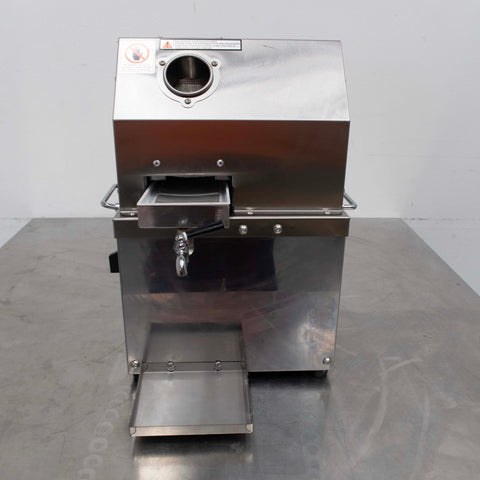

 Zummo LFS-SJ3FT17 Sugarcane Juicer - 909139
420W x 490D x 530Hmm
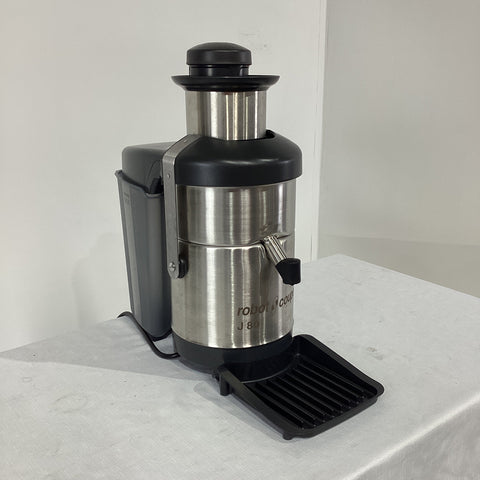

 Robot Coupe J80 Automatic Juice Extractor - 915101
230W x 520D x 500Hmm


 Federal KF12L-3 Juice Dispenser - 867566
615W x 435D x 665Hmm


 Oranfresh Orangenius OR-M5PL Orange Juicer - 876978
270W x 560D x 785Hmm


 Kuvings CS700 Juicer - 829494
155W x 230D x 510Hmm

 Robot Coupe J100 Juicer - 857667
230W x 520D x 530Hmm


 Ceado ES500 Juicer - 851428
250W x 500D x 520Hmm


 Santos 65 Juicer - 870998
220W x 410D x 670Hmm

 Zummo Z14A-N Juicer with waste cabinet - 785657
600W x 480D x 1690Hmm
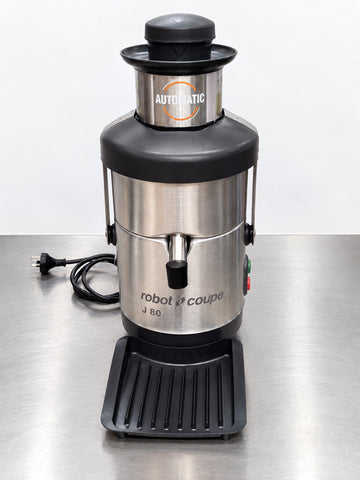
 Robot Coupe J80 Automatic Juice Extractor - 908232
230W x 520D x 500Hmm
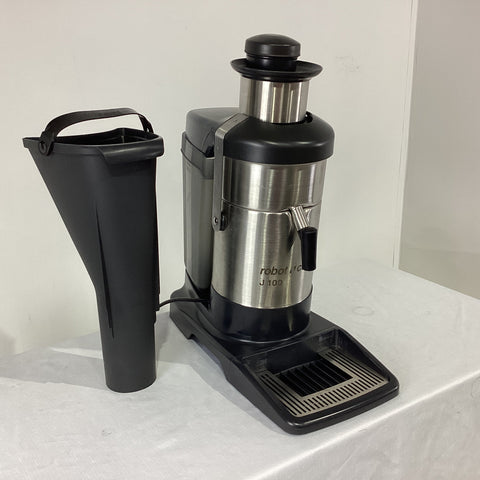
 Robot Coupe J100 Juicer - 903043
230W x 550D x 630Hmm
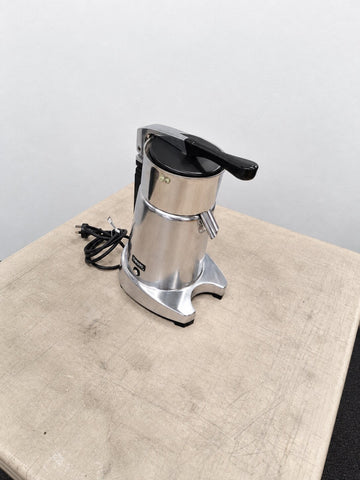
 Ceado CEL1098/SL98 Juicer - 908231
190W x 300D x 360Hmm

 Zummo ZIT14A-N Juicer - 880035
700W x 600D x 1710Hmm


 Zumex ZU-11847 Juicer + Zumex Z-10256 Stand - 934676
960W x 680D x 2130Hmm

 Santos 50C Juicer - 838306
240W x 460D x 500Hmm

 Santos 65 Juicer - 869944
250W x 480D x 660Hmm

 Robot Coupe J80 Juicer - 881592
230W x 520D x 500Hmm

 Robot Coupe J100 Juicer - 840459
538W x 235D x 596Hmm

 Robot Coupe J100 Centrifugal Juicer - 888565
260W x 540D x 620Hmm

 Kuvings CS700 Juicer - 829496
155W x 230D x 510Hmm

 Kuvings CS700 Juicer - 829495
155W x 230D x 510Hmm

 Kuvings CS700 Juicer - 846475
150W x 270D x 560Hmm

 Ceado ES500 Juicer - 867169
240W x 380D x 520Hmm

 Ceado CP150 Juicer - 814295
190W x 390D x 460Hmm

 Benchstar KF12L-3 Juice Dispenser - 863012
600W x 440D x 660Hmm
Refurbished commercial juicers are built to work through a crate of fruit rather than a bowl of it, and they come in three quite different kinds. A citrus press squeezes halved fruit. A centrifugal juicer shreds whole fruit and vegetables and spins the juice out. A cold press crushes and presses slowly for yield and shelf life. The new range is commercial juicers.
Units come off showroom floors, out of demonstration venues and off supplier clearance lines. Each one is inspected, tested and verified in working condition before it is relisted for sale, and the condition of a particular machine is described on its own product page.
Pick the type by the fruit, not by the price. For oranges and lemons alone, commercial lemon juicers and citrus presses are faster and far less work to clean. For a mixed juice bar menu with apples, carrots, beetroot and greens, a centrifugal or cold press machine is the one to look at.
Tell us the menu and how many juices go out in the busiest hour, and we will get a quote back to you on the machines in stock. Related ranges: refurbished commercial beverage equipment, refurbished commercial blenders and commercial salad spinners for the prep side.
Citrus press for oranges, lemons and limes: fastest, simplest and easiest to clean, because it only ever handles halved fruit. Centrifugal for a mixed menu with apples, carrots, beetroot and greens: quick, high yield on hard produce, and it produces a juice best served straight away.
Cold press for yield, texture and a juice that holds up for longer in a bottle, at the cost of speed and a much more involved clean-down. If the business is bottling juice to sell, cold press. If it is pouring to order at a cafe, one of the other two.
A lot, and it is daily work rather than a weekly job. Pulp sets hard, fruit sugar sours, and every part that touches juice has to come apart and be washed on a schedule — filter baskets, blades, augers, chutes and the housing. A juicer that is cleaned at the end of a rush is a different machine from one cleaned at the end of a day.
That is also the main thing to assess on a used machine. Ask what was replaced during the refurbishment, and look at the state of the filter basket and the seals. Build the cleaning time into the roster, because it is labour, not an afterthought.
A commercial machine will, provided it is the right type for the fruit and it is not being asked to run continuously past its duty cycle. The usual bottleneck is not the motor, it is the handling: feeding fruit, emptying pulp and swapping jugs.
If the peak is heavy, two smaller machines usually beat one larger one, because one can be cleaned or cleared while the other runs. Count the juices in the busiest hour and tell us the number rather than the brand you had in mind.
Filter baskets and blades on a centrifugal machine, augers and screens on a cold press, and the seals and the drive coupling on both. On a citrus press it is the cones, the gaskets and the strainer. All are consumables and all should be available for a current trade brand.
Ask us about parts for the exact model before you buy, because a juicer with an unobtainable filter basket has a short life left whatever its condition today. Keep a spare set of the parts you replace most, since they fail mid-service rather than conveniently.
Some juice holds and some does not, and that is set by the type of machine as much as the fruit. Centrifugal juice separates and oxidises fast and is best poured straight away. Cold-pressed juice holds its quality much longer, which is the main reason bottling operations use it.
Whatever you make ahead goes straight into refrigeration, and your own food-safety plan sets how long you can hold it. A refurbished commercial under bench fridge at the counter is the usual answer, so bottles are cold and in reach.
Beside a sink, with bench space on both sides — one side for the fruit going in, the other for the pulp bin and the jugs coming out. A juicer dropped into a gap with nowhere to put the pulp bin will slow the counter down no matter how good the machine is.
Also check the power point and the clearance the product page asks for, and keep the machine away from the edge where a full pulp bin gets knocked. If it is customer-facing, remember a juicer is messy by nature and plan a splash surface behind it, ideally a run of stainless steel benching that wipes down.

We have a special page just for stock that's warehoused in Perth.
Click Here to see all WA stockWhat our customers say about us on Google, and how Google scores our store for things like shipping and returns.
Store scores from Google