


 03 9070 5784
 Help & Support
 Track My Order




Recently Viewed


 Birko 1060084 Coffee Percolator - 890493
340W x 320D x 580Hmm


 BFC Lira 2 Group Coffee Machine - 873159
812W x 575D x 560Hmm


 Bezzera Otto 2 Group Coffee Machine - 885448
510W x 500D x 530Hmm

 BFC LIRA 2 Group Volumetric Tall Cup Coffee Machine - 806005
812W x 575D x 560Hmm


 Coffee Roasters Australia CRAT-2.5E Coffee Roaster - 817820
1020W x 700D x 1020Hmm

 BFC Lira 2 Group Coffee Machine - 873160
812W x 575D x 560Hmm

 Bezzera Moda De 2 Group Espresso Machine - 867153
670W x 520D x 545Hmm


 Brugnetti Giulia 2 Group Volumetric Coffee Machine - 856333
625W x 520D x 495Hmm
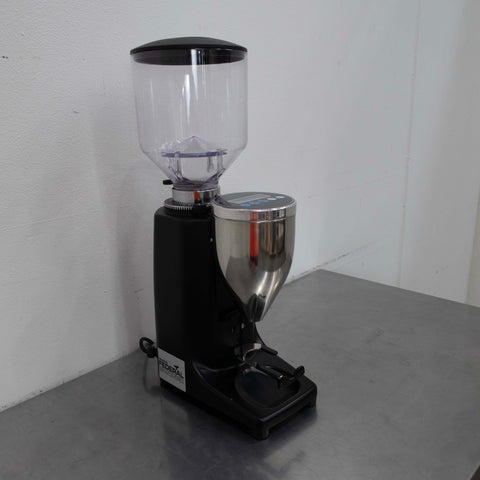
 Bezzera BZM80EB Coffee Grinder - 884906
175W x 310D x 560Hmm
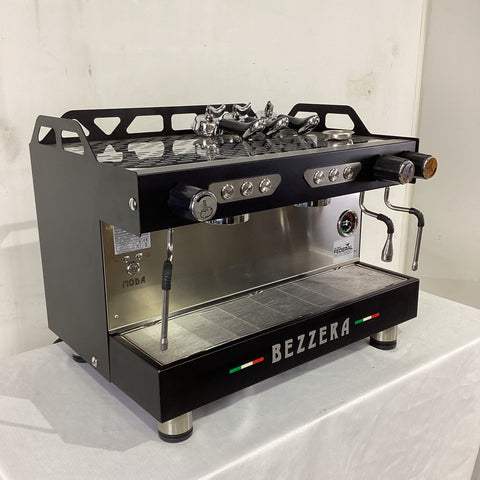
 Bezzera Moda De 2 Group Espresso Machine - 867152
670W x 520D x 545Hmm
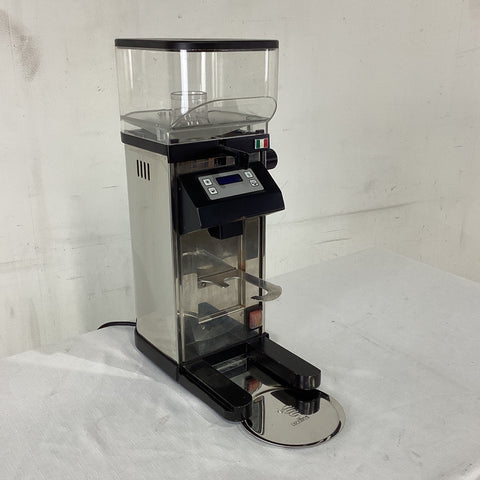
 BEZZERA BB012TMOIL7D Coffee Grinder - 828519
230W x 420D x 470Hmm

 Bezzera ARCADIA-G2DP 2 Group Coffee Machine - 867405
825W x 565D x 525Hmm

 Bezzera ARCADIA-G2DP 2 Group Coffee Machine - 890236
820W x 560D x 530Hmm

 Bezzera B2016 DE 2 Group Coffee Machine - 875261
660W x 520D x 530Hmm

 Bezzera ARCADIA-G2DP 2 Group Coffee Machine - 867390
825W x 565D x 525Hmm

 Bezzera ARCADIA-G2DP 2 Group Coffee Machine - 926251
820W x 560D x 530Hmm


 Astoria Pilot SAE./3-S2 3 Group Coffee Machine - 883601
1160W x 640D x 530Hmm


 Appia Compact II 3 Group Coffee Machine - 892606
1010W x 545D x 530Hmm

 Astoria SAE./3-EC 3 Group Coffee Machine - 829519
960W x 530D x 520Hmm

 Astoria Pilot SAE./3-S2 3 Group Coffee Machine - 838368
1160W x 640D x 530Hmm


 Anfim Alba/AF06 Coffee Grinder - 879501
210W x 370D x 615Hmm
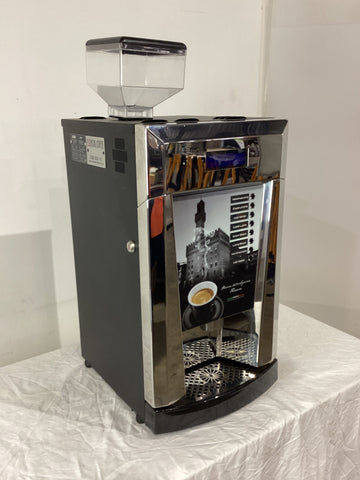

 Acem F050 Automatic Coffee Machine - 844791
350W x 500D x 800Hmm

 ACEM F050 Auto coffee machine - 851780
350W x 500D x 800Hmm
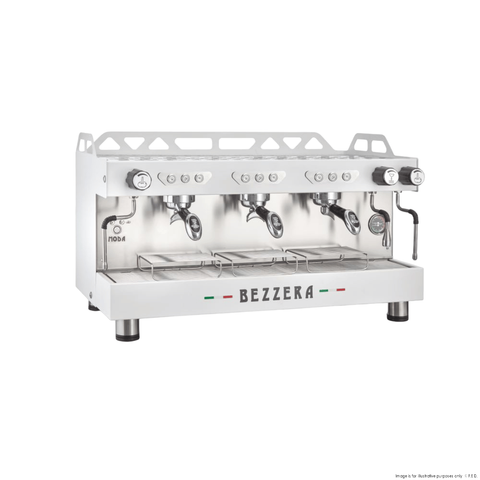
 CLEARANCE - Bezzera MODA DE 3 Group Espresso Machine White - MODADE3W-VIC1050
877(W) x 550(D) x 520(H)mm

 CLEARANCE - Bezzera VICTORIA Black 2-Group Professional Espresso Machine - BZVICTORIA2B-VIC935
170(W) x 820(D) x 680(H)mm

 CLEARANCE - Bezzera VICTORIA Black 2-Group Professional Espresso Machine - BZVICTORIA2B-VIC934
170(W) x 820(D) x 680(H)mm
 CLEARANCE - Bezzera ARCADIA Professional Espresso coffee machine SS 2 Group PID with display - ARCADIA-G2DP-NSW2022
67(W) x (D) x (H)mm
 CLEARANCE - Bezzera ARCADIA Professional Espresso coffee machine SS 2 Group PID with display - ARCADIA-G2DP-NSW2014
67(W) x (D) x (H)mm
 CLEARANCE - Commercial Timer Doserless Coffee Grinder BZBB012TM-NSW1375
25(W) x 220(D) x 400(H)mm

 CLEARANCE - Bezzera SIRIO Q Grinder BZSIRIOQ-NSW1809
22(W) x 200(D) x 390(H)mm
Refurbished commercial coffee machines come with the same group count and the same boiler capacity as new, at a price that leaves money for the grinder, which is where the coffee is really made. That is the whole case for buying reconditioned commercial coffee machines for a cafe counter. The new range is commercial coffee machines.
Machines come off showroom floors, out of demonstration venues and off supplier clearance lines. Each one is inspected, tested and verified in working condition before it is relisted for sale, and the marks on a given machine are described on its own product page.
Group count is how the range is sized — compare against 1 group coffee machines and 2 group coffee machines in the new range. For a site without a barista, commercial automatic coffee machines and bean to cup coffee machines are the alternative.
The machine is usually the biggest single thing on a counter, and Silverchef Rent-Try-Buy can fund it so the cash stays in the fit-out. Related ranges: refurbished commercial beverage equipment, espresso cups and refurbished commercial under bench fridges for the milk.
Count the coffees in the busiest hour, not the day. One group suits a small shop, a secondary counter, a wine bar or a restaurant pouring espresso after service. Two groups is the working cafe standard, because it lets a barista texture milk while a shot runs, and it suits a tight bench or trade that is steady rather than spiky. Where it stops being the right answer is a hard peak with a queue that never clears, and that is why most cafes, and nearly all hotels and function venues, go to three groups.
Boiler capacity matters alongside group count, because steam is what runs out first when a queue forms. A machine that extracts well but cannot keep up with steam will bottleneck at the milk jug. Tell us the peak-hour number and we will match it against what is in stock.
Less than people fear, provided the brand is supported. These are plumbed, pressurised machines built to be serviced, with group gaskets, shower screens, seals and solenoids all treated as consumables. A machine that has been looked after has a long life ahead of it.
The risks are scale and parts. Ask about the water where the machine last worked and whether it ran behind a filter, and ask whether parts for that exact model are still available in Australia. Then ask us what was replaced during the refurbishment rather than what was tested.
Yes. A good machine with a poor grinder makes poor coffee; a modest machine with a good, well-adjusted grinder makes good coffee. If buying refurbished frees up budget, the grinder is where it should go.
Buy the grinder new or buy it refurbished from a brand with burrs available, because burrs wear and a grinder with unobtainable burrs is a short-term machine. Budget for burr replacement as a running cost, the way you would for filters.
Water in, waste out, and power that can carry it. The machine needs a plumbed water supply through a filter, a drain for the waste tray, and usually a dedicated electrical circuit — the requirement for each unit is on its product page, and some need a 15 amp outlet with its wider earth pin.
Get the plumbing and the power into the counter joinery before the counter is built. Opening up a finished counter to add a water point is the most avoidable cost in a cafe fit-out, and it is one of the most common.
It is the difference between a machine that lasts years and one that needs a boiler. Every espresso machine heats water, and hard water leaves scale behind in the boiler and the lines. Filtration also changes how the coffee tastes, so it is a quality decision as well as a maintenance one.
Put a filter in from the first day and change the cartridge on schedule rather than when something goes wrong. Ask us what filtration suits the water where the machine is going, and factor the cartridges into the running cost.
Daily: backflush the groups with the correct detergent, scrub the shower screens, clean the steam wands inside and out, and soak baskets and the portafilters. The steam wand is the one most often neglected and the one customers taste.
Then periodically: group gaskets, shower screens and seals as they harden, plus the filter cartridge. On a refurbished machine, find out what has just been replaced so you know where you are in that cycle. Keep a small stock of gaskets, because they fail at the start of a shift.
Often yes. Silverchef Rent-Try-Buy lets you rent the machine rather than pay for it outright, which keeps cash in the fit-out and makes the payments an operating expense. For a new cafe it is the most common way the biggest single machine on the counter gets paid for.
It also means group count is not a one-shot decision. If the morning rush outgrows a two group machine, you can step up rather than run two machines side by side. Ask us which of the units in stock can be put on a rental.

We have a special page just for stock that's warehoused in Perth.
Click Here to see all WA stockWhat our customers say about us on Google, and how Google scores our store for things like shipping and returns.
Store scores from Google