


 03 9070 5784
 Help & Support
 Track My Order




Recently Viewed
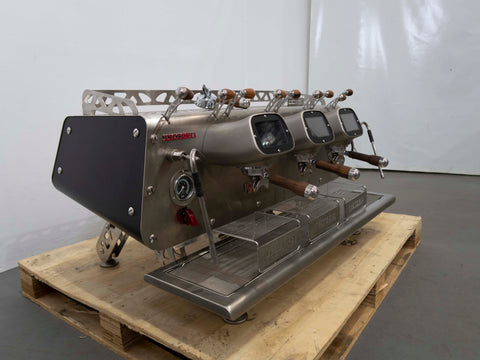

 Bezzera Victoria De Brewing Profile 3 Group Coffee Machine - 811542
1020W x 660D x 550Hmm

 Bezzera Victoria De Brewing Profile 3 Group Coffee Machine - 836457
1040W x 650D x 550Hmm


 Ascaso Barista T One 3 Group Coffee Machine - 775791
920W x 540D x 470Hmm


 Hamilton Beach HBH550-AU Fury Blender - 874719
180W x 200D x 470Hmm


 Synesso S300 3 Group Coffee Machine - 846062
980W x 590D x 410Hmm


 Wega EVD3 Coffee Machine 3 Group Coffee Machine - 830929
990W x 560D x 540Hmm

 Synesso S300 S Series 3 Group Coffee Machine - 785359
980W x 590D x 410Hmm
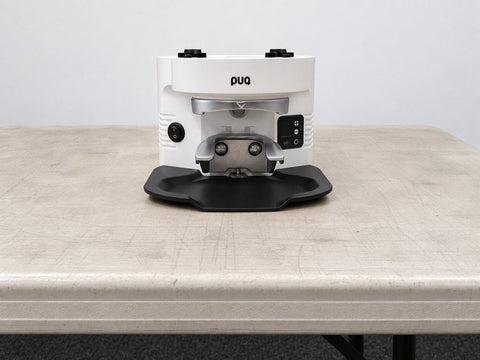

 PuqPress M3 Tamper - 887837
185W x 385D x 180Hmm


 Conti CG200 Coffee Grinder - 893519
250W x 350D x 610Hmm


 Mazzer Robur S Elect Coffee Grinder - 800228
240W x 330D x 710Hmm


 Slingshot Kilo Automatic Coffee Tamper - 838738
114W x 240D x 290Hmm

 PuqPress M3 Tamper - 880503
185W x 385D x 180Hmm
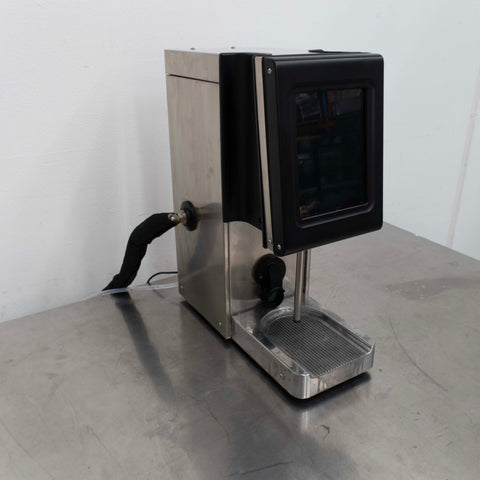

 Caffe Assist MSL./1CA Milk Steamer - 832636
180W x 400D x 480Hmm

 Slingshot S64 Coffee Grinder - 837368
208W x 435D x 630Hmm


 San Remo F18 Tall 3 Group Coffee Machine - 802467
1050W x 650D x 520Hmm


 Jura Giga X3 Coffee Machine Automatic - 799205
370W x 460D x 540Hmm

 Bezzera Victoria De Brewing Profile 3 Group Coffee Machine - 847922
1040W x 650D x 550Hmm

 Bezzera Victoria De Brewing Profile 3 Group Coffee Machine - 820623
1040W x 650D x 550Hmm


 Zummo ZIT14A-N Juicer - 880035
700W x 600D x 1710Hmm


 Zumex ZU-11847 Juicer + Zumex Z-10256 Stand - 934676
960W x 680D x 2130Hmm


 Vitamix VM0149 Blender - 821230
215W x 245D x 460Hmm

 Vitamix VM0149D Blender - 837601
220W x 270D x 460Hmm


 Yasaki CJ-50AH Citrus Juicer - 859915
185W x 325D x 400Hmm
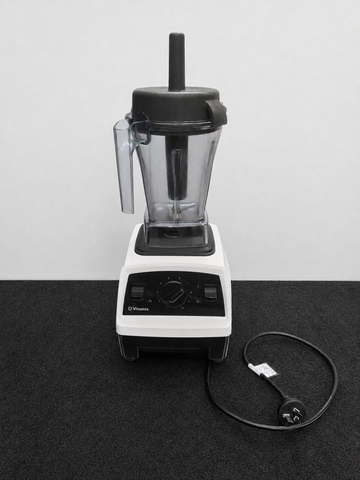
 Vitamix VM0201/E310 Blender - 796545
200W x 280D x 460Hmm


 Santos 50C Juicer - 838306
240W x 460D x 500Hmm


 Sammic XM-52 Hand Held Liquidiser / Blender 120L - 825219
110W x 110D x 870Hmm

 Santos 62 Blender - 830191
195W x 240D x 450Hmm
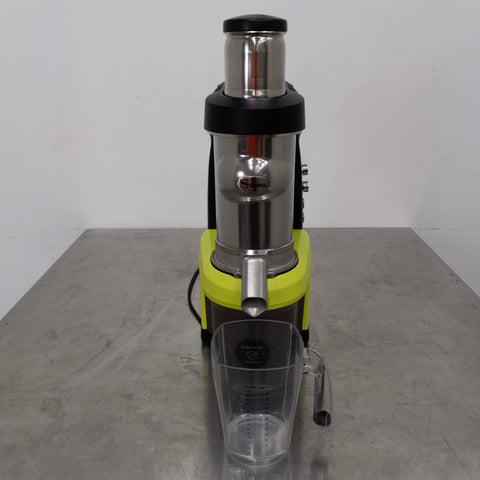
 Santos 65 Juicer - 869944
250W x 480D x 660Hmm

 Santos 34-3 Cold Drink Dispenser - 860040
570W x 430D x 550Hmm


 Robot Coupe J80 Juicer - 881592
230W x 520D x 500Hmm
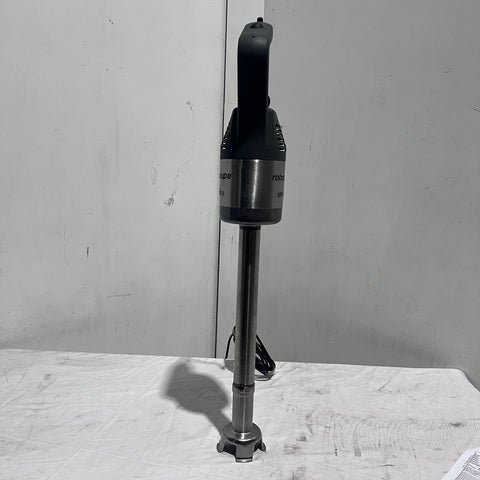
 Robot Coupe MP450 Ultra Stick Blender - 903473
125W x 125D x 840Hmm
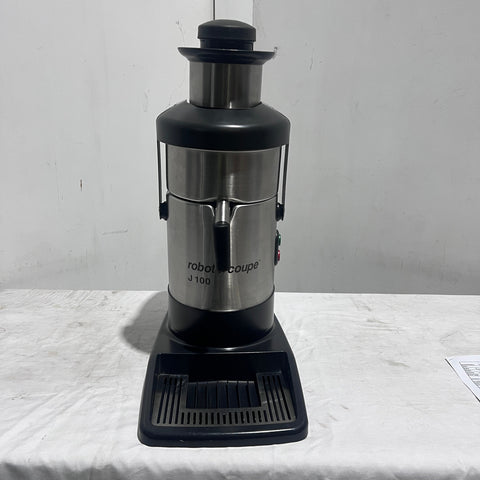
 Robot Coupe J100 Juicer - 840459
538W x 235D x 596Hmm


 Pro-Line BL-1421Q Blender with Sound Barrier - 839645
235W x 280D x 475Hmm


 Polar CF760-A-04 Drink Dispenser - 858799
210W x 440D x 670Hmm

 Robot Coupe J100 Centrifugal Juicer - 888565
260W x 540D x 620Hmm


 Nutramix NUT-3880 Commercial Blender - 876146
210W x 280D x 470Hmm
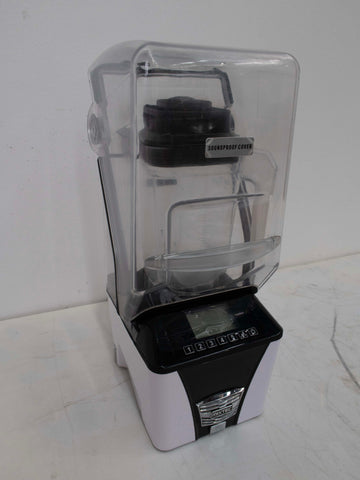

 Mixtec MS-E586Q Blender - 850180
220W x 235D x 520Hmm
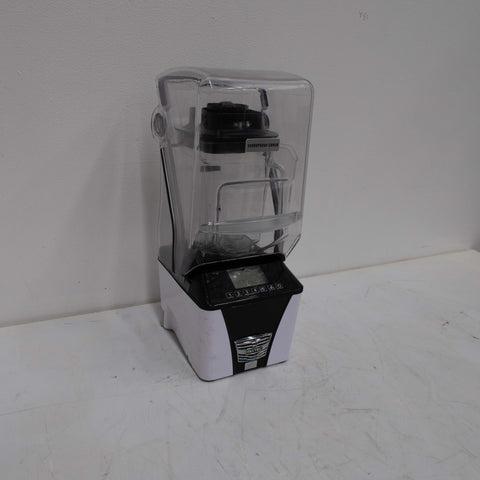
 Mixtec MS-E586Q Blender - 850179
220W x 235D x 520Hmm

 Mixtec MS-E586Q Blender - 860490
220W x 235D x 520Hmm


 Kuvings CS700 Juicer - 829496
155W x 230D x 510Hmm

 Kuvings CS700 Juicer - 829495
155W x 230D x 510Hmm

 Kuvings CB1000B Blender with Sound Barrrier - 867835
220W x 290D x 500Hmm

 Kuvings CS700 Juicer - 846475
150W x 270D x 560Hmm

 Hamilton Beach HBH755R-AU Blender - 919727
210W x 285D x 470Hmm
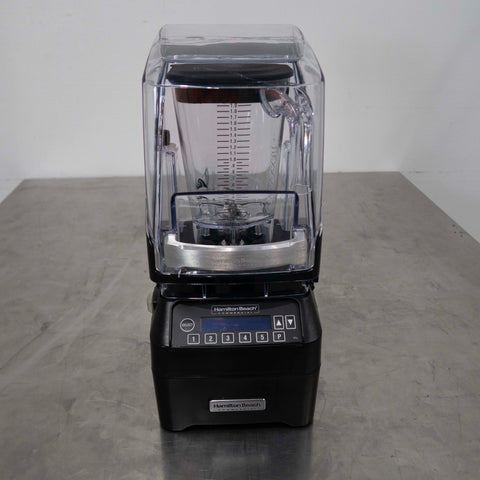
 Hamilton Beach HBH755-AU Blender With Sound Barrier - 795449
210W x 280D x 480Hmm

 Hamilton Beach HBH850-AU Blender - 864649
275W x 300D x 480Hmm
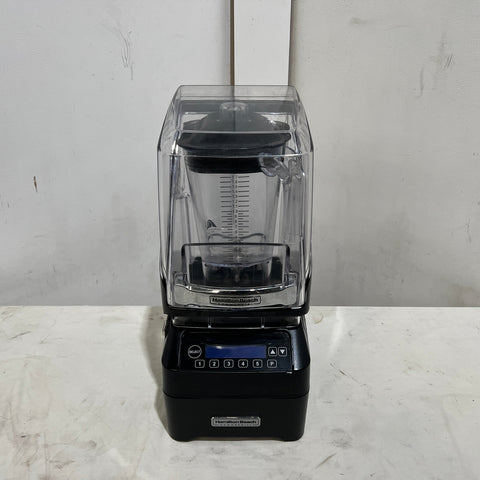
 Hamilton Beach HBH755R-AU Blender - 857028
220W x 280D x 475Hmm

 Hamilton Beach HBH550-AU Fury Blender - 874717
180W x 200D x 470Hmm

 Hamilton Beach HBH755R-AU Blender - 861498
220W x 280D x 475Hmm
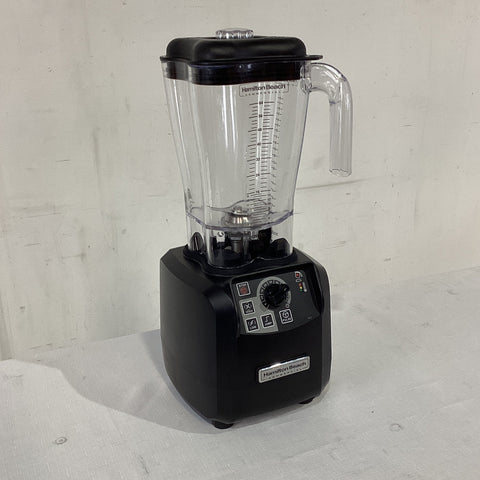
 Hamilton Beach HBH650 Blender - 898390
170W x 200D x 455Hmm

 Hamilton Beach HBH650 Blender - 865034
170W x 200D x 455Hmm
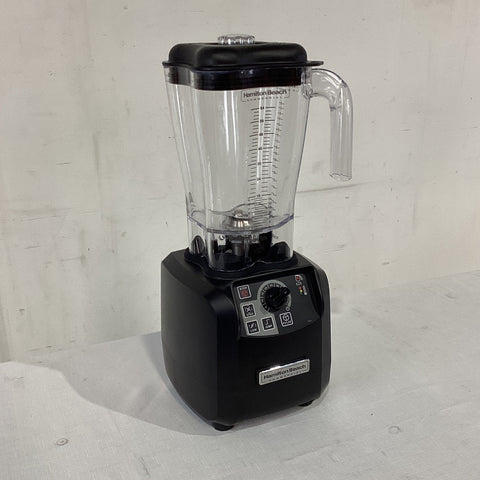
 Hamilton Beach HBH650 Blender - 898389
170W x 200D x 455Hmm
Refurbished commercial beverage equipment is everything behind a bar or a cafe counter that turns stock into a drink: espresso machines, blenders, juicers, drink dispensers, slushy machines and urns. The new range is commercial beverage equipment.
Units come off showroom floors, out of demonstration venues and off supplier clearance lines. Each machine is inspected, tested and verified in working condition before it is relisted for sale, and the marks on a given machine are described on its own product page.
The range breaks into four: refurbished commercial coffee machines for espresso and filter, refurbished commercial blenders for smoothies and cocktails, refurbished commercial juicers for citrus and cold press, and refurbished commercial drink dispensers for chilled and hot service.
Tell us what the counter has to produce in a peak hour and get a quote on what is in stock. Related ranges: refurbished commercial bar fridges for the cold side, commercial hot water urns and refurbished commercial ice machines, because almost every cold drink needs ice.
Whatever the signature drink needs, then the ice. A cafe lives and dies on the espresso machine and the grinder, so that is the first and largest line on the list. A bar lives on ice, glassware and the cold cabinet before it needs a blender.
After the hero machine, buy the thing that stops service when it fails. In practice that is the ice machine for a bar and the grinder for a cafe. Garnish tools, juicers and blenders can usually be added once the trade has told you what people actually order.
Largely yes, with one caveat: these are machines with water, pumps and seals in them, so the parts that matter are the ones you cannot see. A blender or a juicer is simple and the wear items are cheap. An espresso machine or a dispenser with a chilling circuit is a machine where service history matters.
The question to ask is the same across the category: what was replaced during the refurbishment, not what was checked, and are parts for that exact model still available in Australia. A well-supported brand is a far safer buy than an unfamiliar import at the same money.
A great deal, and it is the thing most buyers underestimate. Any machine that heats or chills water will scale up if the water is hard, and scale is what eventually ends an espresso machine, an ice machine, a dispenser and a steamer alike. Filtration is not an accessory in this category.
Find out about the water where the machine is going, and put a filter in from day one rather than after the first service call. On a used machine, ask about the water where it last worked, because a machine from a hard-water area with no filter has had a harder life than its age suggests.
Some of it, and the requirement for each unit is on its product page. Espresso machines are often the heaviest electrical load on a cafe counter and frequently need a dedicated circuit, sometimes a 15 amp outlet, which takes a wider earth pin and will not accept a standard plug until an electrician fits one.
Plumbing matters too. Plumbed-in machines need a water connection and usually a drain, and a counter built without either is an expensive thing to open up afterwards. Sort power points, water and waste into the joinery drawings before the counter is built, not after the machines arrive.
Yes, and most fit-outs do. The sensible split is to buy new where failure stops trade and parts matter most, and refurbished where the machine is simple and replaceable. A blender, a juicer and an urn are easy refurbished buys; a bar's only ice machine is where many operators prefer new.
Compare the two side by side before deciding on any given machine, since the gap varies by category. The new ranges sit at commercial coffee machines, commercial juicers and commercial bar blenders.
Work from the peak hour, not the day. A counter that serves most of its drinks in two short bursts needs capacity for the burst, and a machine sized to the daily average will fall behind every morning. Count the drinks in the busiest hour and size for that.
Then think about recovery rather than output. A machine that produces well but takes time to come back between drinks will bottleneck a queue, which is why group count matters on an espresso machine and why ice storage matters as much as ice production. Tell us the peak and we will match it against stock.
Seals, gaskets and anything that touches water. On blenders and juicers it is the blade assembly, the drive coupling and the seal under the jug. On espresso machines it is group gaskets, shower screens and the steam valve. On dispensers it is the pumps, the taps and the seals in them.
All of it is cheap and routine, provided parts for the model exist. Build a small stock of the wear parts for whatever you buy, because the one that fails will fail at the start of a shift. Ask us about parts availability for the exact model you are looking at.
Yes, and this is where used machines are either a bargain or a problem. Milk, juice and syrup residue is harder on a machine than kitchen grease is, because it gets into the parts you cannot reach and it sours. A machine that was cleaned down daily is in a different condition from one that was rinsed.
Each machine has its own routine: backflushing and group cleaning on espresso, stripping and sanitising on juicers and dispensers, and descaling on anything that heats water. Factor the chemicals and the time into the running cost. Dishwashing chemicals covers the glassware side of the same counter.

We have a special page just for stock that's warehoused in Perth.
Click Here to see all WA stockWhat our customers say about us on Google, and how Google scores our store for things like shipping and returns.
Store scores from Google