


 03 9070 5784
 Help & Support
 Track My Order




Recently Viewed


 Bromic CF0700FTSS Chest Freezer - 853232
2055W x 715D x 903Hmm


 CLEARANCE - Thermaster Two glass sliding lids chest freezer with castors - ST545-QLD236
320(W) x (D) x (H)mm
 CLEARANCE - Thermaster 396L Chest Freezer with Flat Glass Sliding Lids - WD396G-VIC1110
1234(W) x 653(D) x 868(H)mm
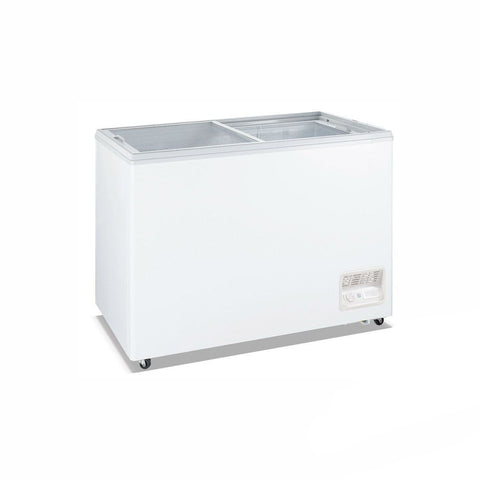
 CLEARANCE - Thermaster Heavy Duty Chest Freezer with Glass Sliding Lids - WD-520F-QLD143
255(W) x 1500(D) x 700(H)mm
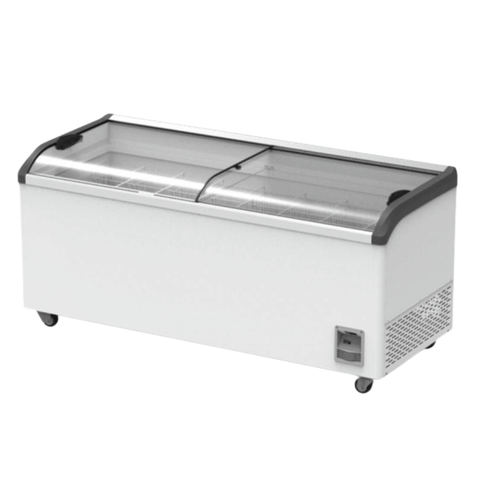
 CLEARANCE - Thermaster Heavy Duty Supermarket Glass Sliding Lid Freezers 446L - SD-666K-QLD142
382(W) x 1846(D) x 745(H)mm

 CLEARANCE - Thermaster Supermarket Island Freezer with Glass Sliding Lids - ZCD-E185G-QLD136
745(W) x 1850(D) x 850(H)mm

 CLEARANCE - Thermaster Supermarket Island Freezer with Glass Sliding Lids - ZCD-E185G-QLD137
745(W) x 1850(D) x 850(H)mm

 CLEARANCE - Thermaster Heavy Duty Supermarket Glass Sliding Lid Freezers 303L - SD-306k-QLD145
213(W) x 1006(D) x 745(H)mm


 Atosa SD-520P Flat Glass Top Chest Freezer - 871694
1530W x 680D x 850Hmm


 Liebherr EFL4656 Chest Freezer - 866667
1460W x 700D x 830Hmm

 Thermaster LG-1000BGBMF Freezer - 834086
1255W x 750D x 2005Hmm

 Federal BD598F Chest Freezer - 877177
1600W x 720D x 1030Hmm

 Thermaster LG-1000BGBMF Freezer - 862774
1255W x 750D x 2035Hmm


 Exquisite USF400H Undercounter Freezer - 823306
1795W x 700D x 830Hmm

 Thermaster WD586G Chest Freezer - 911293
1825W x 655D x 870Hmm

 Thermaster WD-200F Chest Freezer - 902952
785W x 655D x 850Hmm
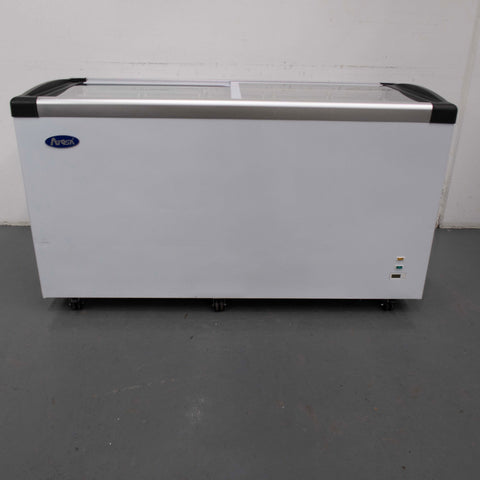
 Atosa SD-520P Flat Glass Top Chest Freezer - 902951
1535W x 680D x 875Hmm
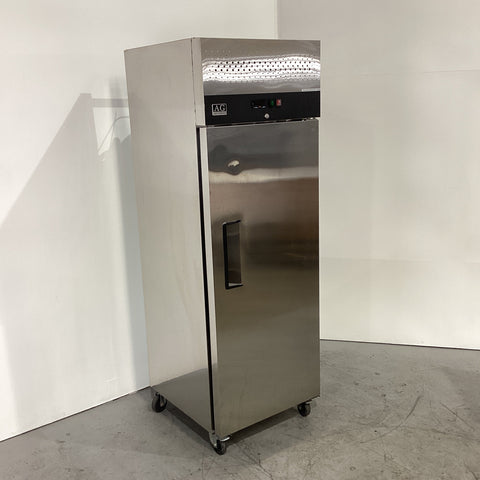

 AG Equipment GNX400BT Freezer - 907393
680W x 710D x 1990Hmm
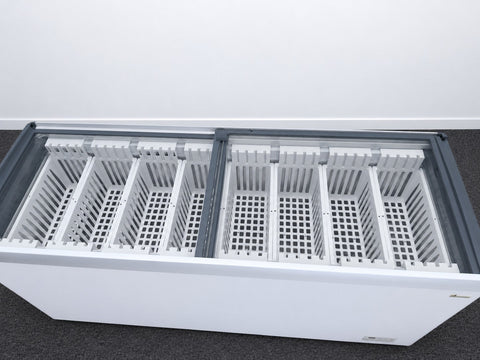
 Thermaster WD586G Chest Freezer - 911294
1825W x 655D x 870Hmm
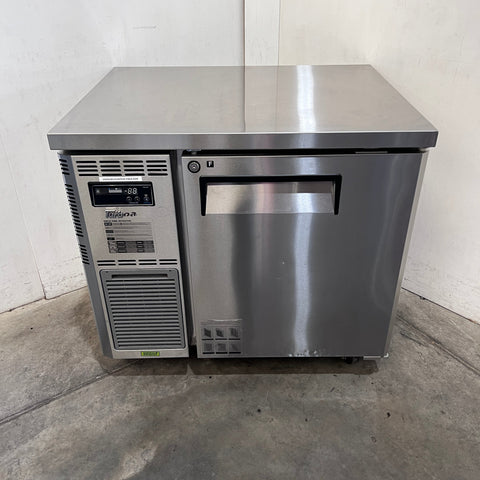

 Turbo Air KUF9-1-N Undercounter Freezer - 880488
900W x 700D x 860Hmm

 Thermaster ST445 Chest Freezer - 858072
1530W x 680D x 860Hmm

 Thermaster LG-1000BGBMF Freezer - 862772
1255W x 750D x 2005Hmm

 Bromic 3735262 NR/GD0007S-NR Chest Freezer - 916397
1310W x 630D x 1300Hmm

 Atosa SD-520P Flat Glass Top Chest Freezer - 871696
1530W x 680D x 850Hmm

 Atosa SD-520P Flat Glass Top Chest Freezer - 871693
1530W x 680D x 850Hmm

 Atosa SD-520P Flat Glass Top Chest Freezer - 871697
1530W x 680D x 850Hmm

 Atosa SD-420P Chest Freezer - 899243
1270W x 680D x 850Hmm
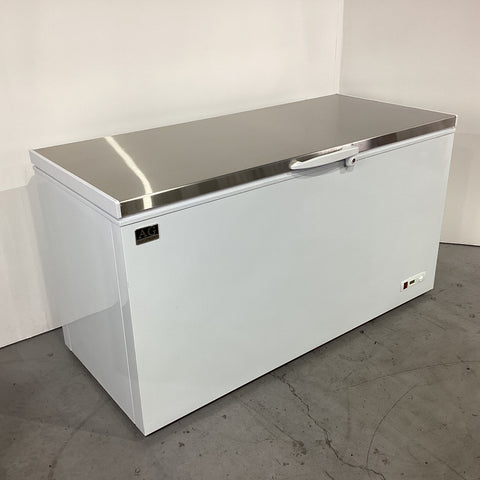
 AG Equipment BD550S Chest Freezer - 900037
1540W x 770D x 860Hmm
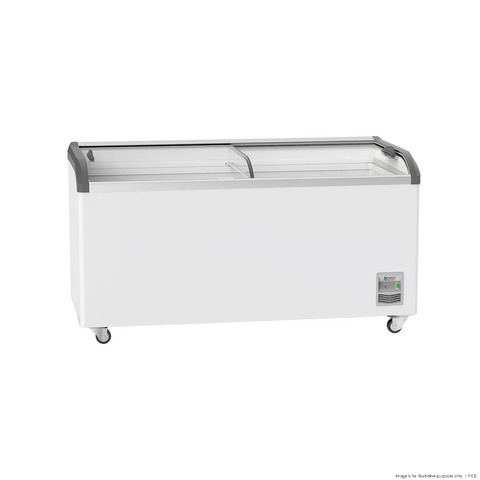
 CLEARANCE - Thermaster Heavy Duty Supermarket Glass Sliding Lid Freezers 576L - SD-576K-VIC1071
1656(W) x 475(D) x 845(H)mm
344(W) x 1656(D) x 475(H)mm

 CLEARANCE - Thermaster two glass sliding lids chest freezer with castors - ST445-NSW2169
271(W) x (D) x (H)mm

 CLEARANCE - Thermaster Two glass sliding lids chest freezer with castors - ST545-QLD237
320(W) x (D) x (H)mm
Refurbished chest freezers hold bulk frozen stock in one open box, which is the cheapest way to keep a lot of product frozen, and a reconditioned chest freezer is often the first piece a small site buys second-hand. Cold air sinks, so less of it spills out when a lid is lifted than when an upright door is opened. The trade-off is access — you have to dig for what is at the bottom — and that the litres sit across the floor rather than up a wall. The new commercial chest freezers range shows the same shapes brand new.
Stock here comes off showroom floors, out of demonstration kitchens and off supplier clearance lines, and each unit is inspected, tested and verified in working condition before it is relisted for sale. Marks from transit or from the site it worked in are described on the product page for that unit.
If floor space is the constraint rather than price, a refurbished upright freezer holds the same volume against a wall, and a refurbished under bench freezer fits into a kitchen line. For a site holding real volume, freezer rooms become the cheaper answer per litre.
Chest freezers are awkward to move and fussy about where they stand, so if you are not sure the spot will work, request a callback and we will check the measurements with you before you order. The wider range is refurbished commercial freezers.
A chest freezer wins on cost per litre and on holding temperature through a power interruption, because the cold air stays in the box when the lid is lifted. It loses on access: the stock at the bottom is the stock you forget about, and rotating product properly in a deep box takes discipline and baskets.
An upright freezer wins on finding things, since everything is on a shelf at eye level, and on where it can go, because it stacks its litres up a wall rather than out across the floor. If the frozen product is one or two lines bought in bulk, take the chest. If it is a dozen lines picked from through a service, take the upright. Plenty of kitchens end up with one of each.
Somewhere with air around it and a floor that can take the weight loaded. The condenser on most chest freezers is in the wall of the cabinet or behind a grille at one end, so a box shoved into an alcove on three sides has nowhere to put its heat. The product page states the clearance the maker asks for.
Avoid the back of a hot kitchen, direct sun through a window, and anywhere the lid cannot open fully — a lid that fouls a shelf above makes the freezer unusable at the far end. A store room or a cool back area is ideal. If the unit is going outside a conditioned space, check the product page states it is rated for that; not all are.
Lift the lid and let it go halfway. On a counterbalanced lid it should hold there rather than slamming, and a lid that drops is a tired spring or hinge. Then run a hand along the seal all the way round and look for a flattened or torn section, usually at the front corners where people lean.
Check the lid sits down evenly with no gap at one end, because a twisted box or a dropped hinge will frost up along that gap continuously. Ask us what was replaced rather than checked on the unit you are looking at, and get a photo of the seal if you are buying unseen.
Many do. Plenty of chest freezers are static-cooled with no automatic defrost cycle, so frost builds on the inside walls and has to be cleared manually on a schedule. The product page says whether a unit defrosts itself, and it is worth checking, because manual defrosting means planning where the stock goes while it happens.
Frost is not just housekeeping. A layer of ice on the walls insulates the cabinet from its own refrigeration, so the unit runs longer for the same result. Keep the lid shut, load product already frozen rather than fresh, and clear frost before it gets thick rather than after.
Only if it was built as one. A plain chest freezer is a storage box with a solid lid — a customer cannot see into it and leaning over it is not a pleasant way to shop. Units built for display have glass or curved glass lids, interior lighting and a layout that suits browsing, and they are a different product: display freezers and ice cream displays are where to look.
If the frozen product is being sold to a customer rather than stored for a kitchen, buy the display unit and keep the chest freezer out the back for the back-up stock. Trying to make a storage box do a retail job usually costs more in lost sales than the right cabinet costs.
Plan the path, because these are wide, heavy and have nothing useful to grip. Measure the narrowest point on the route and remember that a chest freezer cannot be turned on its side to get round a corner without consequences. Doorways, a step at the entry and a lift car are the usual problems.
Keep the unit upright in transit where you can, and if it has travelled on a lean, stand it level and leave it a few hours before switching it on so the compressor oil can drain back. Then run it empty with the lid shut for a day before you load it, and load product already frozen rather than fresh.

We have a special page just for stock that's warehoused in Perth.
Click Here to see all WA stockWhat our customers say about us on Google, and how Google scores our store for things like shipping and returns.
Store scores from Google