


 03 9070 5784
 Help & Support
 Track My Order




Recently Viewed
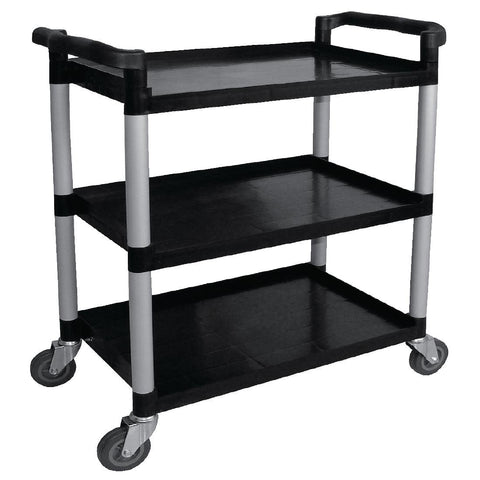

 Vogue Polypropylene Mobile Trolley Large - CF102
520(W) x 960(H) x 1070(D)mm
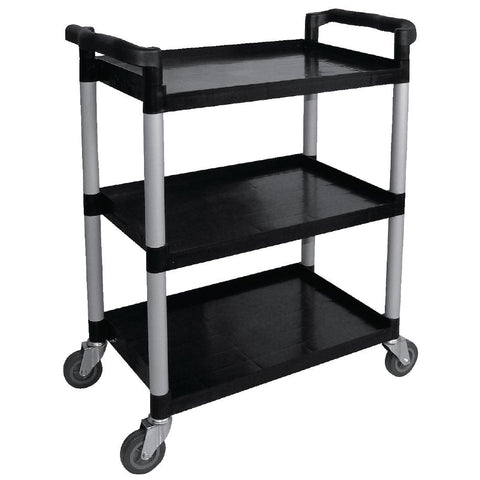
 Vogue Polypropylene Mobile Trolley Small - CF101
415(W) x 960(H) x 830(D)mm

 Food Tek Utility Trolley Only JD-UC340-1
1280(W) x 500(D) x 960(H)mm
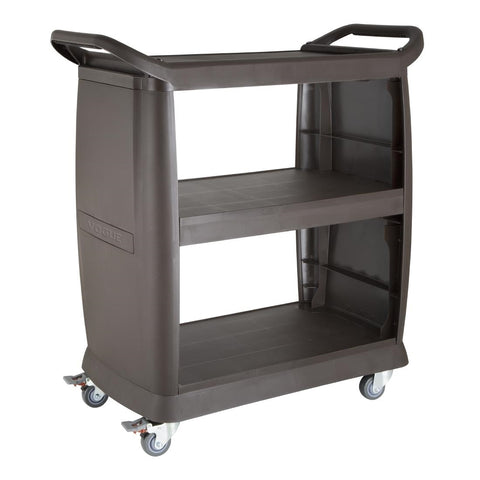
 Vogue Polypropylene Mobile Trolley - DN585
980(W) x 1050(H) x 500(D)mm
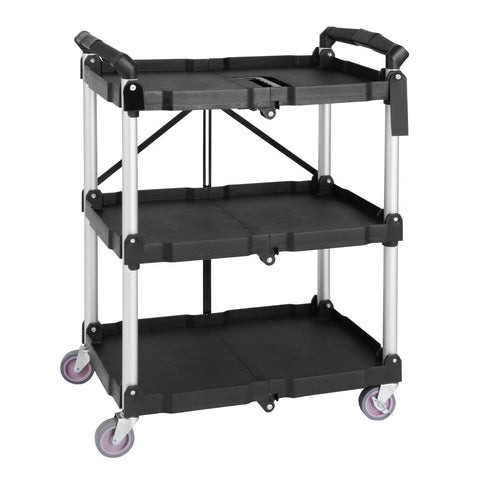
 Vogue 3 Tier PP Folding Trolley Black Small - CK113
645(W) x 835(H) x 405(D)mm
 Food Tek Cuttery Bin To Suit Trolley JD-UC340-CB
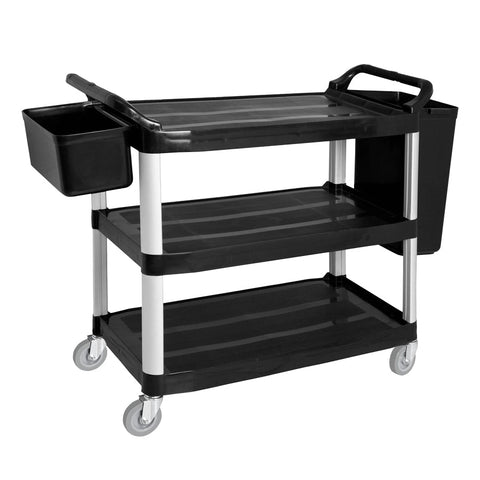
 Food Tek Complete Utility Trolley JD-UC340
1280(W) x 500(D) x 960(H)mm
 Food Tek Bin To Suit Trolley JD-UC340-B

 Carlisle Grey Large Bin Top Utility Cart 1143mm x 685mm x 838mm - UC452523
 Carlisle Black Light Duty Utility Tilt Truck 204kg Capacity 1370mm x 660mm x 965mm - TTLD58003
 Carlisle Black Standard Duty Utility Tilt Truck 385kg Capacity 1727mm x 825mm x 1086mm - TTS58003
 Carlisle Black Service Cart on Castors 854mm x 515mm x 870mm - SBC23003
 Carlisle Black Large Fold ‘N Go® Cart. Unfolded: 520mm x 1016mm x 1099mm Folded: 267mm x 1016mm - SBC203103
 Carlisle Grey Flat Top Utility Cart 1026mm x 483mm x 830mm - UC194023
 Carlisle Black Small Fold ‘N Go® Cart. Unfolded 406mm x 749mm x 908mm Folded: 229mm x 749mm - SBC152103
 Carlisle Cateraide™ Black Dolly with Handle 730mm x 570mm x 994mm - XDL3000H03
570(W) x 730(D) x 994(H)mm
Plastic catering trolleys move drinks and service items around the front of a venue: function rooms, housekeeping corridors and beverage service, where the trolley is working in front of guests rather than beside a cooking line. A plastic catering trolley is lighter to push, much quieter over hard floors, and it will not dent a doorframe or scratch a skirting board when someone clips the corner.
It also cannot corrode. In a wet environment with no heat involved — a bar, a housekeeping run, a beverage service — that makes it a longer-lived item than a budget steel trolley with a coated finish.
The stainless alternative is stainless steel catering trolleys, and both sit under catering trolleys in the wider commercial kitchen trolleys range.
Buying trolleys for several floors or service areas? get a quote and we will price them as one order.
Where there is no direct heat, where noise matters, and where the trolley works around guests, furniture and painted walls. Front of house, function rooms, housekeeping corridors and beverage service are the usual places.
Where the trolley carries hot pans, sits beside a cooking line or faces a high-pressure washdown, stainless is the answer instead. See stainless steel catering trolleys for that end of the range.
Only within the temperature the material is rated for, which is stated on the product page and is the figure to work to. A hot pan straight out of an oven is not what these are built for.
For hot food on the move, use equipment designed for it: a bain marie trolley holds food at temperature, and a holding cabinet does it statically.
Washed down with a neutral detergent and dried, and they tolerate that better than most things in a venue because there is no finish to lift and nothing to corrode. Shelves on many models lift out, which makes the job quicker.
Check whether the shelves are rated for a dishwasher before putting them through one, because repeated high-temperature cycles can distort some plastics. The cleaning supplies range covers the detergents.
Not necessarily, but the figure varies more between models than it does with stainless, so the rating on the product page matters. The shelf material and the frame design both play a part.
What does change is how the load behaves. A lighter trolley with a heavy load high up is easier to tip, so keep the weight on the bottom shelf. Our specifications page explains how the ratings are listed.
Many plastic trolleys ship knocked down, which is one of their advantages: a flat carton is cheaper to freight and easier to get through a doorway than an assembled trolley.
Assembly is usually a tool-free job of clipping shelves to uprights. The instructions for your model are on the product documents page if you need them again later.
They are one of the standard choices for it, because they are quiet in a corridor at night, they do not mark lift walls, and they can be wiped down between rooms.
Look for shelf lips, which stop items sliding off when the trolley goes over a threshold, and for castors large enough to cross a carpet-to-tile transition. See cleaning trolleys for the housekeeping-specific versions.
Whether they have a raised lip, whether they are removable, and how far apart they sit. A trolley with fixed, flat shelves at the wrong pitch for your trays will annoy staff every time it is loaded.
Measure the tallest item you intend to carry. If the load is trays rather than loose items, a racking trolley designed for tray pitch is a better fit than a shelf trolley.

We have a special page just for stock that's warehoused in Perth.
Click Here to see all WA stockWhat our customers say about us on Google, and how Google scores our store for things like shipping and returns.
Store scores from Google