


 03 9070 5784
 Help & Support
 Track My Order




Recently Viewed
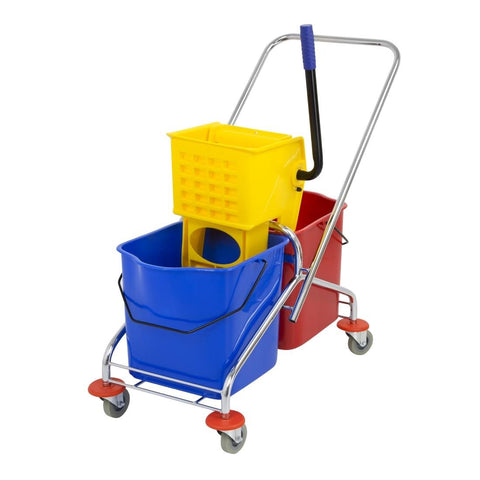

 Jantex Dual Bucket Mop Wringer with Frame - M880
410(W) x 860(H) x 995(D)mm
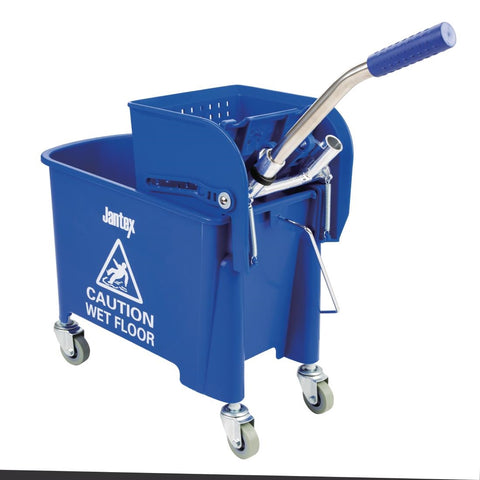
 Jantex Kentucky Mop Bucket Blue - DL913
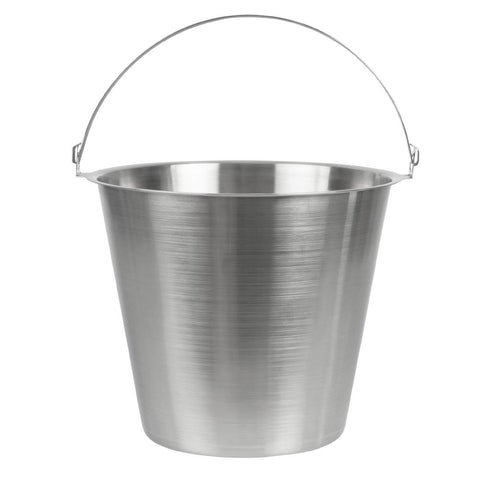
 Jantex Stainless Steel Bucket - J807

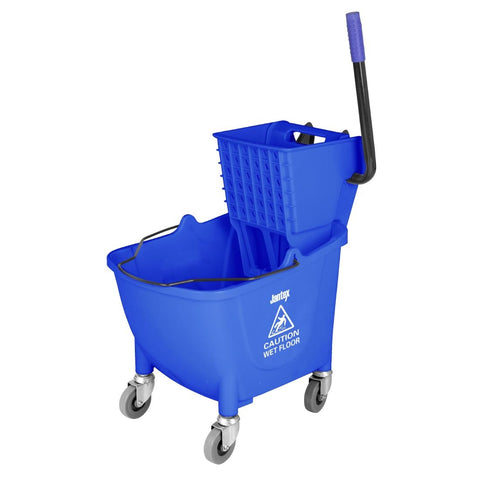
 Jantex 30ltr Mop Bucket with Foot Pedal release - Blue - FW869
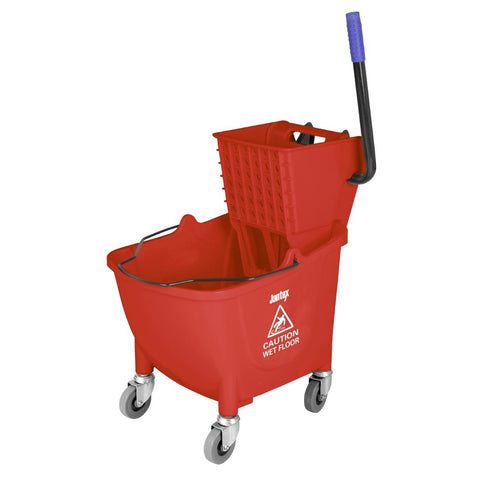
 Jantex 30ltr Mop Bucket with Foot Pedal release - Red - FW868
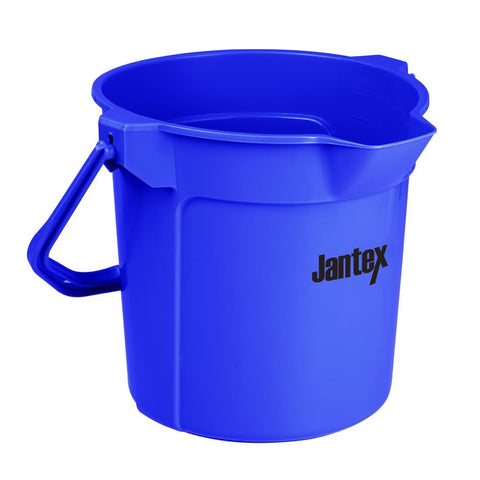
 Jantex Blue Graduated Bucket with Pouring Lip 10ltr - FU835

 Jantex 30ltr Mop Bucket with Foot Pedal release - Green - FW867
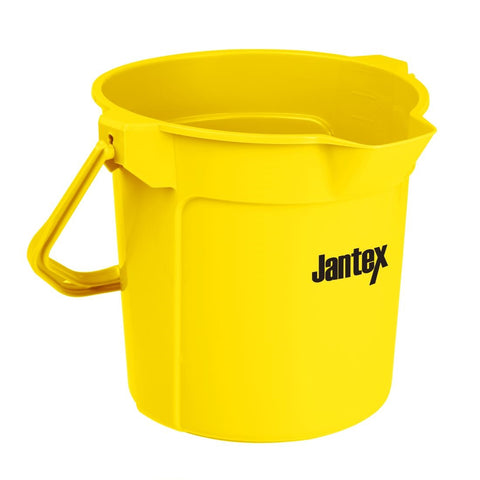
 Jantex Yellow Graduated Bucket with Pouring Lip 10ltr - FU834
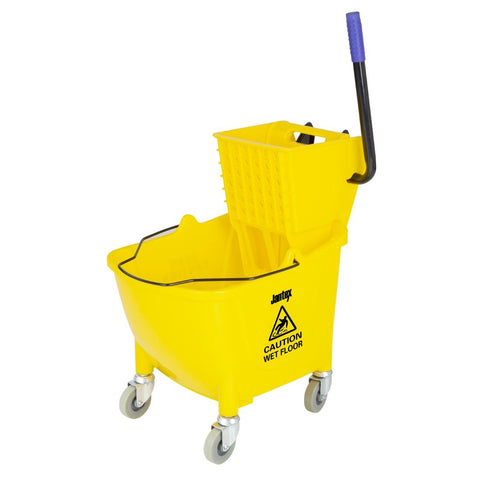
 Jantex 30ltr Mop Bucket with Foot Pedal release - Yellow - FW866
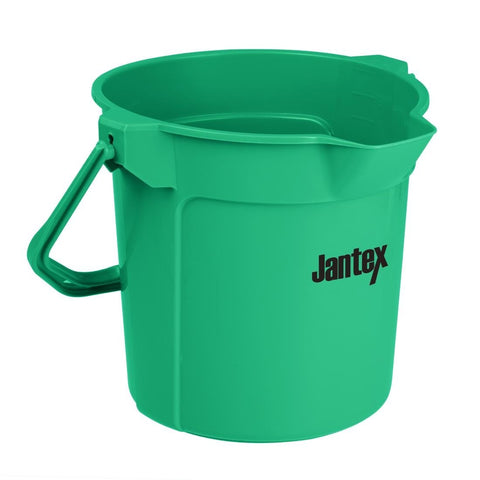
 Jantex Green Graduated Bucket with Pouring Lip 10ltr - FU833
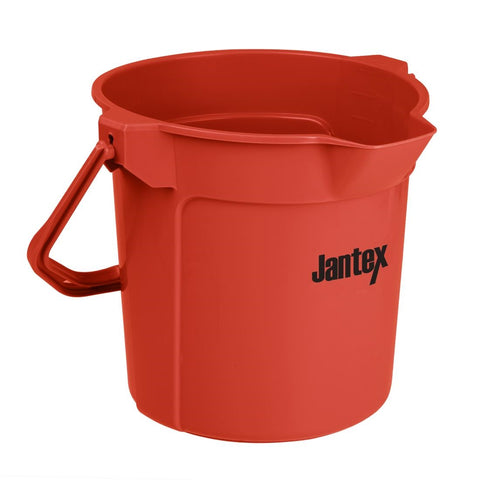
 Jantex Red Graduated Bucket with Pouring Lip 10ltr - FU832
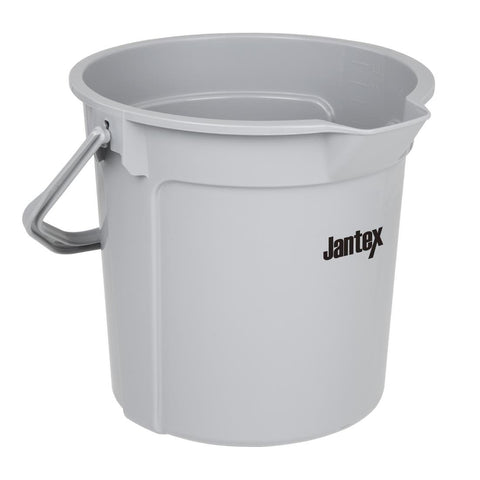
 Jantex Grey Graduated Bucket with Pouring Lip 14ltr - FU589
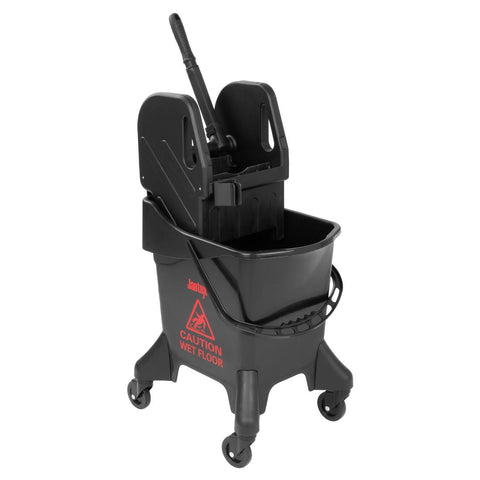
 Jantex 21Ltr Tall Mop Bucket and Wringer - Red Print - HW636
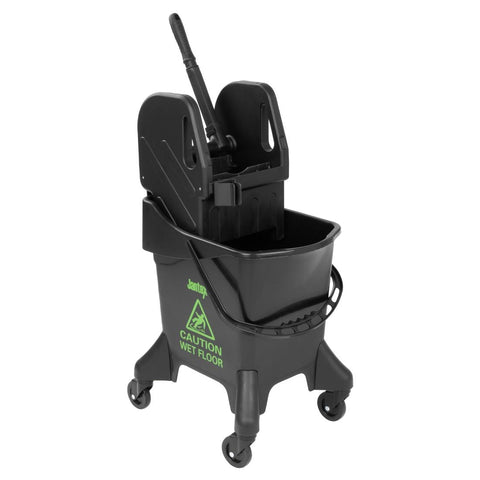
 Jantex 21Ltr Tall Mop Bucket and Wringer - Green Print - HW637

 Jantex 21Ltr Tall Mop Bucket and Wringer - Blue Print - HW639
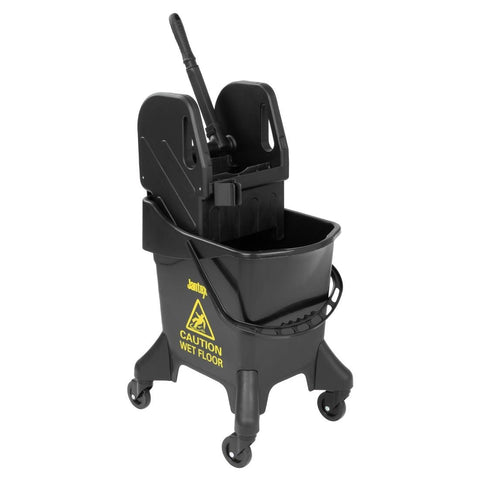
 Jantex 21Ltr Tall Mop Bucket and Wringer - Yellow Print - HW638
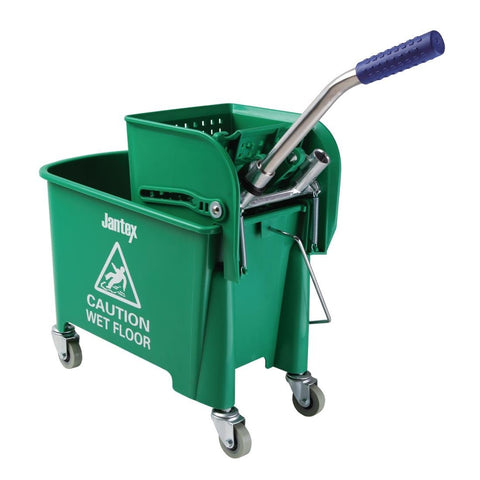
 Jantex Kentucky Mop Bucket Green - GK689

 Jantex Kentucky Mop Bucket Yellow - F951
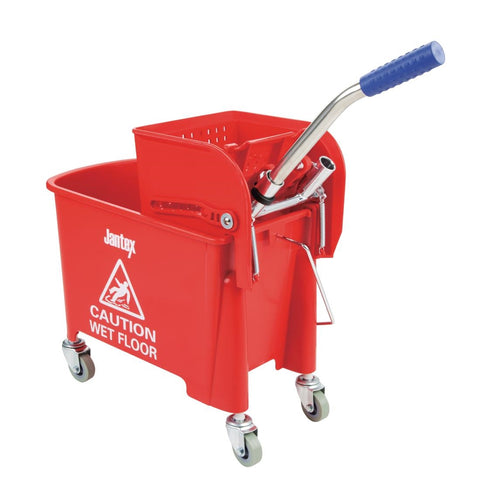
 Jantex Kentucky Mop Bucket Red - DL912
A mop bucket with wringer squeezes the head dry, which is what decides whether a kitchen floor is damp for five minutes or slippery for half an hour.
A commercial mop bucket is usually a wheeled unit with a side-press or down-press wringer. Side-press is easier on the wrist and the common choice; down-press gets more water out. Either beats wringing a mop by hand into a mop sink.
Twin-bucket units keep clean detergent separate from dirty water, which is the single biggest improvement available in floor cleaning. A wringer bucket with one chamber recycles the dirt you just picked up back onto the floor.
Working out how many buckets a site needs, and in what capacities? The price guide lists the twin and single units alongside their wringer types.
In any kitchen with a greasy floor, yes. One side holds clean detergent, the other takes what comes out of the wringer, so the mop goes back down with detergent rather than with the last pass's grease.
Single buckets are fine for front of house and dry areas. The difference shows up most where surface and floor cleaners are fighting fat.
Side-press is lighter to operate and more forgiving of a rushed staff member, so it stays in service longer. Down-press extracts more water, which matters on a large floor that has to be walked on quickly.
Both wear out at the wringer before the bucket. Check whether a replacement wringer is available for the model before buying.
Only insofar as a full large bucket is too heavy to move and gets half-filled anyway. Match the capacity to the floor area and to whoever has to push it.
Capacities vary by model and are listed on the product page. If the bucket has to go through a doorway or up a step, check the footprint there too — the specifications page covers how we list dimensions.
Because a bucket is pushed across a wet floor with grit on it, and cheap castors seize. A seized castor means the bucket gets dragged, which spills and damages the floor.
Look for castors that can be replaced. The same logic applies to cleaning trolleys and kitchen trolleys.
No. Colour-code them and keep them apart — the washroom bucket should never touch a food preparation floor. The washroom and toilet cleaner range is kept separate for the same reason.
Two cheap buckets cost less than one cross-contamination incident. Match them with separate mops and brushes too.
Emptied, rinsed and upside down or tipped so it dries, with the mop head out of the bucket and hung. A mop left standing in dirty water overnight is the smell people blame on the drains.
Store it in the cleaning area with the commercial kitchen cleaning supplies rather than in the kitchen.
Some buckets are built for flat-mop pads and some for string heads, and the wringer is what differs. A string wringer will not press a flat pad properly.
Decide the mop system first, then buy the bucket that matches it. Mixing the two is where a kitchen ends up wringing by hand.

We have a special page just for stock that's warehoused in Perth.
Click Here to see all WA stockWhat our customers say about us on Google, and how Google scores our store for things like shipping and returns.
Store scores from Google