


 03 9070 5784
 Help & Support
 Track My Order



Recently Viewed


 Hallde Grater/Shredder 8 mm RB-HA83426 - HA83426
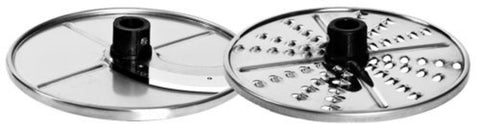
 Hallde Soft Slicer 8 mm RB-HA83375 - HA83375
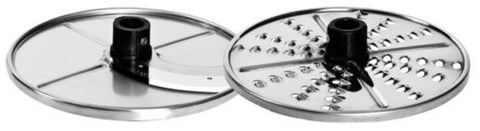
 Hallde Soft Slicer 10 mm RB-HA83364 - HA83364
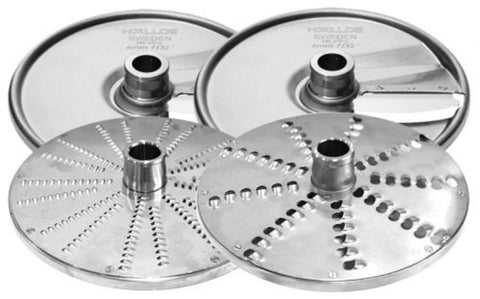
 Hallde Grater/Shredder 4.5 mm RB-HA83424 - HA83424

 Hallde Dicing Grid 20x20 mm Extra Low - HA83299

 Hallde Fine Cut Slicer 15 mm RB-HA83373 - HA83373
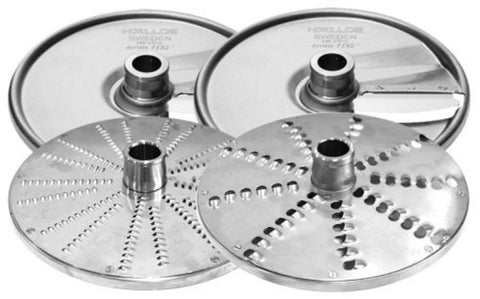
 Hallde Grater/Shredder 2 mm RB-HA83422 - HA83422
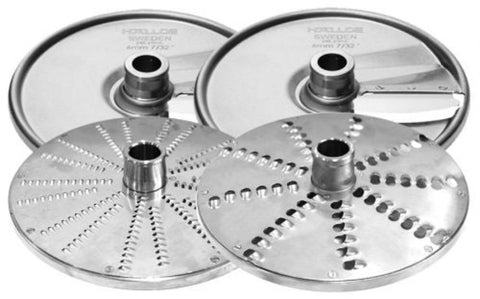
 Hallde Dicing Grid 15x15 mm Low RB-HA83296 - HA83296

 Hallde Soft Slicer 15 mm RB-HA83383 - HA83383

 Hallde Soft Slicer 12 mm RB-HA83385 - HA83385
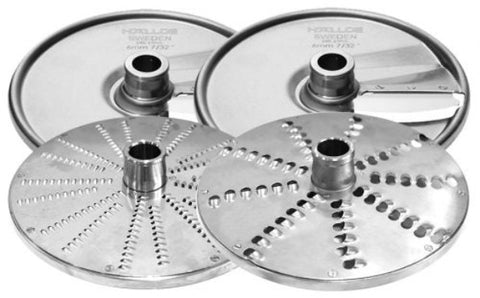
 Hallde Dicing Grid 15x15 mm RB-HA83295 - HA83295

 Hallde Dicing Grid 20x20 mm RB-HA83297 - HA83297
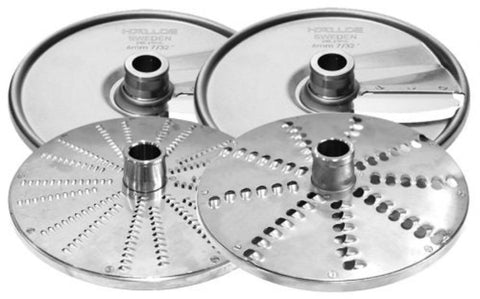
 Hallde Dicing Grid 20x20 mm Low RB-HA83298 - HA83298

 Hallde Dicing Grid 12x12 mm Low RB-HA83294 - HA83294

 Hallde Dicing Grid 12x12 mm RB-HA83293 - HA83293

 Hallde Fine Grater RB-HA83215 - HA83215
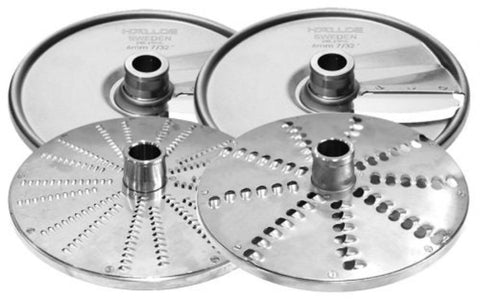
 Hallde Dicing Grid 6x6 mm RB-HA83290 - HA83290
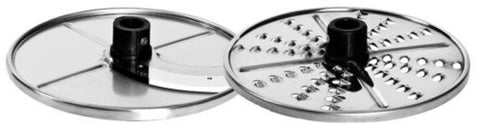
 Hallde Grater/Shredder 3 mm RB-HA83212 - HA83212
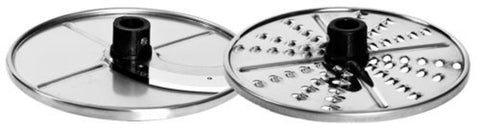
 Hallde Grater/Shredder 10 mm RB-HA83272 - HA83272
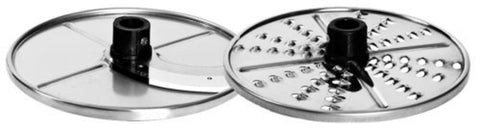
 Hallde Fine grater, extra fine RB-HA83284 - HA83284

 Hallde Hard cheese grater RB-HA83249 - HA83249
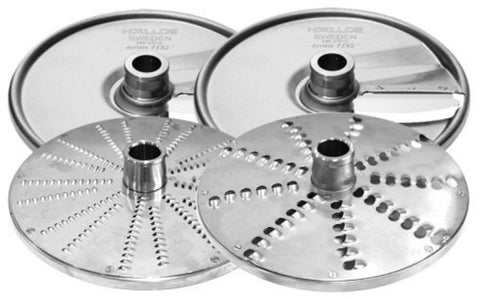
 Hallde Soft Slicer 12 mm RB-HA82557 - HA82557
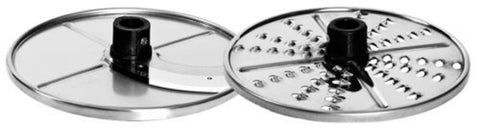
 Hallde Grater/Shredder 2 mm RB-HA83211 - HA83211

 Hallde Soft Slicer 8 mm RB-HA82532 - HA82532
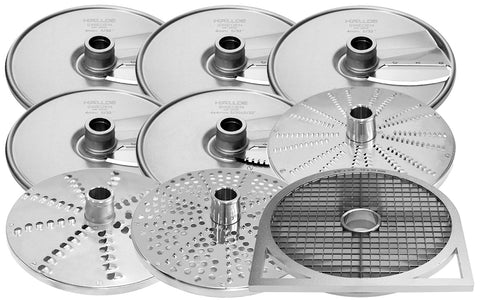
 Hallde High Capacity Crimping Slicer 2 mm - HA65060
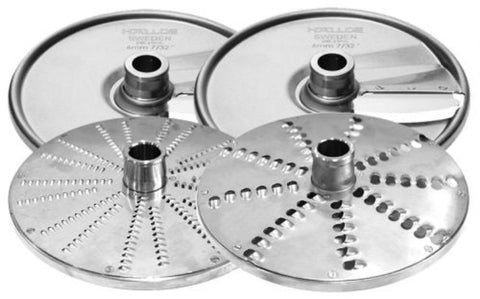
 Hallde Soft Slicer 10 mm RB-HA82510 - HA82510

 Hallde Grater/Shredder 8 mm RB-HA83214 - HA83214

 Hallde Grater/Shredder 1.5 mm RB-HA83210 - HA83210

 Hallde Standard Slicer 20 mm - HA82395
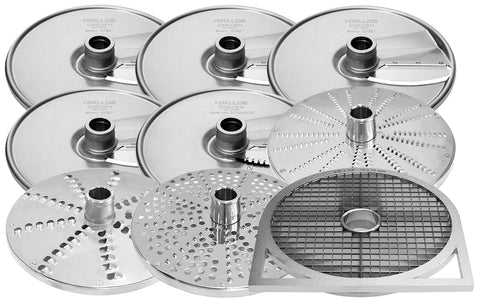
 Hallde High Capacity Julienne Cutter 2.5 x 2.5 mm - HA65049
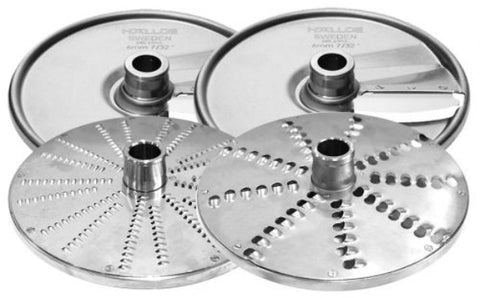
 Hallde Fine Cut Slicer 15 mm RB-HA82519 - HA82519
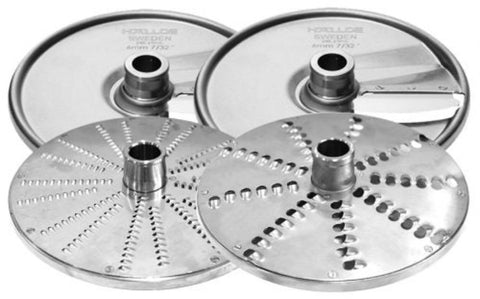
 Hallde Soft Slicer 15 mm RB-HA82554 - HA82554
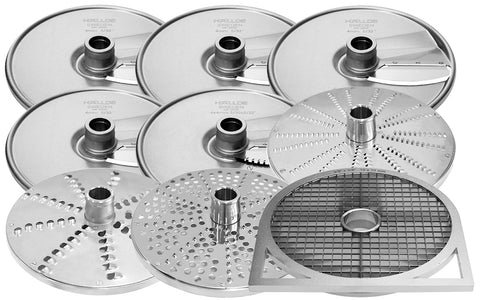
 Hallde High Capacity Crimping Slicer 3 mm - HA65063
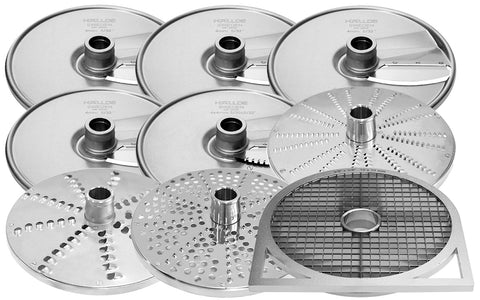
 Hallde High Capacity Slicer 8 mm - HA65043
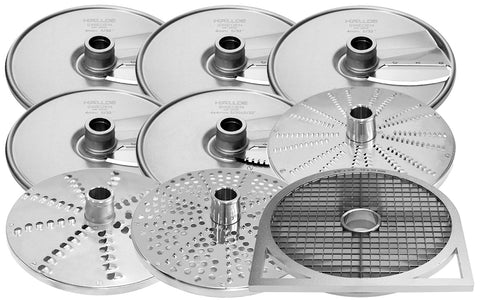
 Hallde High Capacity Slicer 10 mm - HA65044
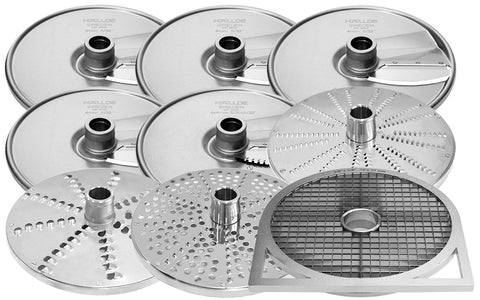
 Hallde High Capacity Slicer 20 mm - HA65024
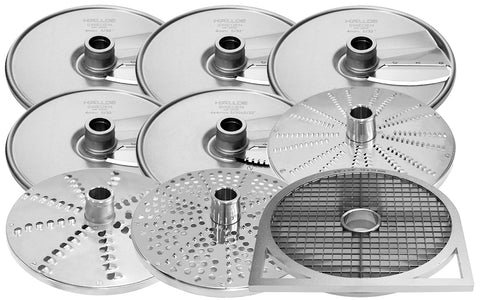
 Hallde High Capacity Crimping Slicer 6 mm - HA65062

 Hallde High Capacity Slicer 6 mm - HA65042

 Hallde High Capacity Crimping Slicer 4 mm - HA65061
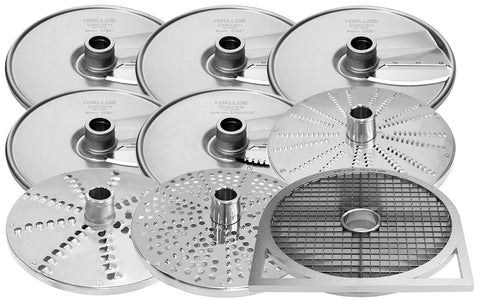
 Hallde High Capacity Slicer 4 mm - HA65041
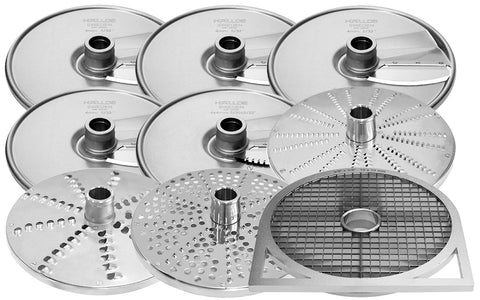
 Hallde High Capacity Slicer 15 mm - HA65021

 Hallde High Capacity Julienne Cutter 6x6 mm - HA65007
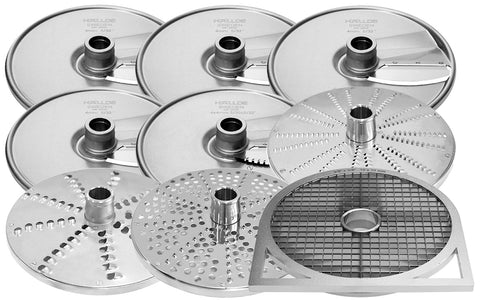
 Hallde High Capacity Slicer 3 mm - HA65045

 Hallde High Capacity Slicer 2 mm - HA65040
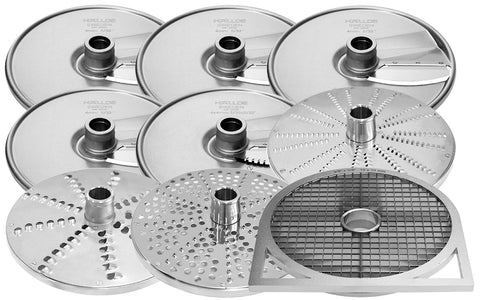
 Hallde High Capacity Julienne Cutter 2x2 mm - HA65000
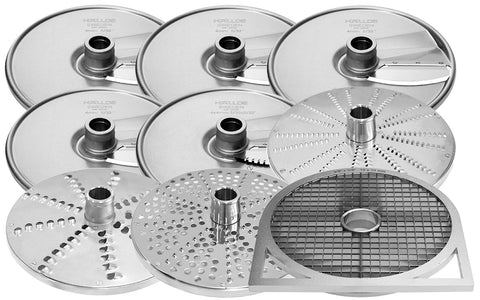
 Hallde High Capacity Julienne Cutter 10x10 mm - HA65015

 Hallde High Capacity Slicer 12 mm - HA65018
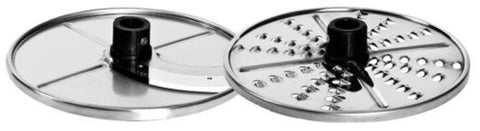
 Hallde Crimping Slicer 2 mm RB-HA63362 - HA63362
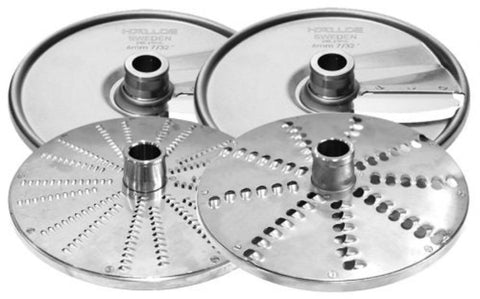
 Hallde Crimping Slicer 5 mm RB-HA63355 - HA63355
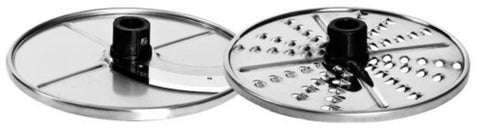
 Hallde Crimping Slicer 5 mm RB-HA63365 - HA63365
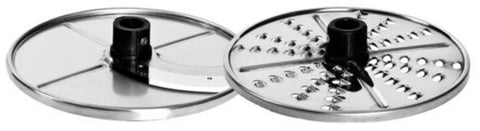
 Hallde Julienne Cutter 3x3 mm RB-HA63350 - HA63350
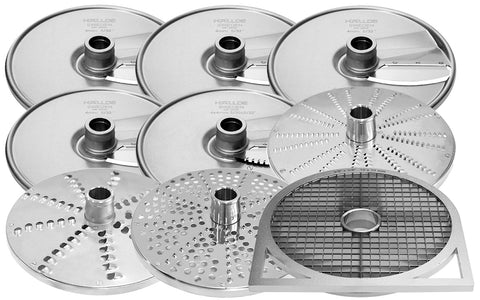
 Hallde High Capacity Julienne Cutter 8x8 mm - HA65010
We recommend always purchasing the same brand of blades and discs as the machine, to guarantee compatibility. A 4mm slicer made for a Hallde won't drop into a Dito Sama, and a Dynamic plate won't fit a Yasaki, because the diameter, the centre boss and the way the disc locks onto the drive shaft are all different between brands.
They're often different between models from the same brand too, and Dito Sama list some of their grating discs in more than one diameter. Get the make and model off the data plate on your machine, and if you already own a disc, get the part number off the plate itself. Send those two things through and we'll confirm what fits.
Once the fit is settled it comes down to what you want the food to look like. A slicing disc gives you rounds, and the number in the name is the thickness in millimetres. A grating or shredding disc tears the product into strands.
A julienne disc cuts matchsticks and carries two numbers, like 4x4mm or 5x2mm, for the width and the depth of the cut. Dicing takes two parts working together, a slicing disc on top and a matched dicing grid underneath. There are also chip and french fry grids, wavy blades for garnish, and soft slicers made for tomatoes.
We recommend always purchasing the same brand of blades and discs as the machine, to guarantee compatibility. Go by make and model, never by size alone. Two brands both selling a 4mm slicer are selling two different parts, and what fits yours is decided by the plate diameter, the shape of the centre drive boss and the depth of the housing it sits in. A disc that's close but not right will either not seat at all or will foul the housing and get chewed up.
The quickest way to get it right is to read the model number off the data plate on the machine, then turn over any disc you already have and read the part number stamped on it. A photo of the underside of the disc tells us most of what we need. Ring or email those through before you order and we'll confirm the match, which takes a minute and saves a return.
No. Dicing takes two parts. A slicing disc sits on top and cuts the product into sheets, and a dicing grid sits underneath and cuts those sheets into sticks and then cubes as they're pushed through. The two have to be a matched pair, which is why grids are often listed as working with one particular slicer.
So a 10x10mm dice means a 10mm slicer with a 10x10mm grid. Some brands list grids in a standard and a low version for different machines, and those aren't the same part, so order the one your machine calls for. Chip and french fry grids work the same way and give you a stick instead of a cube.
For slicing, 1mm to 2mm is the salad range: cucumber, radish, red onion, anything going raw on a plate, and crisps. Three to 5mm suits potato bake, roasting veg and onion for the grill. Eight millimetres and up is chunky roast veg, thick chips and stir fry, and the coarsest slicers go past 10mm for things like whole potatoes for wedges.
For grating, 2mm to 4mm is cheese, carrot and beetroot, and 6mm to 9mm gives the coarse strands you want for rosti or a slaw with some bite. Julienne is the same idea in two directions: 2 to 4mm for garnish and salad, 8 to 10mm for stir fry and crudites. If you're not sure, buy the thinner one first, because a thin cut is more useful in more dishes.
Usually the blade is blunt. A sharp edge parts the skin and a dull one pushes it, and tomato shows that up before anything else does. The same thing shows as ragged edges on cucumber and a puddle of juice in the pan underneath where there shouldn't be one.
Soft product also wants a soft slicer, which uses a different blade geometry to get through skin without crushing what's behind it, and running the machine a bit slower helps as well. If tomatoes and mozzarella are a daily job, keep a soft slicer for them and stop using the general purpose disc on soft product, which is what blunts it in the first place.
On most veg cutter discs the blade is riveted or bolted into the plate at a set angle, and grinding it changes that angle, so they're replaced. A few ranges sell the blade as a separate part from the plate, and where that's the case it's the cheaper repair.
The cut goes ragged, there's more liquid in the pan, the machine sounds louder and yield drops because more of the product is being torn to waste. Our prices on discs are sharp and a disc is one of the least expensive parts you'll buy for that machine, so replace a tired one well before it stops cutting altogether.
Where a brand offers the same cut in more than one material, stainless is what to buy for a machine that runs every day. It holds its edge longest, it doesn't stain from beetroot or onion, and it stands up to being washed several times a day for years.
Aluminium and polycarbonate plates are lighter, which makes a real difference if the disc is being changed six or eight times through a morning prep, and they're easier on the hands of whoever is doing it. They're a sensible choice for a cut you only do occasionally. What they don't like is being dropped or stacked under something heavy, since a bent plate rubs the housing and won't sit true.
Three or four covers most kitchens. A thin slicer around 2mm for salad, a mid slicer around 4 to 5mm for cooking veg, a grater for cheese and carrot, and then either a julienne disc or a dicing set depending on whether your menu actually dices anything.
Then double up on whichever one gets used every single day. Discs need washing between products, and while your only 2mm slicer is in the sink the prep bench stops. A second one of the size you lean on keeps that from happening, and it gives you cover for the day someone drops one.
Wash them straight after use, before starch, onion juice and beetroot dry on. Use a brush, not a cloth: a cloth wraps over the blade edge and that's how people cut themselves badly. Dry them properly, because water left sitting on a blade will pit even good stainless.
Most of the damage happens in storage. Loose in a drawer, plates knock together, blades chip and someone reaches in blind. A wall rack or an accessories trolley keeps them flat, separated and where you can see what you're grabbing. It also stops the plates bending, and a bent disc rubs the housing and cuts unevenly for the rest of its life.
Hallde offers slicers from 1mm up, fine cut and soft slicers, graters and shredders, julienne cutters, dicing grids from 6x6mm to 25x25mm in standard and low versions, and potato chip grids, plus the feed cylinders, hoppers, push feeders and racks that go with them. Dito Sama discs are made for their own machines including the Prep4You line, covering grating, shredding, slicing and wavy slicing plates along with dicing and chip grids.
Dynamic's CL discs run from 0.5mm slicing up to 13mm, with julienne from 3x2mm to 10x10mm and dicing sets. ICE offer slicing, julienne, shredding, cubing grids and a parmesan disc, and Yasaki offer slicing in metal, aluminium and poly, plus shredding graters, julienne, french fry and dicing sets. The machines themselves are on veg processors.

We have a special page just for stock that's warehoused in Perth.
Click Here to see all WA stock