


 03 9070 5784
 Help & Support
 Track My Order




Recently Viewed
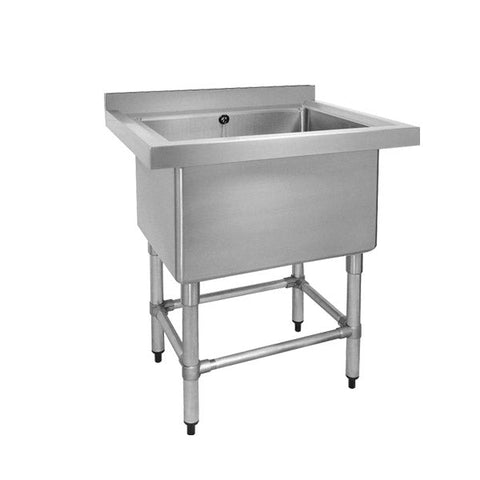

 Modular Systems Stainless Steel Single Deep Pot Sink 770-6-SSB
770(W) x 600(D) x 900(H)mm
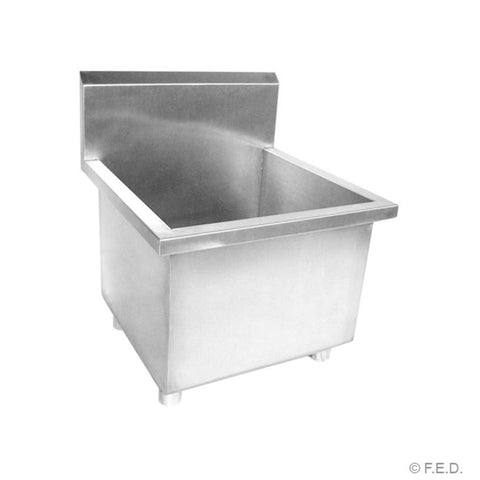
 Modular Systems Single Mop Sink SMS-H
520(W) x 515(D) x 800(H)mm
 Modular Systems Stainless Steel Double Deep Pot Sink 1410-6-DSB
1410(W) x 600(D) x 900(H)mm
Commercial stainless steel pot sinks solve a problem a standard sink cannot: washing the biggest items in the kitchen. Stockpots, bratt pan inserts, baking trays and full gastronorm pans do not fit in a general bowl, and trying to wash them in one puts water on the floor and strain on the person doing it.
A pot sink is therefore deeper and usually wider, with the bowl sized around the pot rather than the plate. The trade-off is that a deeper bowl means reaching further down, which is why bench height and a decent landing area on either side matter as much as the bowl itself.
It belongs in the pot wash corner rather than on the service line. See commercial stainless steel sinks for the full range and commercial kitchen sinks for the general-purpose versions.
A pot wash corner goes in as part of the fit-out rather than as a single purchase, so Silverchef Rent-Try-Buy can fund the sinks and the benching together, with the option to upgrade or hand equipment back as things change.
Depth, mostly, and then width. The bowl is built around the largest vessels in the kitchen, so a stockpot can be stood in it and filled rather than balanced on the rim of something shallower.
That changes the ergonomics as well. The dimensions are on the product page, and our specifications page explains the format. If what you need is a general wash sink, the commercial kitchen sinks range is the right one.
Often two: one to wash in and one to rinse in, because a pot cannot easily be lifted out, emptied and put back. One deep bowl with a landing bench alongside works where volume is low.
Where the volume is high, consider taking the load off people entirely. Commercial pot washers are built for exactly this, and they change the staffing of a busy kitchen more than any other machine.
For volume, yes, but almost no kitchen gets away without a pot sink as well. Items too large for a machine, items that need soaking, and the pre-scrape all still happen at a sink.
Most kitchens run both: a pot washer or a passthrough dishwasher for the throughput and a deep sink next to it for everything else.
A spray arm over the bowl makes a real difference to how long each pot takes, because the first job is always getting the bulk of the residue off. The tapware is specified separately from the sink in most cases.
Water temperature and backflow protection are both plumbing decisions for your licensed plumber. Our appliance installation page explains what we can arrange with the order.
Onto a drainer and then onto shelving, and the mistake is not allowing enough of either. Wet stockpots stacked on a bench take up more room than people expect and they stay wet if they are nested.
A bay of modular shelving next to the sink, or a racking trolley that can be wheeled away, both work. An undershelf under the sink itself holds the items waiting to be washed.
Deliberately, because this is the wettest corner of the kitchen. Water comes over the rim of a deep bowl no matter how careful the person is, so the area wants a floor waste and a non-slip surface.
That is a build decision rather than an equipment one, and it belongs in the fit-out drawings. Our fit-out and project management page covers how we work with that.
304 stainless steel is the food-safety grade used in Australian commercial kitchens, and it is what a pot sink should be. It takes hot water, detergent and daily scrubbing without pitting.
Clean along the grain with a neutral detergent and do not leave steel wool or chlorine cleaners sitting in the bowl. The rest of the stainless steel equipment range is maintained the same way.

We have a special page just for stock that's warehoused in Perth.
Click Here to see all WA stockWhat our customers say about us on Google, and how Google scores our store for things like shipping and returns.
Store scores from Google