


 03 9070 5784
 Help & Support
 Track My Order




Recently Viewed
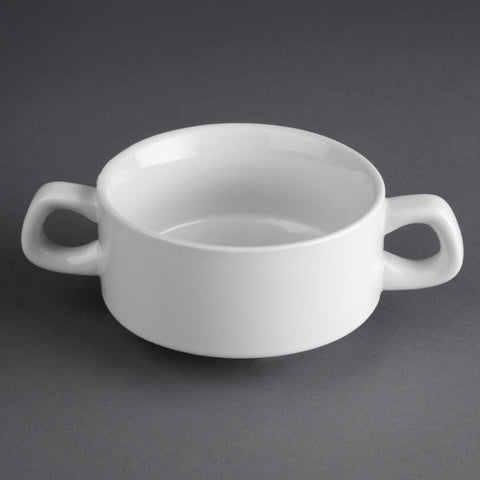

 Bulk Buy Olympia Athena Stacking Soup Bowls (24 Pack) - S758
107(W) x 57(H) x 107(D)mm
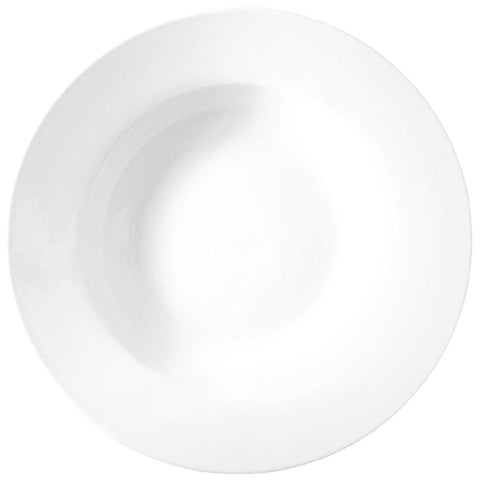
 Special Offer Olympia Athena Rimmed Soup Bowls (24 Pack) - S774
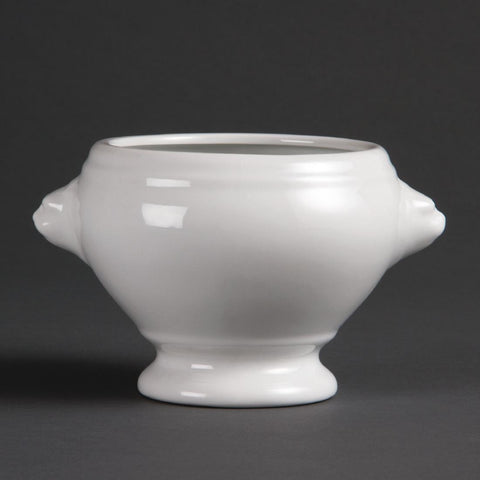
 Olympia Whiteware Lion Head Soup Bowls 475ml/16.5oz (6 Pack) - W442

 Olympia Large Enamel Soup Mug 670ml - DC398
146(W) x 100(H) x 110(D)mm
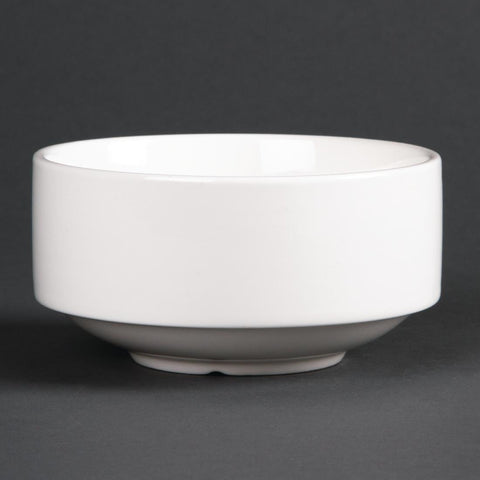
 Olympia Lumina Stacking Soup Bowls White 398ml 14oz (6 Pack) - CF379

 Olympia Lumina Pasta or Soup Bowls White 205mm (6 Pack) - CD635
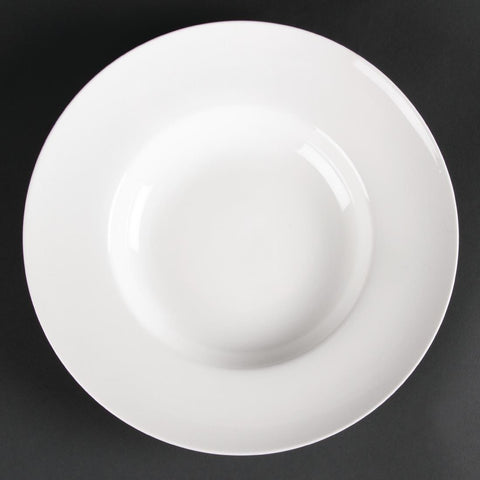
 Olympia Lumina Pasta or Soup Bowls White 254mm (4 Pack) - CD636
A soup bowl carries a hot portion from the pass to the table, and its shape sets how much goes out and how long it stays hot. A wide, shallow bowl shows off garnish and cools quickly; a deep, narrow one holds heat and suits broth-heavy dishes. A rim gives staff somewhere to hold; a lugged or handled bowl lets it go to table hot without a cloth.
Commercial soup bowls include small bowls for a cup of consomme up to large ones for a ramen or pho menu, so you can match the bowl to the dish and add sizes as the menu changes.
Soup bowls sit in the crockery range beside dinnerware bowls and dinnerware plates, and they are served with soup spoons and ladles and from bain maries.
Working out how many of each size a soup menu needs? The price guide prices the bowls beside the ladles that portion into them.
Work backwards from the portion, not the look. Fill your intended ladle count into a sample bowl and see where the level sits: a bowl filled to the rim cannot be carried, and one filled a third of the way looks mean.
Aim for the level to sit comfortably below the rim with the garnish on. Match your ladles to the bowl so a portion is a fixed number of ladles rather than a judgement.
Porcelain is the usual choice for table service: it is dense, holds heat and takes a clean glaze. Stoneware is heavier and gives a more rustic look. Melamine does not break, which is why it dominates function catering and outdoor service.
Melamine does not hold heat the way ceramic does, and it cannot go in an oven or a microwave. For hot soup in a dining room, ceramic is the better tool.
For any thin soup, yes. A cold bowl pulls the temperature out of broth before it reaches the table, and it is the most common reason a customer says soup arrived lukewarm when it left the pass hot.
Hold them on a heated shelf or in a holding cabinet rather than running them under a hot tap. Thick soups are more forgiving.
Round bowls with a plain foot usually nest reasonably; wide-rimmed and lugged bowls do not, and a handled bowl takes up roughly double the shelf space. That is a real constraint in a small pass.
Count how many you need in service, not in total, and store the rest away from the line. Modular shelving with adjustable spacing handles mixed bowl heights better than fixed racks.
They are made to be washed in a commercial machine hundreds of times and to survive stacking, which usually means a denser body, a tougher glaze and a rolled or reinforced edge. Retail crockery is made to look good on a table once.
The visible difference is at the rim, where most chips start. Buying commercial costs more up front and less per year once you count breakage.
Stop stacking hot, stop stacking too high, and use the right rack in the dishwasher. Most crockery is broken in the wash-up and the plate stack rather than in service.
A proper rack from the dishwashing accessories range stops bowls knocking, and a commercial dishwasher with the right rack is gentler than hand washing in a crowded sink.
It depends entirely on the item, and plain ceramic with no metallic decoration is usually safer than decorated or melamine. Anything with a metallic band or lustre should never go in a microwave.
Take it from the product page specifications for the specific bowl rather than assuming. For reheating at volume, a commercial microwave oven and a dedicated reheating vessel is the better workflow.

We have a special page just for stock that's warehoused in Perth.
Click Here to see all WA stockWhat our customers say about us on Google, and how Google scores our store for things like shipping and returns.
Store scores from Google