


 03 9070 5784
 Help & Support
 Track My Order




Recently Viewed


 Vogue Clear 3 Nozzle Squeeze Bottle 1Ltr - CW726
77(W) x 275(H) x 77(D)mm
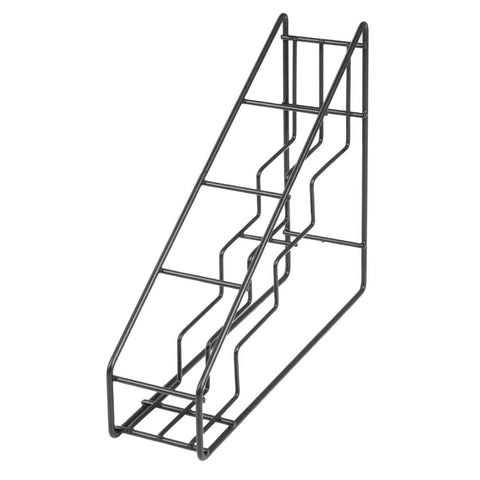

 Olympia Syrup Bottle Stand Black Wire 400x105x320mm - HY987

 Vogue Clear Rotation Squeeze Bottle 570ml - CP068
70(W) x 210(H) x 70(D)mm

 Vogue Yellow Squeeze Sauce Bottle 994ml - W834
76(W) x 288(H) x 76(D)mm

 Vogue Red Squeeze Sauce Bottle 994ml - W833
76(W) x 288(H) x 76(D)mm
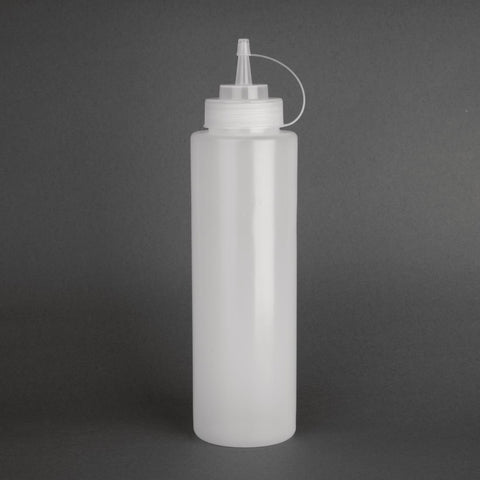
 Vogue Clear Squeeze Sauce Bottle 994ml - W832
76(W) x 288(H) x 76(D)mm

 Vogue Clear Squeeze Sauce Bottle 340ml - K657
58(W) x 200(H) x 58(D)mm

 Vogue Red Squeeze Sauce Bottle 340ml - K093
58(W) x 200(H) x 58(D)mm

 Vogue Clear Squeeze Sauce Bottle 681ml - K163
67(W) x 262(H) x 67(D)mm

 Vogue Clear Squeeze Sauce Bottle 227ml - K062
48(W) x 185(H) x 48(D)mm
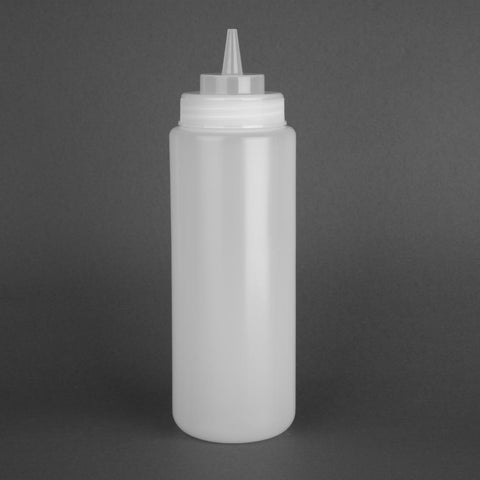
 Vogue Clear Wide Neck Squeeze Sauce Bottle 910ml - E093
80(W) x 265(H) x 80(D)mm

 Vogue Clear Wide Neck Squeeze Sauce Bottle 454ml - E092
67(W) x 200(H) x 67(D)mm
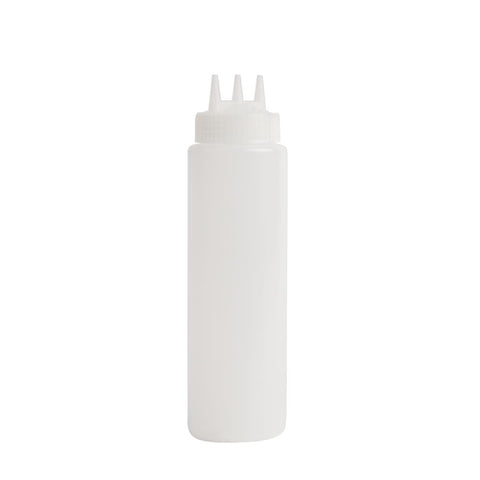
 Vogue Clear 3 Nozzle Squeeze Bottle 681ml - CW725
66(W) x 244(H) x 66(D)mm

 Vogue Clear Rotation Squeeze Bottle 455ml - CP069
60(W) x 210(H) x 60(D)mm
A squeeze bottle turns a sauce into a portioned ingredient. Instead of a spoon and a guess, you get the same line on every plate, and the cost of sauce per cover stops being a mystery.
Sauce bottles and dressing dispensers are chosen on the nozzle more than the body. A fine tip for a drizzle or a decorative line, a wide tip for a thick sauce or a mayonnaise, and a cap with a valve where you want portion control rather than a free pour. Commercial dressing dispensers for a service counter usually have a pump or a measured pour instead.
The body matters for heat and for cleaning. A bottle with a wide mouth can actually be washed; one with a narrow neck cannot. Keep them with the cruets and condiment sets on the table and the gastronorm containers they are filled from.
Working out how many bottles and which tips a line needs? Ask for the price guide and order the bodies and the spare tips in the same go.
A fine tip for anything thin enough to run: jus, oil, a thin glaze. A wide tip for mayonnaise, aioli and anything with body. A thick sauce through a fine tip means squeezing hard and then a blow-out.
Buy a couple of tip sizes and keep the spares, because the tip is what gets lost. See commercial sauce warmers and dispensers for hot sauce held at the pass.
That depends on the plastic and its stated temperature rating, which is on the product page rather than being general to squeeze bottles. Standard bottles are for cold and ambient use.
For hot sauce held through a service, use a warmer rather than a bottle. See commercial sauce warmers and dispensers and hot bain marie displays.
Strain the sauce before it goes in, and use a tip wide enough for what is in it. Most clogs are a solid particle in a sauce that was never passed through a sieve.
A conical strainer before filling fixes it almost completely. Keep a pin or a brush at the station for the tip itself.
Yes, both. A row of identical white bottles is a food safety problem and a consistency problem, because nobody knows which is older.
Label the body, not the cap, since caps get swapped. See kitchen food labels for the dissolvable and removable options.
Apart. Cap, tip and body separately, with a bottle brush through the neck, because a rinsed bottle keeps a film of old sauce at the shoulder.
Most go through a commercial dishwasher disassembled and in a rack; the product page states it. See dishwashing accessories for the brushes.
Clear, almost always, because you can see the level and the condition of what is in it. Coloured bodies are for light-sensitive oils and for colour-coding by station.
If you colour-code, keep it consistent with the rest of the kitchen's system — the same logic as colour-coded chopping boards.
One per sauce in service, plus a full spare set so a bottle can be swapped out and washed properly rather than topped up. Topping up is how a bottle never gets cleaned.
They are cheap enough to double up. For bulk decanting, see commercial mixing bowls and preserving jars.

We have a special page just for stock that's warehoused in Perth.
Click Here to see all WA stockWhat our customers say about us on Google, and how Google scores our store for things like shipping and returns.
Store scores from Google