


 03 9070 5784
 Help & Support
 Track My Order




Recently Viewed
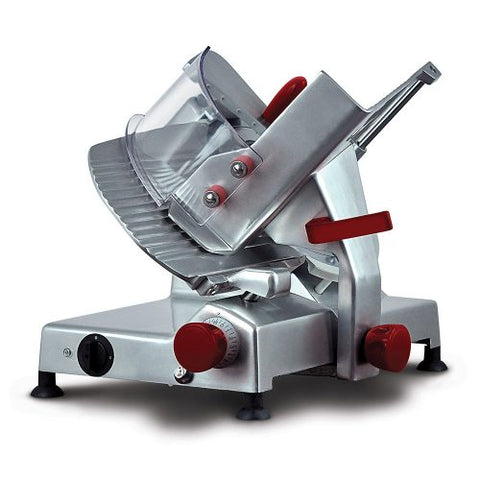

 Roband Noaw Manual Gravity Feed Slicers - Heavy Duty, 250mm blade - NS250HD
630(W) X 440(D) X 460(H)mm

 Apuro Meat Slicer 300mm - CD279-A
500(W) x 585(H) x 437(D)mm
 Apuro Meat Slicer 220mm - CD277-A
445(W) x 457(H) x 445(D)mm
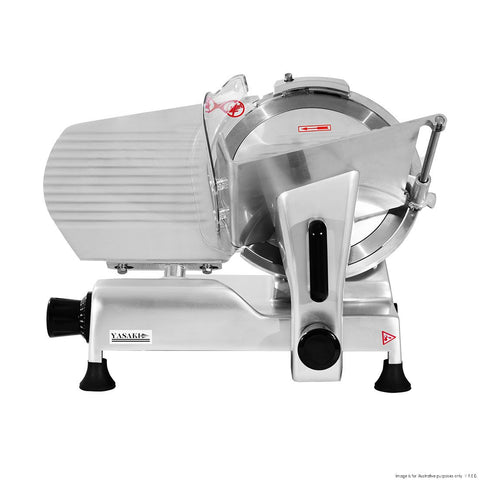

 VC Jacks Professional Deli Slicer HBS-300
565(W) x 295(D) x 565(H)mm
 VC Meat Slicer For Non-Frozen Meat HBS-300C
748(W) x 686(D) x 678(H)mm

 Hobart Semi Automatic Heavy-Duty Safety Slicer - HS9
664(W) x 692(H) x 562(D)mm
 Hobart Medium Duty Manual Slicer - EDGE
680(W) x 570(H) x 600(D)mm

 Roband Noaw Fully Automatic Slicer - Heavy Duty with Speedy Blade Remover system - NS350HDX
1030(W) X 890(D) X 850(H)mm
Deli counters, butchers, grocers, food trucks and restaurants all want the same thing from a commercial meat slicer: the same slice every time, so the weight in every sandwich or pack matches. The range runs from small manual machines up to automatic models that feed the meat through on their own. Blades come in 200mm, 250mm and 300mm, and thickness settings run from about 1mm for prosciutto up to 10mm for roast meats. Delivered anywhere in Australia.
A commercial slicer cuts ham, salami, prosciutto or roast beef all to a set thickness, so you can buy the size that suits your business at its current size, then size up as your business grows. The brands we stock are the ones built for daily trade use.
Not sure which option suits your venue? Request a callback and we will help you choose. Related ranges: meat processing equipment and commercial bone saws.
A machine that cuts meat into even slices. You set the thickness and every slice comes out the same. Depending on the model, that goes from about 1mm, fine enough for prosciutto and salami, up to 10mm for ham and roasts.
Some of the stronger machines can. Cheese is harder on a slicer than meat because it grabs the blade, and softer cheeses need a non-stick blade to cut cleanly. Check the specifications or the user guide for the model you are looking at before you try it.
Several years, and a lot longer if you look after the blade. How often you use it and how well you clean and sharpen it matter more than the price you paid. A model with a built-in sharpening stone makes that easier, because the blade gets touched up without pulling the machine apart.
The models we recommend most often are from Anvil and Apuro.
Every day, and after each use if you are cutting different products. Most models strip down and the removable parts go through a commercial dishwasher, which is quicker and cleans better than doing it by hand.
Sharpen the blade when it starts to drag, and put lubricant on the moving parts as the manual says. A blunt blade tears the meat instead of cutting it.
Even slices and less time spent on them. If your deli, butchery or food truck gets through real volume, a slicer cuts the time spent portioning and the product looks the same every day.
If you sell pre-packed meat, put a scale in the same spot. Some machines have a scale built in, so a portion of ham or cheese is sliced and weighed in one go.
Three: manual, semi-automatic and automatic.
Manual machines need you to turn the blade and push the meat. They are slow, so in a commercial kitchen they are usually a novelty or a low-volume machine. Semi-automatic models run the blade on their own and you push the product against it, which is most of the work done for you. Automatic models are often gravity fed: you load the meat, press go, and the machine feeds it through while you do something else.
Start with how much you cut in a day and how many different thicknesses you need. Then pick a blade size - 200mm, 250mm and 300mm are the common ones, and a bigger blade handles a bigger piece of meat.
After that, decide between semi-automatic and automatic, and whether a built-in scale saves you a step. Check how the machine strips down for cleaning, and buy stainless steel. It lasts and it cleans up properly.
A manual machine needs you for every slice: you drive the blade and push the meat. Semi-automatic and automatic models keep the blade turning on their own, and the automatic ones move the meat for you as well.
Keep the blade guard fitted, and check it is back on properly after cleaning. Wear cut-resistant gloves and keep your hands away from the blade - use the pusher, not your fingers.
Switch the machine off and wait for the blade to stop before you clean or service it. Grips on the feet stop it sliding on the bench. Handle the blade carefully when it is off the machine and take your time putting it back together.
If you slice every day, yes. You get even slices, consistent portions and less time on the prep roster, and you can cut to whatever thickness a customer asks for. For a deli or a butcher it pays for itself quickly.
You will see commercial slicer, commercial slicer machine, commercial deli meat slicer, industrial meat slicer, meat slicer machine commercial, industrial meat slicer machine, commercial meat cutter, heavy duty commercial meat slicer, professional deli slicer, professional slicer machine, professional meat slicer, industrial meat cutter, industrial deli slicer, industrial meat cutting machine, heavy duty meat slicer, heavy duty meat slicer machine, heavy duty meat cutter, meat cutting machine commercial, restaurant meat slicer, professional meat cutter and commercial meat cutter machine used for the same kind of equipment. The name changes with the supplier and the region, not the job it does. Compare models on capacity, construction and the specification on each product page, and check the full commercial meat slicers range to see every option side by side.

We have a special page just for stock that's warehoused in Perth.
Click Here to see all WA stockWhat our customers say about us on Google, and how Google scores our store for things like shipping and returns.
Store scores from Google