


 03 9070 5784
 Help & Support
 Track My Order




Recently Viewed


 Vogue Non-Stick Loaf Tin 180mm - GD075
180(W) x 63(H) x 86(D)mm
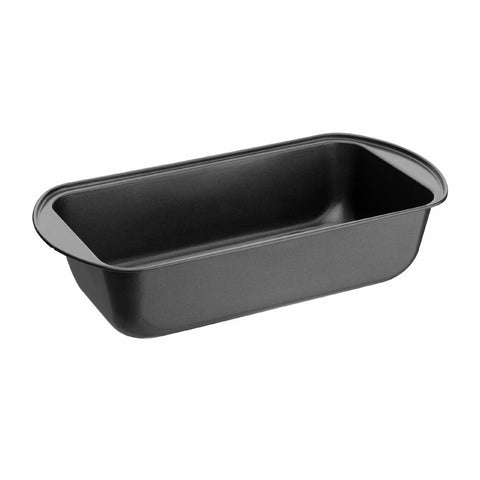
 Vogue Non-Stick Loaf Tin 255mm - GD005
255(W) x 60(H) x 125(D)mm

 Vogue Non-Stick Loaf Tin 300mm - GD004
300(W) x 80(H) x 112(D)mm

 Vogue Non-Stick Loaf Tin 250mm - GD003
250(W) x 78(H) x 100(D)mm
Commercial loaf pans are what you bake sandwich bread, tin loaves, banana bread and fruit loaves in, and in a restaurant kitchen a professional loaf pan does terrines, pâté, meatloaf and ice cream bases. Commercial loaf tins are bought for one outcome: a loaf that releases cleanly and has straight sides.
The material and the coating decide the release. Aluminised steel conducts well and bakes evenly. A silicone-glazed or non-stick coating releases without greasing but wears, and how fast it wears depends on how the pans are washed. Heavier gauge resists bowing, which is what keeps the sides of the loaf straight.
Pans sit with the rest of the commercial bakery accessories and commercial cookware ranges, alongside commercial muffin pans, cake tins and commercial baking trays. You can start with the sizes you bake most of now and add more as your business grows.
Working out how many pans fill an oven load? Get the price guide and compare gauges and coatings by size.
Usually not at first, and increasingly as the coating ages. A new non-stick pan releases dry; the same pan after a year of machine washing often does not, and that is normal wear rather than a fault.
A light spray or a paper liner buys back the release. Baking papers cut to size are the most reliable answer for a product that cannot be allowed to stick.
Pan spacing and pan material more often than the oven. Pans crowded together on a tray shield each other, and the loaves in the middle come out pale on the sides.
A professional loaf tin in a heavier gauge also bakes more evenly than a thin one, because the heat is carried by the metal rather than passed straight through.
Thin gauge, repeated heating and cooling, and being stacked while warm. Once a pan has bowed, the loaf takes that shape and will not stack or slice consistently.
Buy on gauge rather than price for the pans you bake in daily, and let them cool before they are stacked.
Most can mechanically, and most coatings last longer if they do not. Commercial detergent is hard on non-stick and on aluminised surfaces, which is why bakeries often scrape and wipe rather than wash.
Check the product page. Where a pan has to be machine washed, expect to replace the coating sooner and treat it as a consumable, the way the commercial baking mats are.
Enough of one size to fill a full oven load, before you buy a second size. A mixed set that cannot fill a rack means part-empty bakes and inconsistent product.
Sizes are listed per product, so match them to the dough weight you work to and to the rack spacing in your commercial bread provers and oven.
Regularly. Terrines, pâté, meatloaf, pressed salads and semifreddo all use the same shape, and in a restaurant kitchen a loaf pan spends more time in the larder than in the bakery.
If that is the main use, a straight-sided uncoated pan is often better, because it takes a liner and a weight on top without the coating being damaged.
Nested, dry, and not stacked so high that the weight distorts the bottom pan. Coated pans nested wet will mark each other and the marks become sticking points.
Keep them on modular shelving near the bench rather than in a low cupboard. They are light and bulky, so overhead space suits them.

We have a special page just for stock that's warehoused in Perth.
Click Here to see all WA stockWhat our customers say about us on Google, and how Google scores our store for things like shipping and returns.
Store scores from Google