


 03 9070 5784
 Help & Support
 Track My Order




Recently Viewed


 Hygiplas Serrated Vegetable Knife Green 100mm - C862

 Hygiplas Chefs Knife Green 255mm - C868

 Hygiplas Paring Knife Black 75mm - C268

 Hygiplas Slicer Serrated Brown 300mm - FX118

 Hygiplas Slicer Serrated Green 255mm - FX121

 Hygiplas Slicer Serrated Purple 300mm - FX119


 Vogue Bistro Serrated Knife 115mm - FS683

 Vogue Prep Like a Pro 3-Piece Knife Set with Knife Block - SA645
 Vogue Flat Bottom Ladle 112ml - GG004

 Vogue Soft Grip Utility Knife 140mm - GD755
 Vogue Flat Bottom Ladle 180ml - GG005

 Hygiplas Cooks Knife Purple 215mm - FP730

 Vogue Flat Bottom Ladle 56ml - GG003

 Hygiplas Bread Knife Purple 203mm - FP731
 Vogue Knife Sharpening Steel 300mm - D121


 Tormek T-2 Pro Kitchen Knife Sharpener - T-2PRO
240(W) X 210(D) X 285(H)mm
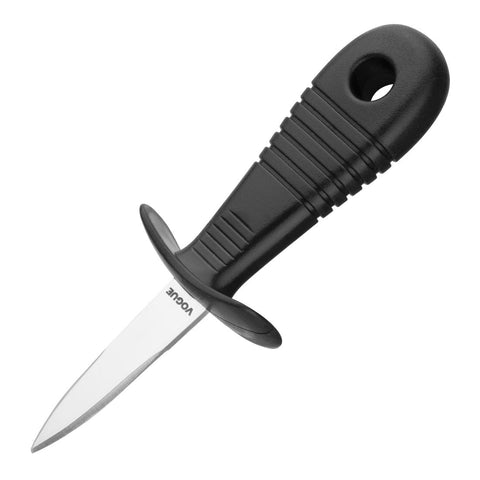


 Vogue Tsuki Series 7 Santoku Knife Black 175mm - CF844

 Vogue Tsuki Series 7 Bread Knife 196mm - CF842

 Vogue Tsuki Series 7 Carving Knife 198mm - CF843

 Vogue Tsuki Series 7 Utility Knife 128mm - CF892

 Vogue Diamond Sharpening Steel 250mm - CC199


 Olympia Kristallon Cutlery Basket - P174
210(W) x 130(H) x 425(D)mm

 Olympia Harley Cutlery Set (48 Pack) - S613


 Olympia Kelso Cutlery Set (48 Pack) - S611

 Olympia Steak Forks Wood Effect Handle (12 Pack) - HZ971

 Olympia Steak Knives Wood Effect Handle (12 Pack) - HZ970

 Special Offer Olympia Rounded Steak Knives Black (60 Pack) - HU764

 Olympia Clifton Table Knives (12 Pack) - C442

 Olympia Premium Riveted Steak Knives with Black ABS Handles (6 pack) - GR919
23(W) x 16(H) x 243(D)mm

 Olympia Jesmond Service Spoon (12 Pack) - C150

 Olympia Jesmond Soup Spoon (12 Pack) - C152

 Olympia Dubarry Table Fork (12 Pack) - C139

 Olympia Kristallon Polycarbonate Spoon Green (12 Pack) - DL124

 Olympia Kristallon Polycarbonate Knife Red (12 Pack) - DL114

 Olympia Kristallon Polycarbonate Fork Yellow (12 Pack) - DL119

 Olympia Kristallon Polycarbonate Fork Green (12 Pack) - DL120

 Olympia Kristallon Polycarbonate Spoon Red (12 Pack) - DL122

 Olympia Kristallon Polycarbonate Knife Green (12 Pack) - DL116

 Olympia Buckingham Table Fork (12 Pack) - U877

 Olympia Buckingham Table Knife (12 Pack) - U875

 Olympia Buckingham Soup Spoon (12 Pack) - U881

 Olympia Buckingham Dessert Knife (12 Pack) - U876

 Olympia Buckingham Dessert Fork (12 Pack) - U879

 Olympia Buckingham Service Spoon (12 Pack) - U878

 Olympia Kelso Latte Spoon (12 Pack) - S468

 Olympia Square Cutlery Basket - P175
110(W) x 140(H) x 110(D)mm

 Olympia Round Cutlery Basket - L443
113(W) x 140(H) x 112(D)mm

 Olympia Kristallon Cutlery Tray - J850
530(W) x 100(H) x 325(D)mm

 Olympia Buckingham Steak Knife (12 Pack) - HC538

 Olympia Jumbo Steak Knives Rosewood Handle 250mm (12 Pack) - GG819
Commercial kitchen cutlery covers three jobs. Commercial knives for prep and butchery, kitchen forks for carving, lifting and turning, and commercial spoons for cooking, portioning and service. You can start with the areas that need covering now and add more as your business grows.
Commercial cutlery is bought on a different basis to domestic cutlery, because it gets washed at high temperature day after day, dropped, soaked and occasionally put through a bin. Professional kitchen cutlery is mostly stainless steel, and 304 stainless steel is the food-safety grade used in Australian commercial kitchens. The grade and the finish decide how it looks after a year.
The other two questions are storage and quantity: somewhere it will not blunt or go missing, which is what knife storage and cutlery storage are for, and enough spare that a lost item is not a crisis mid-service.
Pricing knives, forks and spoons for a whole kitchen? The price guide lists them by type, so you can see where the money goes before a single order is placed.
Three knives per chef — a chef's knife, a paring knife and a serrated knife — plus a steel, a board and a way to store them. Everything else can wait a week.
After that, the service items: serving spoons, ladles, tongs and a carving set. Buy the chef knives properly and the rest to a sensible standard.
For almost everything in a commercial kitchen, yes, because it tolerates a machine wash and acidic food. The exception is high-carbon blades, which hold a better edge but will rust if left wet.
If a kitchen is not going to dry a carbon blade immediately, stainless is the sensible call. The composition of a specific item is on its product page or specifications.
The handle. A handle that works loose lets water in, and that is both a hygiene problem and the point where the item becomes unsafe. Thin pressed items also bend under load.
Full-tang knives and one-piece or well-bonded handles cost more and last longer. That is the whole argument for buying commercial rather than retail.
Some can and some should not, and the item's own listing is the only reliable answer — detergent and high-temperature cycles are hard on timber handles and on fine edges. A commercial dishwasher will blunt a knife faster than cutting will.
As a working rule, knives are washed and dried by hand and service cutlery goes in the machine. Check the listing for anything in between.
Enough to cover a lost item without changing how a station works, which usually means one spare of each prep knife and a reasonable surplus of service cutlery.
Service items disappear into bins and bussing tubs at a steady rate. Budget for replacement rather than treating it as a surprise.
Completely. Table cutlery is chosen on weight, balance and finish because the customer holds it; kitchen cutlery is chosen on function. See tableware for the dining side and disposable cutlery for takeaway.
Do not let one buy cover both. A kitchen using table forks for carving ruins the forks.
Knives in a knife block, a case or on a wall rack — never loose in a drawer, where the edges blunt and someone gets cut reaching in.
Service cutlery in drawer inserts or cylinders, sorted, so a server grabs the right item without rummaging. The cutlery storage range covers both.
A sharpener or steel, colour-coded chopping boards, and the handling items in the kitchen utensils range — tongs, spatulas, scoops.
Cutlery that is sharp and stored properly outlasts cutlery that is replaced twice a year. The accessories are what make the difference.

We have a special page just for stock that's warehoused in Perth.
Click Here to see all WA stockWhat our customers say about us on Google, and how Google scores our store for things like shipping and returns.
Store scores from Google