


 03 9070 5784
 Help & Support
 Track My Order



Recently Viewed

 IWOK Commercial Induction Double Wok – IWOK-2
1200(W) x 850(D) x 1300(H)mm
 IWOK Commercial Induction Single Wok – IWOK-1
600(W) x 850(D) x 1300(H)mm


 RoboChef Cooking Robot - MSS2KPRO
804(W) x 960(D) x 1572(H)mm

 RoboChef Cooking Robot – MSS400PRO
1100(W) x 805(D) x 835(H)mm

 Benchstar CoMMercial Schott Ceran Glass Hob Induction Plate BH3500S
327(W) x 420(D) x 100(H)mm
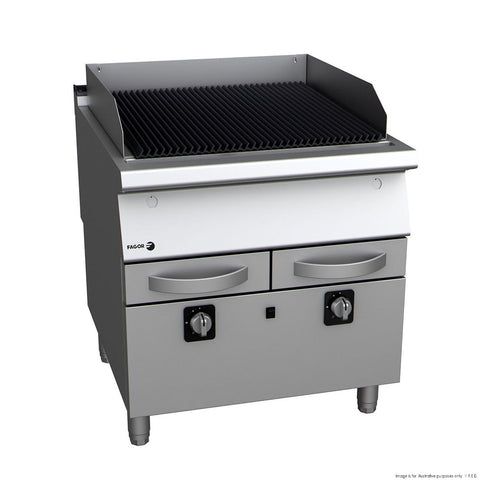
 Fagor Kore 700 Series Bench Top Gas Chargrill B-G7101
800(W) x 730(D) x 850(H)mm
 Fagor Kore 700 Series Bench Top Gas Chargrill B-G710
800(W) x 730(D) x 290(H)mm
 Fagor Kore 900 Series Electric 90L Bratt Pan SB-E910IM
800(W) x 930(D) x 850(H)mm

 RoboChef Cooking Robot MSS7K
1000(W) x 909(D) x 1470(H)mm
 Fagor 900 Series Natural Gas 2 Grid Grill BG9-10
850(W) x 900(D) x 290(H)mm
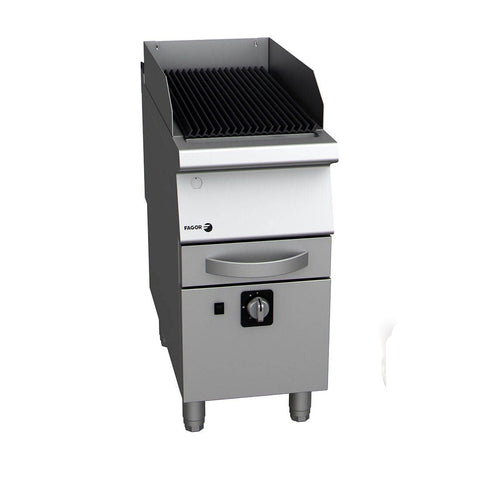
 Fagor Kore 900 Series Chargrill B-G9051
400(W) x 930(D) x 850(H)mm
 Fagor Kore 900 Series Bench Top Electric Chargrill B-E910
800(W) x 930(D) x 290(H)mm
 Fagor Kore 900 Electric Indirect Heating Boiling Pan M-E915BM
800(W) x 930(D) x 850(H)mm
 Fagor Kore 900 Electric Pasta And Noodle Cooker CP-E905
400(W) x 930(D) x 850(H)mm
 Fagor Kore 900 Series Electric 6 Burner With Oven C-E961OP
1200(W) x 930(D) x 850(H)mm
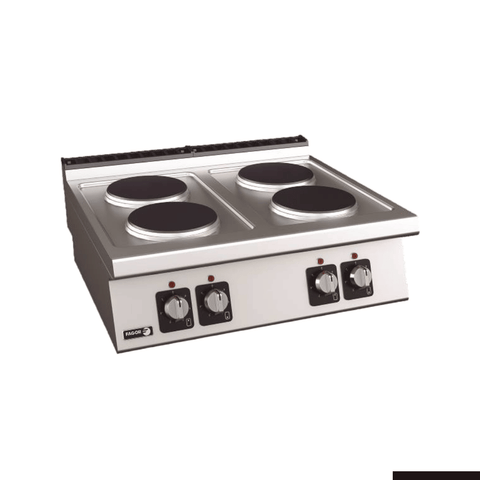 Fagor Kore 700 Series Bench Top 4 Electric Burners C-E740
800(W) x 730(D) x 290(H)mm
 Fagor Kore 700 Series Bench Top Electric Chargrill B-E710
800(W) x 730(D) x 290(H)mm
 Fagor Kore 900 Series Electric 6 Burner C-E960
1200(W) x 930(D) x 290(H)mm
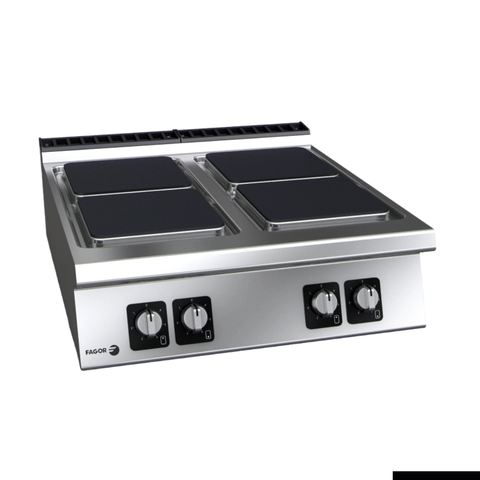 Fagor Kore 900 Series Electric 4 Burner C-E940
800(W) x 930(D) x 290(H)mm
 Fagor Kore 700 Series Bench Top 6 Electric Burners C-E760
1200(W) x 730(D) x 290(H)mm
 Fagor Kore 900 Series Electric 4 Burner With Oven C-E941
800(W) x 930(D) x 850(H)mm

 ElectMAX 900 Series Induction 6 Burner Cooker with Splashback EIC9-1200P
1200(W) x 900(D) x 1003(H)mm

 ElectMAX 900 Series Induction 4 Burner Cooker with Splashback EIC9-800P
800(W) x 900(D) x 1003(H)mm
 ElectMAX 900 Series Induction Griddle with Splashback EGP9-800
800(W) x 900(D) x 1003(H)mm
 Fagor Electric Tilting Bratt Pans SBE9-10I
 Fagor Kore 900 Series Electric 120L Bratt Pan - SB-E915IM
1200(W) x 530(D) x 850(H)mm
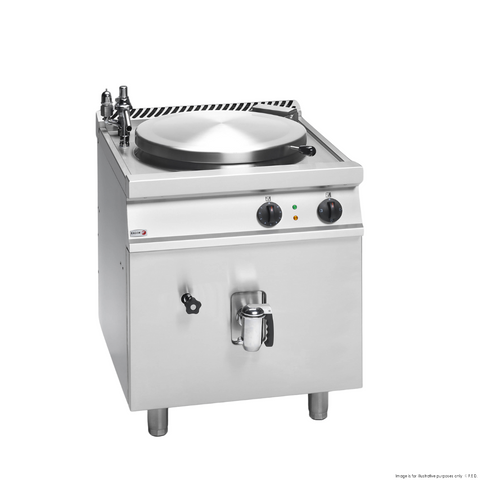
 Fagor 700 Series Electric Indirect Heating Boiling Pan 80L ME7-10BM
700(W) x 775(D) x 850(H)mm
 Fagor Kore 900 Series Indirect Heating Boiling Pan M-G915BM
800(W) x 930(D) x 850(H)mm
 ElectMAX 700 Series Induction 2-Burner Cooker With Splashback EIC7-400P
400(W) x 700(D) x 980(H)mm
 ElectMAX 700 Series Induction Griddle With Splashback EGP7-800
800(W) x 700(D) x 980(H)mm

 Fagor 700 Series Gas Char Grill BG7-10LPG
700(W) x 775(D) x 290(H)mm
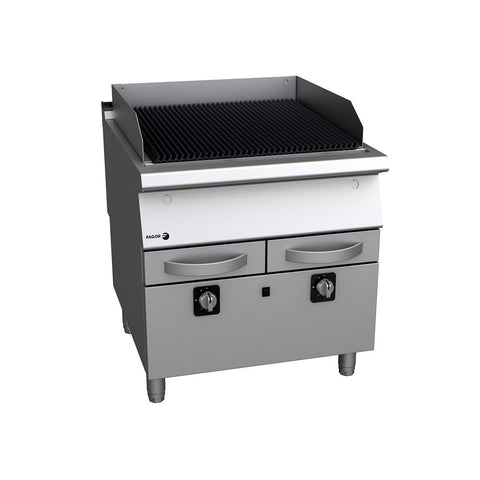
 Fagor Kore 900 Series LPG Chargrill B-G9101LPG
1200(W) x 930(D) x 290(H)mm
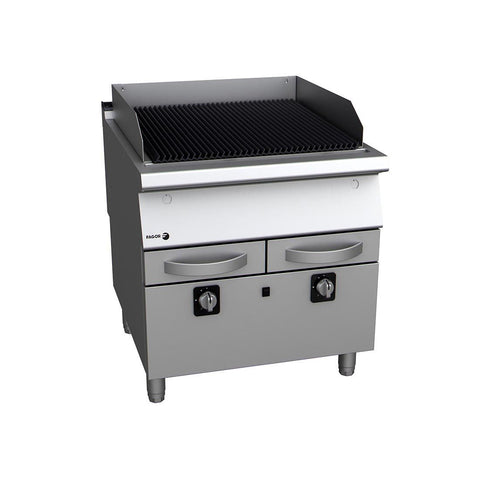
 Fagor Kore 900 Series Chargrill B-G9101
800(W) x 930(D) x 850(H)mm

 Yellow Induction 1000watt Drop In Unit with Remote Control 360mm x 380mm x 100mm 10amp plug - Y1000NT
 Yellow Induction 2000watt Drop In Unit with Remote Control 360mm x 380mm x 100mm 10amp plug - Y2000D
 Yellow Induction High Power 3500watt Fanless Induction Warmer - 380mm x 360mm x 91.2mm 10amp plug - Y300
 Yellow Induction 2500watt Drop In Unit with Remote Control 360mm x 280mm x 100mm 15amp plug - Y2500AD
 Yellow Induction 2 x 3500watt Built in Dual Hob Unit 450mm x 700mm x 208mm 30amp single phase - supplied unplugged - Y3500DDSS
 Yellow Induction Boiling Table 1100 x 900 x 900Hmm - 2Y3500DDSSBT
 Yellow Induction 3500watt Counter Top Unit - 385mm x 520mm x 177mm 15amp plug - Y3500TT
 Yellow Induction 1000watt Free Standing Counter Top Unit - 385mm x 385mm x 100mm 10amp plug - Y1000WCS
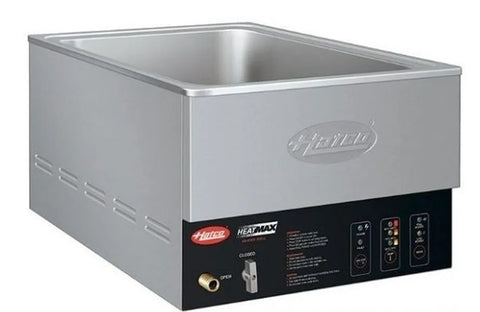

 Heat-Max Pasta Cooker Free Standing Counter Top - RCTHW-6
368(W) x 582(D) x 290(H)mm
 Built-in Heat-Max Pasta Cooker - RCTHW-B
390(W) x 610(D) x 301(H)mm

 Hobart PRECIPAN 150 L High Power | 42.3 Kw - HBPT15HE-P
1400(W) x 1000(H) x 974(D)mm
 Hobart PRECIPAN 100 L High Power | 28.2 Kw - HBPT10HE-P
1100(W) x 1000(H) x 974(D)mm
Electric cooking equipment either plugs into a socket or is wired in by an electrician, so there is no gas point to run, no gas fitter to book and no gas compliance certificate at the end of the job. Electric griddles are a flat plate for eggs, bacon and burgers, electric cooktops are solid hotplates or ceramic zones you stand a pot on, and electric oven ranges put those hotplates over an oven so one footprint cooks and bakes.
Electric deep fryers have the elements down in the oil, which is why they recover quickly between baskets, and electric chargrills run grates over elements instead of a flame. There are single-job machines as well: bratt pans that tilt so a full pan pours out, boiling pans for stock and sauce, pasta cookers, rotisseries, electric smokers and cooking robots.
Solid plate, radiant element and resistance-heated cooktops, ranges and fryers heat a plate or an element first, and that plate then heats the pan. They cost less to buy and they're what a lot of kitchens still run.
Induction makes the heat in the base of the pan itself. It comes up to temperature far faster, wastes much less of the power you pay for, holds a set temperature closely and leaves the kitchen cooler to work in. Induction costs more up front, it only heats steel and cast iron pans, and a round wok needs a bowl-shaped induction hob rather than a flat one.
Sort this out before you order anything. Small benchtop equipment will usually run off a standard 10 amp socket. Once a unit draws more than that you're into a 15 amp plug, which has a fatter earth pin and won't go into a normal socket. Bigger single phase units come with no plug at all and get wired in.
Anything freestanding is another step up again. A six burner induction range, a bank of griddles or a double pan fryer is nearly always three phase and hardwired.
Plenty of tenancies, especially older shops and anything upstairs, only have single phase to the board. Have an electrician look at the switchboard first, because a switchboard upgrade can cost as much as the equipment and it belongs in the budget from the start.
A plug-in unit goes straight into a socket, but the circuit behind it still needs checking, because a 15 amp appliance needs a 15 amp circuit and not just a 15 amp outlet on the wall. Anything hardwired is a licensed electrician's job, and they'll fit an isolator switch you can reach without pulling the machine out.
There is no gas fitter and no gas compliance certificate involved, which is one trade and one document less on a fit-out. It also means a unit can go in and be running the same day, where a gas appliance waits for the fitter. The electrician still has to certify their own work, so allow a short visit for that.
On a solid plate or a radiant element the heat is made under the pan and travels through a lot of metal, so a good part of it ends up in the room. A solid plate is slow to heat and slow to cool, and that mass is why it holds steady through a rush. Induction makes the heat in the base of the pan, so it boils water in a fraction of the time, answers the dial straight away and puts far less waste heat into the kitchen.
Element equipment still suits plenty of venues. A pub kitchen working a set menu on heavy pots, or a site fitting out on a tight budget with a full set of aluminium pans, will get years out of a solid plate range. Induction is worth the extra money in cafes, a la carte kitchens and small rooms where the heat off the section is already a problem.
Yes. Induction only heats a pan a magnet sticks to, so steel and cast iron work, and aluminium, copper and a lot of thinner stainless will sit there cold. Take a fridge magnet to your pans before you order the hob. If it doesn't grab, that pan is finished on induction.
Woks are their own case. A flat induction hob won't heat a round wok properly, so you want a purpose-built induction wok unit with a bowl-shaped top and a wok made to sit in it. Budget for re-panning the section as part of the changeover, because a set of induction-capable pans is a real cost and it gets left out of the quote more often than not.
For a lot of sites there's no decision to make. Shopping centre food courts, many newer buildings, upstairs tenancies and anything in a heritage building often can't have gas run to them at all, and that's the most common reason people end up on electric. The same goes where a gas point exists but sits so far from the kitchen that the pipework costs more than the appliance.
Where you have both, most kitchens use gas for the open burners a cook works to by eye, and electric for anything that has to hold a set temperature all service, which is fryers, pasta cookers, bratt pans and boiling pans. Induction is worth costing on the burner section as well, and there are induction wok units for the wok hole. If gas can get to your site, the gas equivalents are worth pricing against these.
Nearly always, yes. The ventilation rules follow heat and moisture, not just flame, so once the total input under one canopy reaches 8 kW you need mechanical exhaust above it, and most electric cooking equipment passes that on its own. There are no combustion fumes to clear, but the steam, grease and heat still have to go somewhere.
Induction is the one case where the numbers can come out differently, because much less waste heat escapes into the room, and a mechanical engineer will sometimes size a smaller canopy off the back of that. Leave that decision to the engineer. Either way, add up everything going under the one hood before the canopy is ordered.
Elements, contactors and thermostats, mostly, and all three are replaceable parts. A dead zone or a plate that takes forever to come up is usually an element. On induction the electronics sit under the hob and are cooled by a fan, so a blocked fan filter is the most common reason a unit cuts out halfway through service, and clearing it takes a few minutes.
Some faults are self-inflicted and won't be covered. Ceramic and induction glass cracks if you drop a pot on it or drag a pan with grit underneath. Throwing cold water on a hot griddle plate warps it permanently.
Running a fryer with the oil below the mark burns the elements out, because the oil is what carries the heat away from them. Keep the oil topped up and the filters clean and most of this never comes up.
You can, and on electric it's a common way to go, because the price of the equipment often lands on top of an electrical upgrade. Our prices are already sharp, and Silverchef Rent-Try-Buy makes it easier again. You rent the equipment instead of buying it outright, the cash stays free for the rest of the fit-out, and the rental payments go through as an operating expense.
At the end of it you can buy the unit out or move up to a bigger model as the business grows, so a cafe that starts on two induction hobs isn't stuck with them when it needs a four zone range. Here's how Rent-Try-Buy works, and it covers everything from a benchtop hob up to a full electric hot line.
The electrician's time first, and on anything three phase that is not a small line on the quote. After that it's pans that suit the machine, which on induction means steel or cast iron, and on a wok unit means a wok made for that hob.
Gastronorm pans and trays for the fryer, pasta cooker or oven should come from the same supplier as the appliance, because the small differences between brands mean a cross-brand fit can't be guaranteed. Then the everyday items: a bench or stand rated for the weight of a benchtop unit, oven grids, fryer baskets and oil filtering equipment, a griddle scraper, and a spare set of canopy filters so you can rotate them through the wash.
Baron and Electrolux cover the most ground, both in 700 and 900 series modules that line up beside each other, with electric cooktops, fry tops in mild steel or chrome, deep fryers, pasta cookers, tilting bratt pans, boiling pans and static ovens to mount underneath. Fagor's Kore 700 and 900 do the same across benchtop and freestanding, including electric chargrills and pasta cookers. Luus and ElectMAX offer heavy duty induction cooktops, griddles, fryers, wok holes and stockpot boilers.
At the benchtop end, Apuro, Caterlite, Anvil, Benchstar, Dipo and Yellow Induction offer single and double induction hobs, induction woks, warmers and drop-in units, Roband makes boiling hot plates and griddle toasters, AustHeat and AutoFry make fryers, IWOK makes induction woks, Hobart and Moduline cover the bratt pan and smoker end, and RoboChef makes cooking robots. Sizes start at a 2 kW benchtop hob and run up to six burner induction ranges and 1200mm modules with an oven underneath.

We have a special page just for stock that's warehoused in Perth.
Click Here to see all WA stock