


 03 9070 5784
 Help & Support
 Track My Order




Recently Viewed
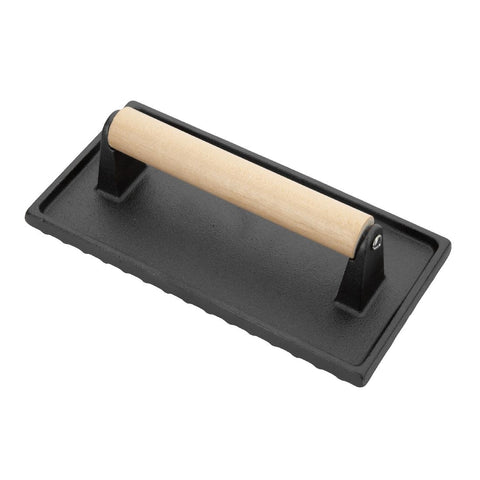

 Vogue Cast Iron Steak Weight with Wood Handle - GN770
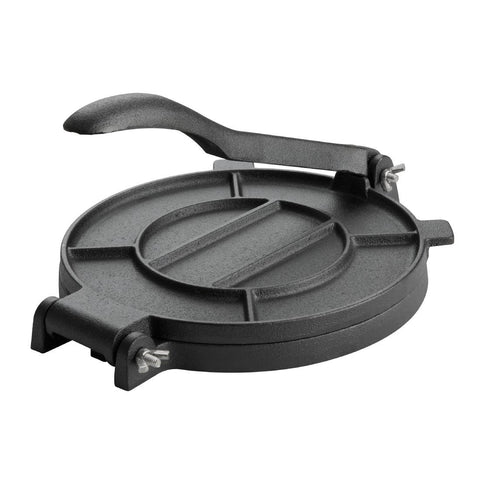
 Vogue Cast Iron Tortilla Press 200mm - CZ942
Commercial cast iron cookware is what a kitchen reaches for when the heat has to stay in the pan: searing steaks, shallow frying at a steady temperature, long oven braises, and sizzlers that go to the table still cooking. Cast iron takes longer to heat than steel and then holds that heat when cold food hits it, which is what gives a proper sear instead of a grey, steamed surface. Professional cast iron cookware and restaurant cast iron cookware are the same thing under different names.
The split is bare versus enamelled. Bare cast iron is seasoned, improves with use, and can be heated as hard as you like. Enamelled cast iron needs no seasoning, does not react with acid, and chips. Both are used side by side in most kitchens.
What cast iron costs you is weight and routine. It is heavy enough to change how a section is set up, it cannot be left wet, and bare pieces need the seasoning maintained.
The range runs across commercial frying pans, casserole pans, skillet pans and cast iron sizzlers, inside the broader commercial cookware range, so you can start with the pieces the menu needs now and add more as your business grows.
Working out which pieces the menu needs first? The price guide prices the pans, skillets, casseroles and sizzlers together, bare and enamelled.
Holding a temperature. The heat stored in a heavy pan is what keeps it searing when cold food goes in, where a thin pan drops away and starts steaming the food instead.
It is worse at anything needing a fast temperature change. A delicate sauce or anything that must come off the heat immediately is better in stainless steel cookware.
A very thin film of a high-smoke-point oil, wiped almost dry, then heated until it stops smoking. Repeat it a few times for a new piece. The layer you want is hard and dry, not sticky.
Too much oil is the usual error and it bakes into a tacky, patchy coating that then flakes into the food. Thin coats, several times, is the whole technique.
Either the seasoning is damaged or the pan was not hot enough when the food went in. Cast iron is slow to heat, and putting protein into a pan that is still coming up is what welds it to the surface.
Let it preheat properly and let the food release on its own. Moving it too early tears it, which then looks like a seasoning problem and is not.
It will rust within hours if it is left wet, and that is the one real vulnerability. Dry it on the heat rather than on a rack, and wipe a trace of oil over it before it goes away.
Surface rust scrubs off and the piece is then re-seasoned from scratch. It is a recoverable mistake, unlike a cracked pan.
No. Detergent strips seasoning, the cycle leaves it wet, and both outcomes are bad. Cast iron is a hand-wash, dry-on-heat item without exception.
Enamelled pieces survive a machine cycle better but the manufacturer generally still advises against it. Keep both out of the commercial dishwasher and use the cooking equipment cleaners range for anything baked on.
Yes — cast iron is magnetic, so it works on every induction surface.
Lift rather than slide it. Dragging a heavy cast iron base across induction cooktops scratches the glass.
It is a real consideration, particularly for the large pieces. A full cast iron casserole coming out of an oven at height is a two-handed, deliberate lift and needs to be treated as one.
Keep the heavy pieces at waist level rather than overhead, and keep kitchen mitts at the section. Handles on cast iron get as hot as the pan.

We have a special page just for stock that's warehoused in Perth.
Click Here to see all WA stockWhat our customers say about us on Google, and how Google scores our store for things like shipping and returns.
Store scores from Google