


 03 9070 5784
 Help & Support
 Track My Order




Recently Viewed
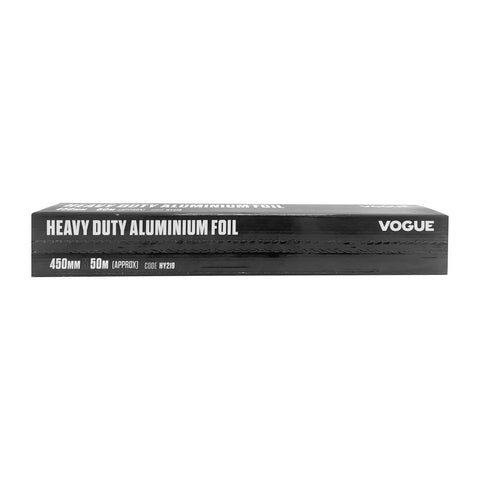

 Vogue Cutter Box Heavy Duty Aluminium Foil 450mm x 50m - HY219
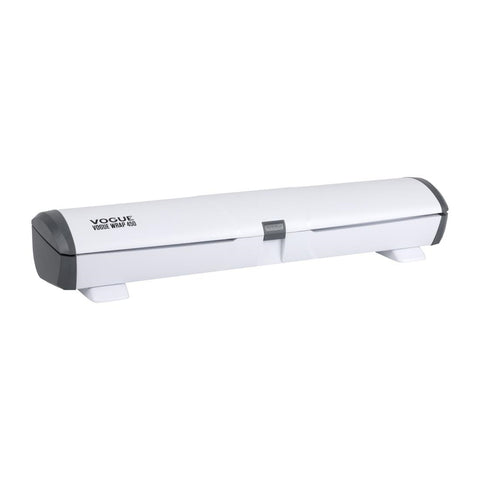
 Vogue Wrap 450 Dispenser for Foil, Cling Wrap & Parchment - HT498

 Vogue Cling Wrap 300m x 440mm - CF351

 Vogue Aluminium Foil 75m x 450mm - CF353
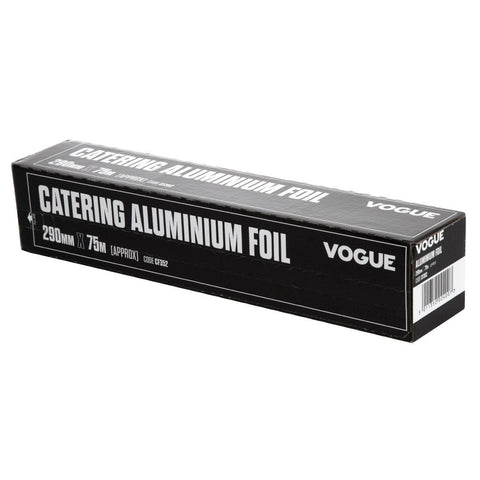
 Vogue Aluminium Foil 75m x 290mm - CF352
330(W) x 65(H) x 65(D)mm
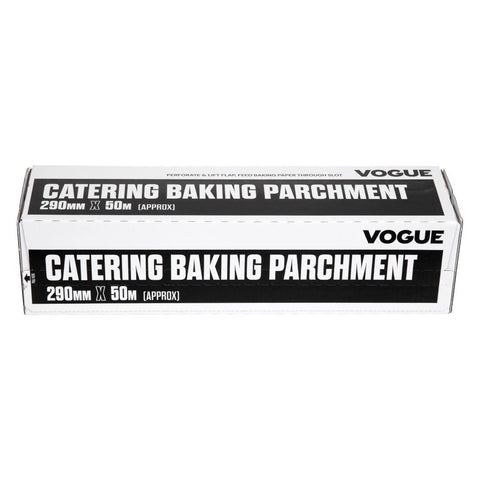
 Vogue Baking Parchment 50m x 300mm - CF349
342(W) x 82(H) x 83(D)mm
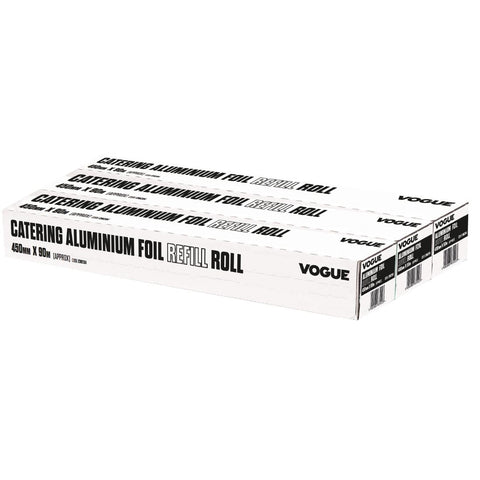
 Foil Refills for Vogue Wrap450 Dispenser - CW204
211(W) x 488(H) x 65(D)mm
 Cling Wrap Refills for Vogue Wrap450 Dispenser - CW203
206(W) x 488(H) x 63(D)mm
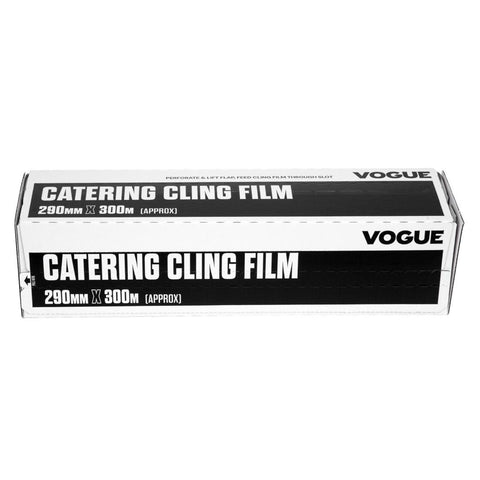
 Vogue Cling Wrap 300m x 290mm - CF350
300(W) x 102(H) x 102(D)mm
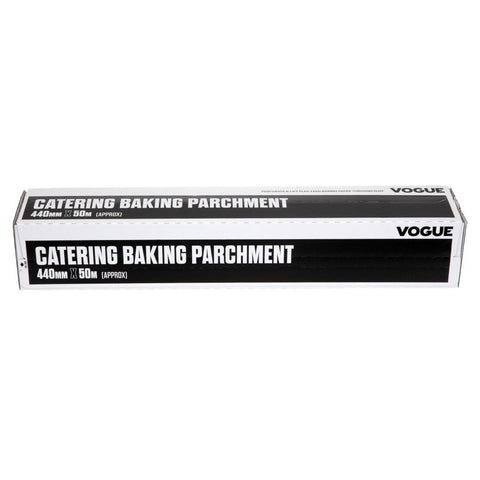
 Vogue Baking Parchment 50m x 450mm - DM177
482(W) x 82(H) x 83(D)mm
 Baking Parchment Refills for Vogue Wrap450 Dispenser (Pack of 3) - CW205
211(W) x 488(H) x 65(D)mm

 San Jamar Saf-T-Wrap Dispenser - SW1218
Cling wrap and foil cover the pans, wrap the portions and seal the trays coming off a prep bench all day. Catering cling wrap is a different product from the supermarket roll: wider, longer, and sold to go into a cutter box that one person can work with one hand.
The decisions are narrow. Film or foil for the job in front of you, how wide a roll the bench can take, and whether you want loose rolls or foil dispensers with a serrated cutter bar. Everything in this range sits in the broader kitchen disposables line alongside baking papers.
Covering and decanting go together, so most kitchens buy wrap next to gastronorm containers and kitchen food labels. Roll widths, roll lengths and dispenser prices are all in the price guide, which is the quickest way to work out how many cartons a month a kitchen gets through.
Length and width, mostly. Trade rolls run far longer so they are changed less often, and they come in widths meant to cover a gastronorm pan rather than a dinner plate.
The other difference is the cutter. A trade roll is designed to sit in a dispenser box with a cutting edge, which is what lets a chef pull, cover and cut without putting the pan down. Exact roll width and length are on each product page.
A cardboard box with a serrated strip works, and plenty of kitchens never go further. It goes soft when it gets wet, which in a wash-up area or a cold room is most of the time.
A proper dispenser fixes the roll in place, gives a clean cut and survives being handled with wet hands. It is the better answer on a wet bench or wherever the roll is used constantly, and it is worth mounting it near the stainless steel bench where prep is covered off.
Foil goes where there is heat. It holds a shape over an awkward tray, blocks light, and will not shrink or pull away the way film does near an oven.
Film is for cold covering, portioning and anything you want to see through. Many kitchens keep both in foil dispensers side by side on the same wall so nobody has to choose badly in a hurry. For long holding, decant into a storage box with a lid instead.
That depends entirely on the film, and it is stated on the product page rather than being a property of cling wrap in general. Some films are made for microwave covering and some are not, and none of them belong in a convection oven.
If a dish is going to be reheated in its wrapping, check the product page or our specifications page before you buy a pallet of it. Where food is reheated routinely, a lidded container is a cleaner answer than any film.
Most ragged cuts come from pulling at an angle rather than straight out, or from a roll that has slipped sideways in its box. Pull square, then bring the film down onto the cutter in one movement.
A roll that has been dropped is usually the culprit after that, because a dented core no longer turns freely. Keep spares flat and off the floor.
Two is usually enough: a narrow roll for portioning, plates and small containers, and a wide roll for pans and trays. The wide roll should match whatever you cover most often, which for most kitchens is a gastronorm pan.
If a third gets used, it tends to be a very wide roll for pallet and trolley work. Check it against the catering trolley or racking you actually wrap before ordering it.
Soft plastic film is not accepted in standard kerbside recycling in Australia, so in practice most of it goes to general waste. That makes volume worth watching, and a bin setup that separates film from food waste makes it visible. See kitchen rubbish bins for that side of it.
If you are trying to cut film use, the alternatives are reusable lids and containers rather than a different film. Food covers and lids, sealed containers and the eco friendly disposables range are where to look.

We have a special page just for stock that's warehoused in Perth.
Click Here to see all WA stockWhat our customers say about us on Google, and how Google scores our store for things like shipping and returns.
Store scores from Google