


 03 9070 5784
 Help & Support
 Track My Order




Recently Viewed
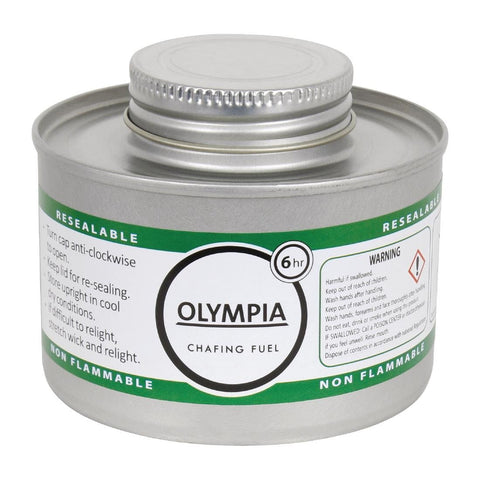

 Olympia Liquid Chafing Fuel 6 Hour - CB735


 Olympia Milan Chafing Dish 9Ltr - K409
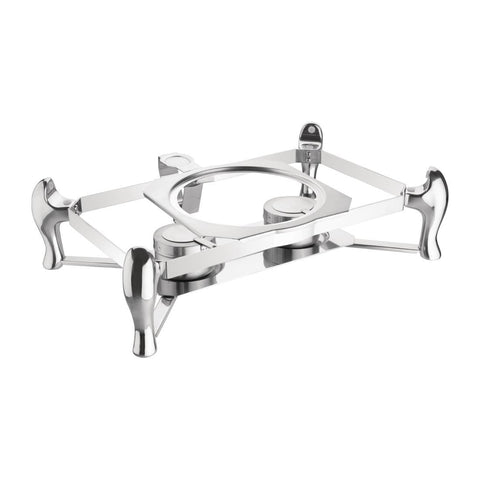
 Olympia Chafer 1/1 Glass Lid Frame - FT039
550(W) x 152(H) x 415(D)mm

 Olympia Madrid Chafing Dish - U008

 Olympia Milan Chafing Set 1/1 GN (4 Pack) - S299

 Olympia Electric Chafing Dish - CM266-A

 Olympia Chafers With 72 x Easy Heater 6 Hour Liquid Fuel - Pack of 2 - S631

 Olympia 1/1 GN Induction Chafer - FT037
586(W) x 195(H) x 450(D)mm

 Olympia 1/2 GN Induction Chafer - FT038
377(W) x 180(H) x 400(D)mm
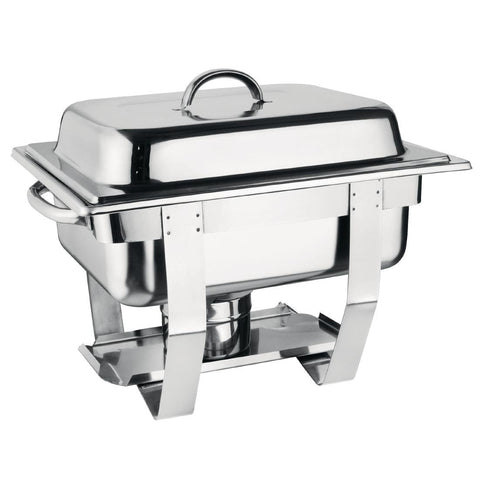
 Olympia Milan 1/2 Sized Chafing Dish Set 3700ml - CN607
365(W) x 300(H) x 300(D)mm

 Olympia Vienna Chafing Dish - CB063
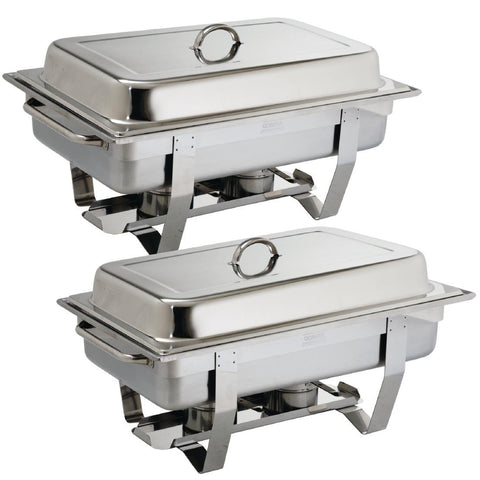
 Olympia Milan Chafing Dish Twin Pack - S300
 Olympia Kristallon Small Polypropylene Fast Food Tray Green 345mm - DP214
 Olympia Liquid Chafing Fuel 2 Hour - CB733
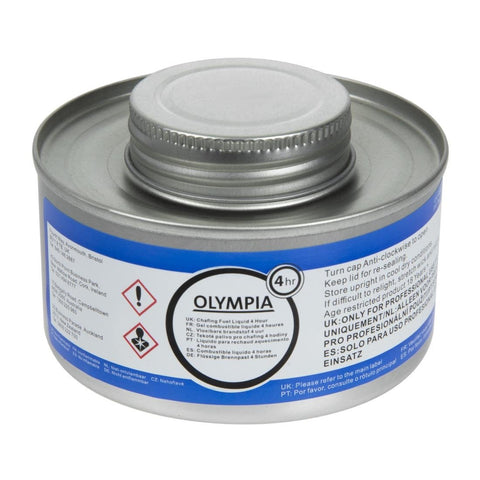
 Olympia Liquid Chafing Fuel 4 Hour - CB734
Chafing dish sets are how a venue runs a hot buffet without power at the service point. A buffet chafer is a water bath over a fuel burner with a food pan sitting in it, so the food is held by steam rather than by direct heat and does not catch on the bottom of the pan.
A set normally includes the frame, the water pan, one or more food pans, a lid and the burner holders. Chafing dish fuel is bought separately and is a genuine running cost — a function burns through it, and running out mid-service means the line goes cold.
The decisions are size, pan configuration and lid type. Standard gastronorm pan sizes mean the food pans interchange with the rest of the kitchen, which is worth checking before buying a set with proprietary pans. Roll-top lids stay out of the way and look better on a long line; lift-off lids are cheaper and have nothing to break.
Chafers sit alongside powered holding in bain maries and the rest of the buffet and table service range. A powered line holds temperature more evenly and costs nothing in fuel, but it fixes the buffet in one spot, which is why many venues run powered holding for the daily line and chafers for functions. Pans and inserts come from gastronorms and containers.
Counting chafers and fuel tins against a season of functions? The price guide sets out set sizes, pan configurations and fuel by the carton.
Work from the number of hot dishes, not the number of guests. Each dish needs its own pan, because mixing two dishes in one chafer means one of them is wrong by the time it is served.
Then size the pan to the guest count and the length of service. A long sitting needs replenishment from the kitchen regardless, so more pans and a faster turnaround beats one enormous pan sitting out for an hour.
It varies by fuel type and tin size, and the burn time is stated on the product. Plan on changing burners at least once through a long function and hold more than you think you need, because a burner that goes out is not always noticed immediately.
Gel and wick fuels behave differently — gel lights and extinguishes easily, wick fuel burns more steadily. Read the stated burn time on the chafing dish fuel product page rather than assuming they are equivalent.
Yes, always, and this is the mistake that ruins food and warps pans. The water is what spreads the heat; a chafer run dry puts flame heat straight onto the base of the food pan and burns whatever is in it.
Top the water up during a long service. Check it when the burners are changed, which makes it one job rather than two.
They are designed to be, because that is where they are used, but there is an open flame involved and the frame gets hot. Keep them clear of linen overhang, drapes and anything a guest might lean on.
For an outdoor function, wind is the real problem. An unshielded burner either blows out or burns unevenly, so a marquee or a wind shield matters more than it sounds.
No. A chafer holds food that is already at temperature and does it gently. Loading a pan with cold food and expecting the burner to bring it up leaves the food in the danger zone for far too long.
Bring food up to temperature in the kitchen — an oven, a combi steam oven or a stock pot — then transfer it hot into a preheated chafer.
Disassembled, with the pans nested and the frames stacked. The frames are the part that bends, and a bent frame means the pan no longer sits flat in the water bath.
A catering trolley and an insulated food carrier to move the hot food separately is the standard arrangement. The chafer carries the food on the table, not in the van.
Pans and lids go through the wash; most are stainless and handle a machine cycle. Frames are usually wiped rather than washed, because they have joints and feet that trap water.
The burners need the residue cleaned out, or the next tin sits unevenly. Check each component on its product page before putting it through the glasswasher or a high-temperature dish cycle.

We have a special page just for stock that's warehoused in Perth.
Click Here to see all WA stockWhat our customers say about us on Google, and how Google scores our store for things like shipping and returns.
Store scores from Google