


 03 9070 5784
 Help & Support
 Track My Order




Recently Viewed


 ConvectMAX Oven Heats 50 To 300 Degrees - YXD-1AE
595(W) x 530(D) x 570(H)mm


 Apuro Black Soup Kettle 10Ltr - L715-A
 Apuro Rice Cooker 13 Ltr - J300-A
460(W) x 370(H) x 400(D)mm
 Apuro Rice Cooker 23Ltr - CB944-A
560(W) x 395(H) x 485(D)mm

 Apuro Upright Ice Cream Maker 2Ltr - CM289-A
272(W) x 362(H) x 315(D)mm

 Apuro Food Steamer 6Ltr - CL205-A
400(W) x 305(H) x 335(D)mm


 Roband Grill Station 8 slice, smooth plates - GSA810S
560(W) X 490(D) X 220(H)mm

 Apuro Portable Sous Vide Machine 40Ltr - DM868-A
163(W) x 320(H) x 130(D)mm

 Anvil Panini Press Single Flat Top Flat Bottom - TSS2001
410(W) x 205(H) x 378(D)mm
 Apuro Rice Cooker 10Ltr - CN324-A
380(W) x 350(H) x 320(D)mm

 Apuro Graphite Grey Soup Kettle 10Ltr - G107-A
330(W) x 375(H) x 330(D)mm

 Benchstar Stainless Steel Microwave Oven - MD-1000L
511(W) x 432(D) x 311(H)mm
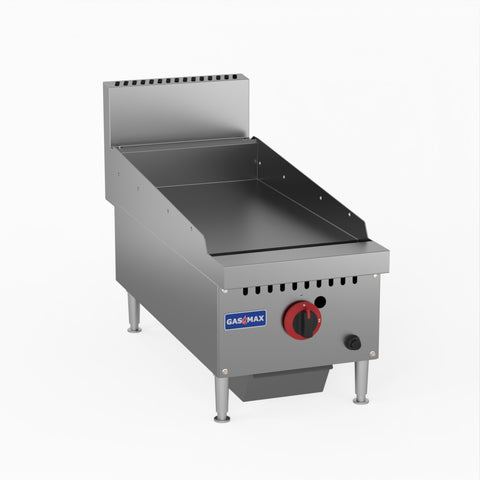

 GasMAX One Burner Lpg Griddle Top - GG-12LPG
336(W) x 824(D) x 546(H)mm

 Roband Double Pan Fryer 2 x 8lt - F28
545(W) X 425(D) X 390(H)mm

 Apuro Chamber Vacuum Sealer - DK208-A
425(W) x 366(H) x 359(D)mm

 Apuro Bain-Marie with Tap & Pans 2x GN 1/3 2x GN 1/6 - FT692-A
645(W) x 327(H) x 432(D)mm

 Apuro Electric Crepe Maker 3kW - CT931-A
470(W) x 230(H) x 185(D)mm

 ConvectMAX Electric Convection Oven - YXD-6A
798(W) x 650(D) x 596(H)mm
 Apuro Bag Sealer - GJ459-A
430(W) x 235(H) x 85(D)mm

 Apuro Large Rice Cooker 20Ltr - CK698-A
480(W) x 415(H) x 560(D)mm

 Roband Grill Station 6 slice, smooth plates - GSA610S
435(W) X 490(D) X 220(H)mm

 Elementry Single Door Food Warmer Cart - HT-40S
720(W) x 900(D) x 1763(H)mm
 ConvectMAX Electric Convection Oven - YXD-6A/15
798(W) x 670(D) x 580(H)mm

 Apuro Ice Cream Maker - DM067-A
402(W) x 245(H) x 281(D)mm

 Apuro Soup Kettle Copper Finish 10Ltr - CP851-A
345(W) x 360(H) x 345(D)mm
 Benchstar Two Slice Conveyor Toaster TT-300E
368(W) x 420(D) x 390(H)mm

 Benchstar Benchtop Electric Doughnut Fryer EF-TE
460(W) x 620(D) x 355(H)mm

 Roband Donut Fryer - FD10
380(W) X 485(D) X 290(H)mm


 Vogue Tomato Slicer - DC714
191(W) x 387(H) x 199(D)mm

 Apuro Meat Slicer 250mm - CD278-A
452(W) x 485(H) x 437(D)mm
 Elementry Single Door Food Warmer Cart - HT-20S
515(W) x 780(D) x 1763(H)mm
 Anvil Panini Press Double Flat Top Flat Bottom - TSS3001
570(W) x 205(H) x 378(D)mm

 Apuro Light Duty Programmable Commercial Microwave 25Ltr - FB862-A
432(W) x 311(H) x 511(D)mm
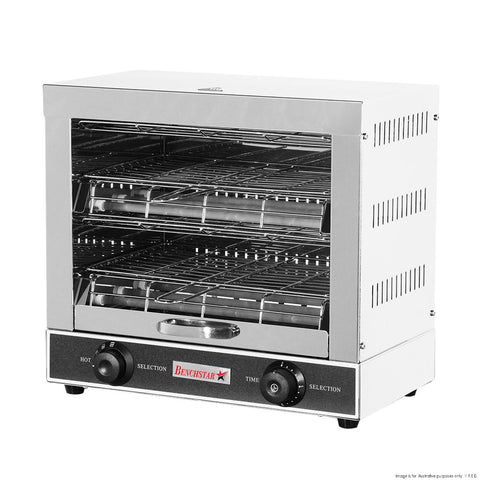
 Benchstar Toaster / Griller Salamander AT-360BE
440(W) x 345(D) x 402(H)mm

 Roband Heat Lamp Stand - 1340mm W - HLS1235
1340(W) X 352(D) X 437(H)mm

 Roband Griddle - Very High Production - G700
725(W) X 529(D) X 263(H)mm
 Apuro Hot Chocolate Machine 5Ltr - CN219-A
410(W) x 465(H) x 280(D)mm

 Musso Ice Cream Machine - IMM0002
510(W) x 310(H) x 350(D)mm

 Apuro Red Soup Kettle 5.7Ltr - GH227-A
 Benchstar Large Double Contact Grill GH-813EE
860(W) x 372(D) x 232(H)mm

 Roband Quartz Heat Lamp Assembly 900mm - HQ900E
900(W) X 110(D) X 65(H)mm

 Roband Grill Max Toaster 8 slice - GMX810
585(W) X 315(D) X 315(H)mm
 Benchstar Stainless Steel Microwave Oven - MD-1400
553(W) x 488(D) x 343(H)mm

 Apuro Retractable Dome Heat Lamp Shade Copper Finish - DY460-A

 Apuro Sous Vide Machine 12.5Ltr - DM869-A
415(W) x 280(H) x 265(D)mm


 Yasaki Vacuum Bag - VB2639

 VC Compact Food Process 12l HR-12
575(W) x 316(D) x 489(H)mm
 Anvil Panini Press Single Ribbed Top Flat Bottom - TSS2000
410(W) x 205(H) x 378(D)mm

 Apuro Extra Wide Griddle Steel Plate - CU627-A
743(W) x 200(H) x 415(D)mm

 Apuro Bubble Waffle Maker - DK229-A
225(W) x 275(H) x 540(D)mm

 Apuro Retractable Heat Lamp Shade Matt Black Finish - DR759-A
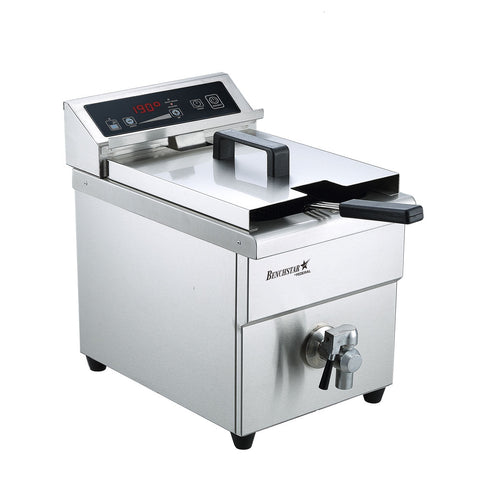
 Benchstar Single Tank Induction Fryer IF3500S
288(W) x 478(D) x 410(H)mm
You can get the whole kitchen here. The commercial kitchen appliances in this range run from spice grinders and sausage fillers to food processors, holding cabinets and even food delivery robots. Delivered anywhere in Australia.
That means one order to track and one number to call if something goes wrong, instead of chasing several suppliers. Butchers, bakers, delis, food trucks, caterers and big venues all buy from this range, from small benchtop machines for a small shopfront up to large industrial kitchen appliances for a production site, so you can buy the size that suits your business at its current size, then size up as your business grows.
Fitting out a whole kitchen? Get a quote and we will price the full line together.
The ones that chop and blend. Vegetable prep machines slice and dice in a fraction of the time it takes by hand, which is what you want if you are getting through boxes of onions, potatoes or pizza toppings every morning.
For the wet work, stick blenders and food processors handle soups, sauces, gravies and jams straight in the pot.
Work out what you get through on an average day, then check it against your busiest hour. Buy appliances that can do about 20% to 30% more than that. You get room to grow and you are not flogging the machine every service, but you are not paying for capacity you never use either.
At a minimum, match your peak. If the appliances you want will not fit, prep ahead and store it instead: good refrigeration buys you the same result with less bench space.
How long it can run and how often. Light duty appliances are for smaller batches, finer work, or jobs that only come up now and then. They suit a small cafe or a boutique caterer.
Heavy duty appliances are the ones running all day, every day. Thicker parts, bigger motors, and they keep going through a full rush. If a machine is on for hours at a time, buy heavy duty - a light duty unit doing a heavy duty job wears out fast.
It depends on the machine. Meat slicers should have a blade guard, an emergency stop and feet that grip so the machine cannot slide on the bench.
Anything with a flame needs a flame failure device. If the flame blows out, the gas shuts off instead of filling the kitchen. Where there is no gas connection, benchtop electric griddles install without one.
Look for grease gutters, removable crumb and drip trays, and stainless steel. Stainless wipes down, sanitises properly and does not rust. Some appliances have parts that go straight in the dishwasher, which saves a lot of scrubbing.
Think about where your staff spend the most time cleaning now, and buy something that fixes it. If you want a hand picking between models, contact the team at REO.
Decide on gas or electric first. If it is electric, check whether the model is single phase or three phase, because three phase often needs an electrician in before the machine can be used. No gas on site means a gas fitter has to run it in.
Then measure. Check the floor or bench space, the clearance around the machine, and where it sits in the flow of the kitchen. A machine in the wrong spot costs you more time than a slow one.
It comes down to your menu and your bench space. Some jobs only a dedicated machine does properly - an ice cream machine or a sausage filler, for example. Single-purpose machines are usually the most reliable too, because they only do one thing.
Multi-function appliances earn their place where bench space is tight or the menu changes often. One machine doing three jobs is one machine to clean, service and find room for.
Check the maker's instructions first, because they vary a lot. The usual list is filter changes, oil or grease on moving parts, and sharpening blades before they go blunt. Bigger machines need a service booked in now and then.
Doing it on a schedule costs less than a breakdown mid-service, and the machine lasts years longer.
In practice, nothing. Commercial kitchen appliances, professional kitchen appliances and professional cooking appliances all describe equipment built for trade use: heavier construction, faster recovery and parts that stand up to a full service every day. Industrial kitchen appliances usually means the larger, production-scale end of the same range.
Start with the core line: commercial cooking equipment, commercial fridges and commercial dishwashers. Then add benchtop units from commercial benchtop appliances and prep machines like food processors.

We have a special page just for stock that's warehoused in Perth.
Click Here to see all WA stockWhat our customers say about us on Google, and how Google scores our store for things like shipping and returns.
Store scores from Google