


 03 9070 5784
 Help & Support
 Track My Order




Recently Viewed

 Moretti Forni Amalfi Double Deck Oven on Stand - 12 x 35cm Pizza - Chamber Size 650w x 1035d x 180h mm - COMP A/2/S
1020(W) x 1650(D) x 1950(H)mm
 Moretti Forni Amalfi Double Deck Oven on Stand - 12 x 35cm Pizza - Chamber Size 950w x 735d x 180h mm - COMP B/2/S
1320(W) x 1350(D) x 1950(H)mm
 Moretti Forni Amalfi Single Deck Oven on Stand - 6 x 30cm Pizza - Chamber Size 950w x 735d x 180h mm - COMP B/1/S
1320(W) x 1350(D) x 1700(H)mm
 Moretti Forni Amalfi Triple Deck Oven on Stand - 27 x 35cm Pizza - COMP C/3/S
1320(W) x 1650(D) x 2150(H)mm
 Moretti Forni serieS Triple Deck Oven on Prover - 12 x 35cm Pizza - COMP S100E/3/L
1365(W) x 1443(D) x 2030(H)mm
 Moretti Forni serieS Triple Deck Oven on Prover - 18 x 35cm Pizza - COMP S120E/3/L
1660(W) x 1443(D) x 2030(H)mm
 Moretti Forni serieS Single Deck Oven on Prover - 6 x 35cm Pizza - COMP S120E/1/L
1660(W) x 1443(D) x 1660(H)mm
 Moretti Forni serieS Double Deck Oven on Prover - 12 x 35cm Pizza - COMP S120E/2/L
1660(W) x 1443(D) x 1870(H)mm
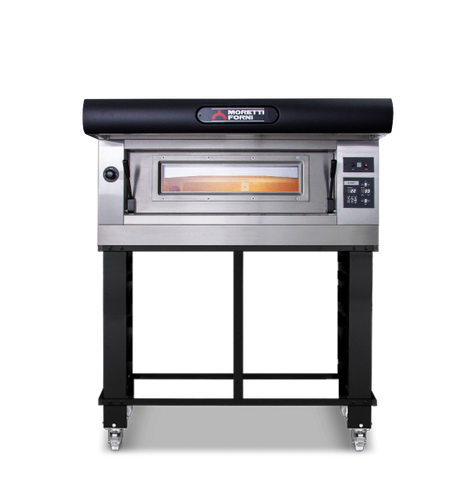 Moretti Forni Amalfi Single Deck Oven on Stand - 6 x 30cm Pizza - Chamber Size 650w x 1035d x 180h mm - COMP A/1/S
1020(W) x 1650(D) x 1700(H)mm
 Moretti Forni serieS Triple Deck Oven on Prover - 30 x 35cm Pizza - COMP S125E/3/L
1660(W) x 1973(D) x 2030(H)mm
 Moretti Forni serieS Double Deck Oven on Prover - 20 x 35cm Pizza - COMP S125E/2/L
1660(W) x 1973(D) x 1870(H)mm
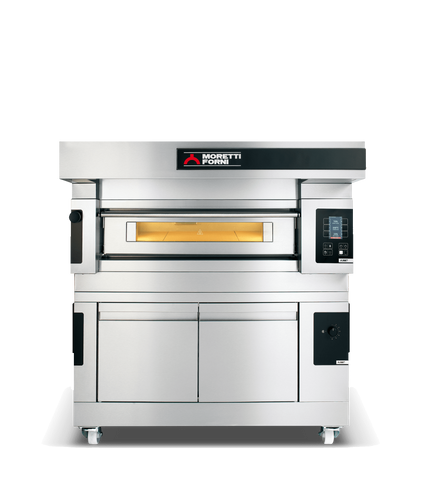 Moretti Forni serieS Single Deck Oven on Prover - 2 x 35cm Pizza - COMP S50E/1/L
890(W) x 1443(D) x 1660(H)mm
 Moretti Forni serieS Triple Deck Oven on Prover - 6 x 35cm Pizza - COMP S50E/3/L
890(W) x 1443(D) x 2030(H)mm
 Moretti Forni serieS Triple Deck Oven on Stand - 8 x 35cm Pizza - COMP S100E/3/S
950(W) x 735(D) x 1660(H)mm
 Moretti Forni serieS Single Deck Oven on Prover - 4 x 35cm Pizza - COMP S100E/1/L
1365(W) x 1443(D) x 1660(H)mm
 Moretti Forni serieS Double Deck Oven on Prover - 4 x 35cm Pizza - COMP S50E/2/L
890(W) x 1443(D) x 1870(H)mm

 Moretti Forni serieS Double Deck Oven on Stand - 20 x 35cm Pizza - COMP S125E/2/S
1245(W) x 1265(D) x 1660(H)mm
 Moretti Forni serieS Double Deck Oven on Prover - 8 x 35cm Pizza - COMP S100E/2/L
1365(W) x 1443(D) x 1870(H)mm
 Moretti Forni serieS Triple Deck Oven on Stand - 20 x 35cm Pizza - COMP S125E/3/S
1245(W) x 1265(D) x 1660(H)mm
 Moretti Forni serieS Single Deck Oven on Prover - 10 x 35cm Pizza - COMP S125E/1/L
1660(W) x 1973(D) x 1660(H)mm
 Moretti Forni serieS Single Deck Oven on Stand - 6 x 35cm Pizza - COMP S120E/1/S
1660(W) x 1443(D) x 1660(H)mm
 Moretti Forni serieS Triple Deck Oven on Stand - 4 x 35cm Pizza - COMP S50E/3/S
435(W) x 735(D) x 1660(H)mm
 Moretti Forni serieS Triple Deck Oven on Stand - 18 x 35cm Pizza - COMP S120E/3/S
1660(W) x 1443(D) x 2030(H)mm
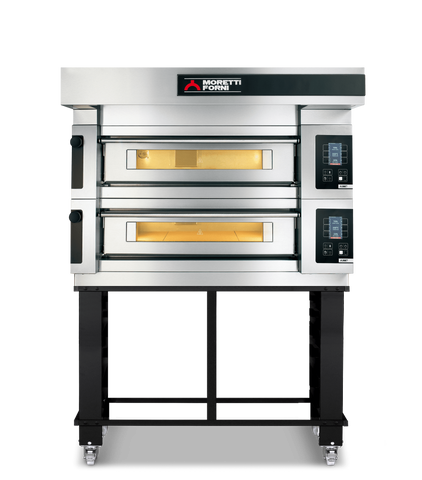 Moretti Forni serieS Double Deck Oven on Stand - 12 x 35cm Pizza - COMP S120E/2/S
1245(W) x 735(D) x 1660(H)mm
 Moretti Forni Neapolis Electric Deck Oven - 4 x 30cm Pizza - NEAP4
1084(W) x 1414(D) x 2229(H)mm
 Moretti Forni serieS Single Deck Oven on Stand - 10 x 35cm Pizza - COMP S125E/1/S
1660(W) x 1973(D) x 1660(H)mm
 Moretti Forni serieS Single Deck Oven on Stand - 2 x 35cm Pizza - COMP S50E/1/S
890(W) x 1443(D) x 1660(H)mm
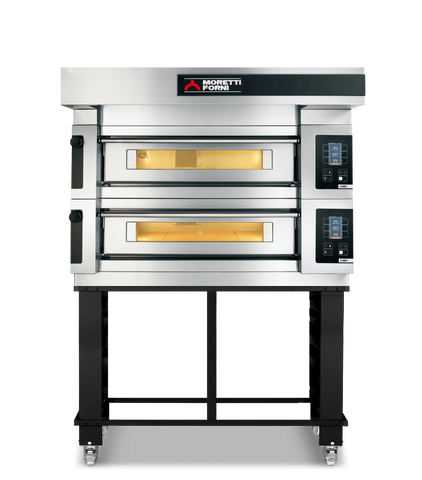 Moretti Forni serieS Double Deck Oven on Stand - 8 x 35cm Pizza - COMP S100E/2/S
950(W) x 735(D) x 1660(H)mm
 Moretti Forni serieS Single Deck Oven on Stand - 4 x 35cm Pizza - COMP S100E/1/S
1365(W) x 1443(D) x 1660(H)mm
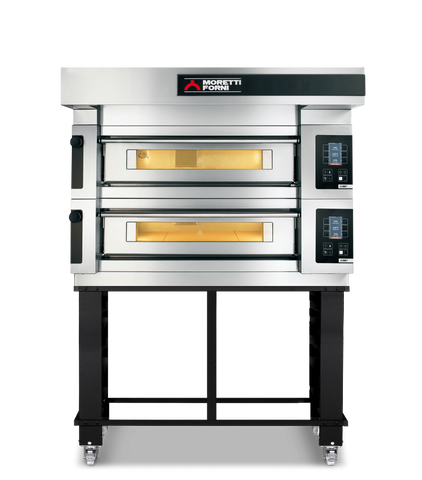 Moretti Forni serieS Double Deck Oven on Stand - 4 x 35cm Pizza - COMP S50E/2/S
435(W) x 735(D) x 1660(H)mm
Moretti Forni Neapolis Electric Deck Oven - 9 x 30cm Pizza - NEAP9
1465(W) x 1842(D) x 2229(H)mm
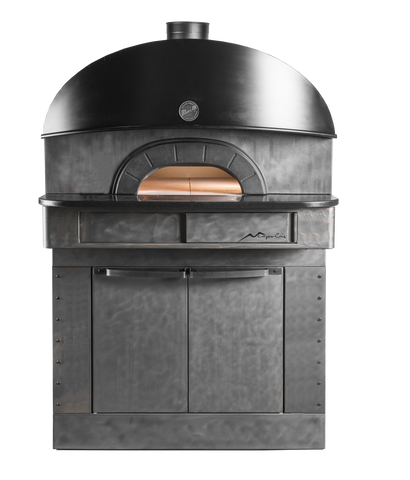 Moretti Forni Neapolis Electric Deck Oven - 6 x 30cm Pizza - NEAP6
1084(W) x 1786(D) x 2229(H)mm
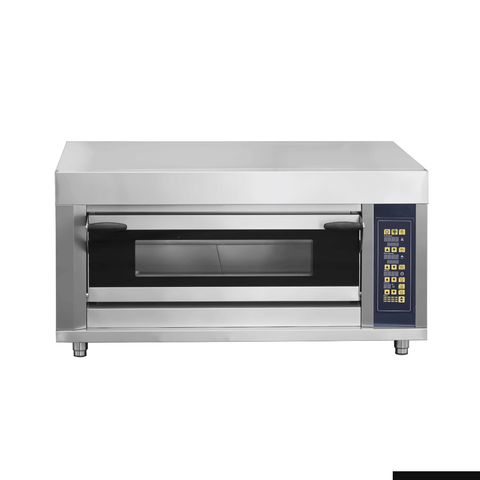

 BakerMAX Electric Deck Bakery Oven - ME2-1
1240(W) x 860(D) x 625(H)mm
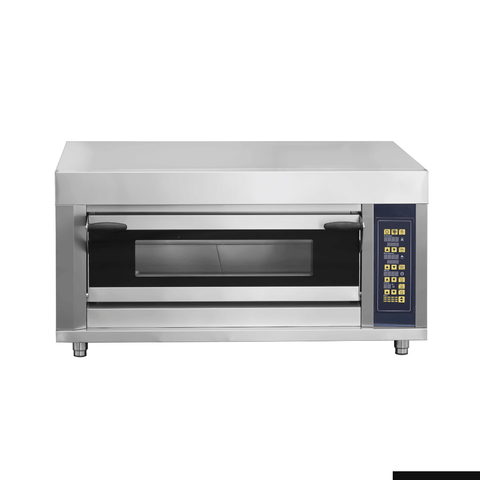
 BakerMAX Electric Deck Bakery Oven With Steam - ME2ST-1
1240(W) x 860(D) x 625(H)mm
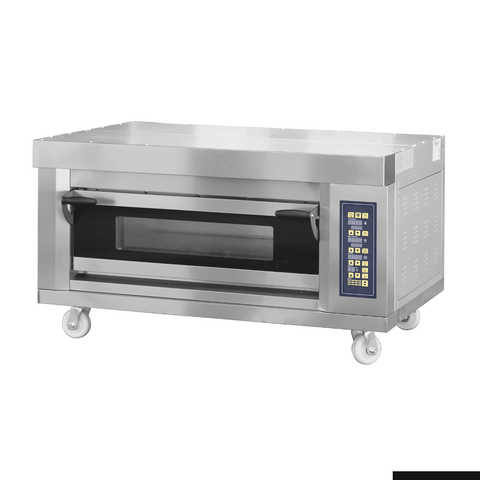
 BakerMAX Stackable Electric Deck Bakery Oven With Steam- ME2ST-1D
1300(W) x 908(D) x 770(H)mm
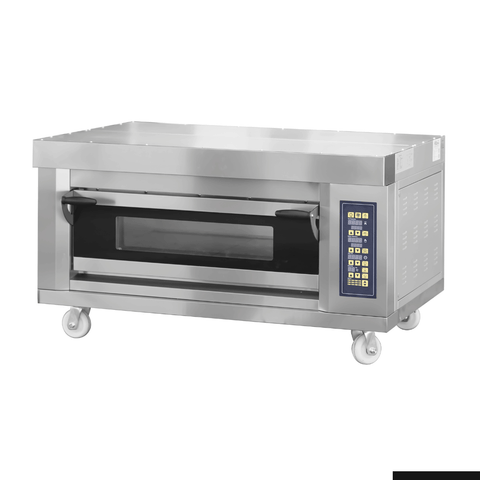
 BakerMAX Stackable Electric Deck Bakery Oven - ME2-1D
1300(W) x 908(D) x 770(H)mm
 BakerMAX Compact Countertop Single Deck Electric Pizza Oven - EP-1T
580(W) x 561(D) x 275(H)mm
 BakerMAX Prisma Food Pizza Ovens Single Deck 6 X 35cm - TP-2-1-SD
1100(W) x 1320(D) x 413(H)mm

 BakerMAX Prisma Food Pizza Ovens Single Deck 4 X 40cm TP-2-1
1100(W) x 1080(D) x 413(H)mm
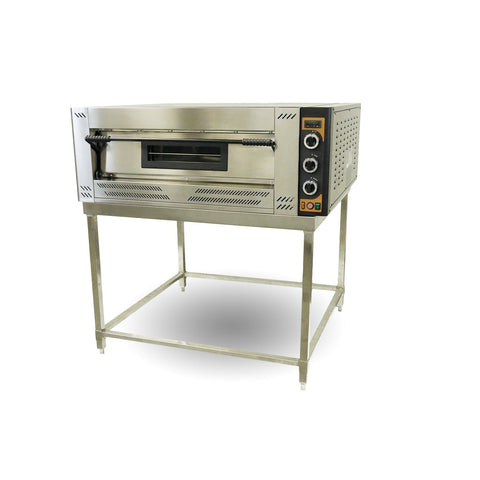

 BakerMAX Prisma Food Single Deck Gas Pizza&bakery Ovens PMG-9
1305(W) x 1362(D) x 560(H)mm
A commercial deck oven bakes straight onto a hot stone sole rather than in moving air, which is what gives bread a crisp crust and pastry an even base. Each deck is a separate baking environment with its own temperature and settings, so a bakery can hold sourdough on one deck and delicate pastries on another and load them independently.
Our commercial deck ovens include small single-deck models for a cafe baking its own bread and croissants up to large three-deck models for a bakery or pizzeria working through batches all day, so you can buy the size that suits your business at its current size, then size up as your business grows. Delivered anywhere in Australia.
Replacing a whole oven line or fitting out a bakery? Get a quote and we will price the decks against what you need to bake in a day.
Yes. Unlike a multi-tray oven such as a combi steam oven, where everything in the cabinet shares one environment, each deck has its own temperature and settings. So you can run everyday loaves on one deck and delicate pastries on another.
Depending on the model you choose you get one, two or three independent decks. That makes it simple to prep everything for the day, or to bake two different products at once.
It comes down to your menu and your volume. A cafe baking its own bread for sandwiches, or breakfast croissants, is usually fine with a single deck oven. That bakes one batch at a time, but a single deck normally takes more than one bread pan or tray.
For a production bakery, the larger multi-deck models are the ones to look at in the wider bakery equipment range. Bakermax is one of the most popular brands here, with models that take more trays and run at higher power output.
It is the format bakers use for both. Variable settings, heavy insulation, a temperature read-out and the stone soles give you a crisp crust or a soft golden edge with a light crumb, and you can hold the settings you worked out while you were testing a recipe.
For pizza, pizza deck ovens are the specific version of the same thing: heat conducted straight into the base crisps the bottom in a way moving air cannot, and the operator stays in control of where the pizza sits and when it comes out. A conveyor oven trades that control for throughput — the pizza goes in one end, comes out the other, and anybody on the shift can run it. If the shop depends on the pizza, the deck is the machine; if it depends on volume, the conveyor is.
Many models run up to 500℃, which covers fast baking as well as a normal bread bake. That is enough heat to hold the moisture in the centre of a loaf while the crust sets, and to get the browning you want on flaky pastry. The maximum on a given model is on its product page.
They are built for continuous use, so the decks recover quickly between batches rather than leaving staff waiting. Large deck surfaces and multiple decks mean several trays go in at once, come out together, and the next batch goes straight in behind them. Drop-down doors make loading and unloading quick.
Bread, pastries and pizza are the main uses, but a restaurant can also put roast vegetables or desserts through one. With multiple decks you can do two of those at once, each at its own temperature.
Put a dough prep station next to it. Sheeted pastry comes off the pastry sheeter, or proved dough out of the dough prover, into a pan and straight into the oven without carrying it across the kitchen. That makes the clean up easier too. If you are doing pizza, keep a pizza prep fridge in the same spot so toppings go on beside the oven.

We have a special page just for stock that's warehoused in Perth.
Click Here to see all WA stockWhat our customers say about us on Google, and how Google scores our store for things like shipping and returns.
Store scores from Google